


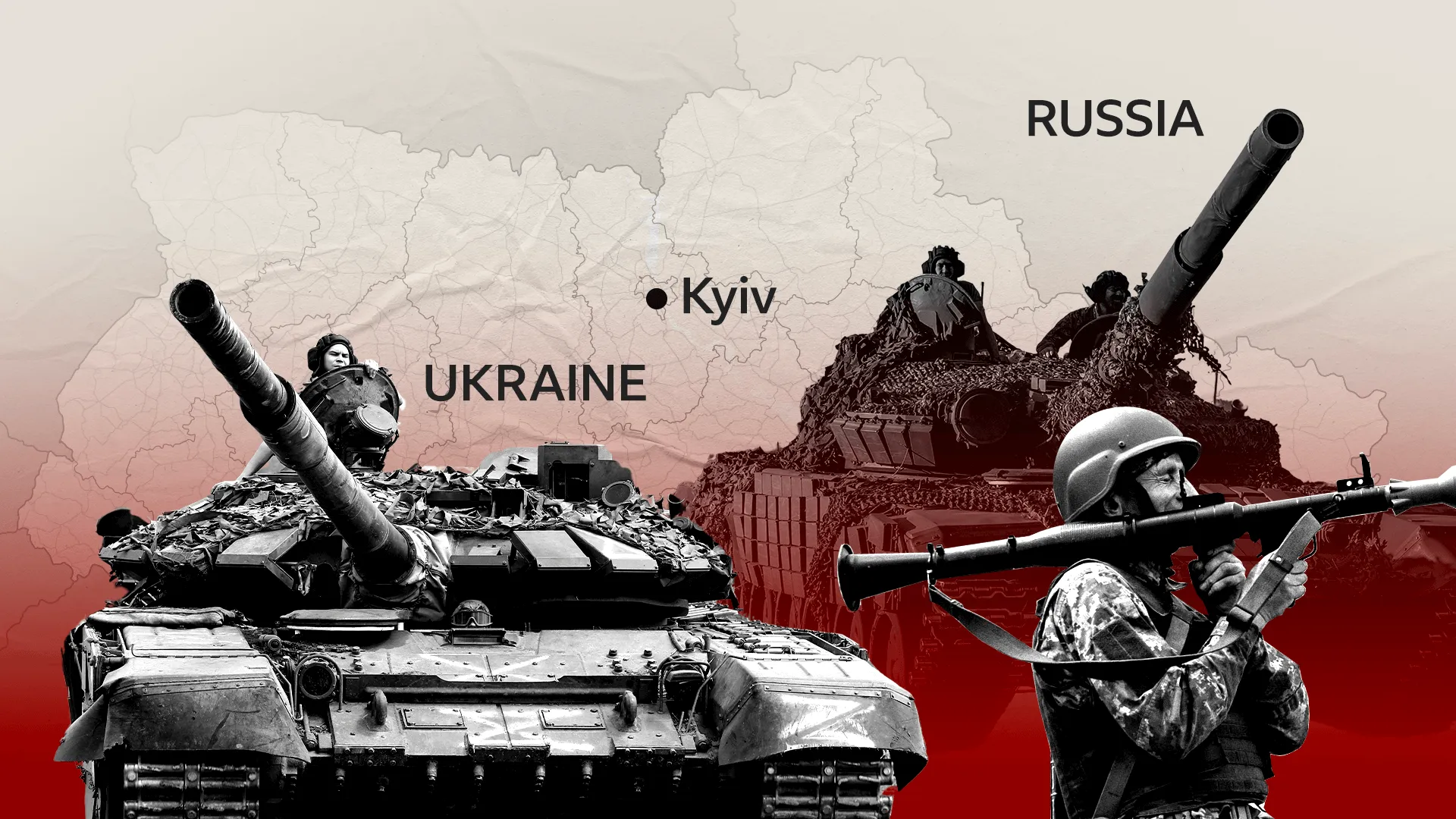
KYIV, Ukraine — The latest wave of Russian missile strikes began before dawn, but the explosions that echoed across Kyiv and Kharkiv represented something larger than another night of warfare.
They underscored how the conflict between Russia and Ukraine is increasingly evolving into a contest of endurance, reach and economic disruption—one in which civilian centres, energy infrastructure, logistics hubs and commercial networks have become as strategically significant as traditional military positions.
By Sunday 19, July 2026 morning, Ukrainian officials reported that four people had been killed and at least 36 injured after Russia launched one of its heaviest missile assaults in recent weeks. Three people died in Kharkiv, Ukraine’s second-largest city, while another was killed in Kyiv.
President Volodymyr Zelensky described the attack on the capital as “one of the most massive ballistic attacks” since Russia launched its full-scale invasion in February 2022.
The strikes formed part of a broader pattern that has become increasingly visible over recent months.
As fighting along the frontlines remains largely static, both sides are seeking advantages by reaching deeper into each other’s territory and targeting the systems that sustain their war efforts.
For Russia, that has meant intensified attacks on Ukrainian cities, logistics centres and critical infrastructure.
For Ukraine, it has increasingly meant long-range strikes against Russian fuel facilities, industrial sites and maritime assets.
The result is a war that is becoming less geographically contained and potentially more difficult to de-escalate.
A night of missiles over Ukraine
According to Ukraine’s military, Russia launched a complex assault involving ballistic missiles, hypersonic weapons and more than a hundred drones.
Air defence systems intercepted many of the incoming threats, but not all.
Officials said residential and commercial properties were damaged across Kyiv and surrounding districts.
Warehouses caught fire.
A logistics hub in Bucha district was hit.
Firefighters spent hours battling blazes that illuminated the night sky.
In Kharkiv, the consequences proved deadlier.
Regional Governor Oleh Syniehubov said a postal terminal on the outskirts of the city was struck, killing three men aged between 24 and 62.
Several others suffered serious injuries.
The attack reinforced a reality Ukrainians have lived with for more than three years: distance from the frontline no longer guarantees safety.
Military analysts note that Russia’s growing reliance on ballistic and hypersonic missiles reflects an effort to overwhelm Ukraine’s air-defence systems through speed, volume and complexity.
Even advanced interception systems face challenges when confronting multiple threats arriving simultaneously from different directions.
For Kyiv, every large-scale missile barrage is not only a military challenge but also a reminder of its continuing dependence on Western air-defence support.
That concern was evident in Zelensky’s response.
“Protection against ballistic missiles is our constant and top priority right now,” he said.
“Interceptors are needed every day.”
Ukraine takes the war deeper into Russia
Yet the latest escalation did not occur in isolation.
While Russian missiles were striking Ukrainian cities, Ukraine was simultaneously celebrating some of its most ambitious long-range attacks inside Russia.
Zelensky said Ukrainian forces had struck three Russian oil depots in Stavropol region and targeted another energy-sector facility.
More significantly, he announced successful strikes against three Russian oil tankers operating in the Black Sea.
“Precise hits on three Russian ‘shadow fleet’ tankers were recorded in the Black Sea,” Zelensky said.
“I thank every one of our units that is helping to spread the realisation within Russia that this war must be brought to an end.”
The attacks highlight an important shift in Ukrainian strategy.
Unable to match Russia’s larger military resources directly, Kyiv has increasingly sought to target the economic foundations of Moscow’s war effort.
Energy infrastructure has become a central focus.
Oil exports remain one of Russia’s most important sources of state revenue.
By targeting refineries, storage facilities and maritime transport assets, Ukraine hopes to impose costs far beyond the battlefield.
The strategy mirrors a broader trend seen in modern conflicts, where economic disruption can become almost as valuable as territorial gains.
The battle beyond the frontlines
The latest exchanges also demonstrate how the war is increasingly being fought through infrastructure.
A decade ago, military planners often distinguished between combat zones and economic centres.
Today, those lines have blurred.
Warehouses, fuel depots, ports, rail networks, logistics hubs and energy facilities have become strategic targets.
Russia’s attack on Ukrainian logistics infrastructure and Ukraine’s strikes on oil facilities illustrate the same underlying logic.
Each side is attempting to weaken the other’s ability to sustain prolonged military operations.
The consequences extend beyond the immediate combatants.
The Caspian Pipeline Consortium confirmed that its Black Sea terminal had been affected, damaging two tankers and temporarily suspending oil-loading operations.
Although no oil spill occurred, the incident serves as another reminder of how the war continues to affect global energy markets.
The Black Sea remains one of the world’s most strategically important trade corridors.
Any disruption there attracts international attention because of its potential impact on energy prices, shipping routes and supply chains.
A war that keeps expanding
The latest attacks also arrive at a time when hopes for a negotiated settlement remain distant.
Neither side appears willing to reduce military pressure.
Instead, both are investing in capabilities that allow them to strike deeper into enemy territory.
Ukraine says Russian attacks on civilian infrastructure justify its campaign against Russian energy assets.
Also Read: Russia launches deadliest drone and missile attacks on Ukraine, 17 civilians killed
Russia argues that its operations target military-related facilities supporting Ukraine’s war effort.
Meanwhile, civilians continue to bear much of the cost.
According to Zelensky, Russia launched approximately 1,450 strike drones, more than 1,640 guided bombs and 99 missiles against Ukraine during the past week alone.
Those figures illustrate not only the intensity of the fighting but also the scale of resources both countries continue to commit to a conflict that has already entered its fifth year.
The escalation dilemma
The latest exchange reveals a central dilemma facing both Kyiv and Moscow.
Military pressure may deliver tactical successes, but it also risks triggering further retaliation.
Each strike creates incentives for another.
Each escalation encourages a response.
What emerges is a cycle that becomes increasingly difficult to break.
For now, neither side shows signs of stepping back.
Russia continues to bombard Ukrainian cities.
Ukraine continues expanding its reach into Russian territory.
And with every missile launched and every drone dispatched, the conflict moves further from the possibility of a quick resolution.
The overnight attacks on Kyiv, Kharkiv, Russian oil infrastructure and Black Sea shipping were not isolated incidents.
They were the latest evidence that the war is entering a phase where geography offers less protection, infrastructure has become a battlefield, and escalation increasingly defines the rhythm of the conflict itself.
