


NEW DELHI, India — The rains arrived as they do every year. But in parts of India this weekend, the monsoon brought more than relief from summer heat.
It brought collapsing hillsides, swollen rivers and desperate rescue operations.
By Sunday 19, July 2026 evening, at least 19 people had been killed after flash floods and landslides swept through parts of northeastern India and the Himalayan region of Jammu and Kashmir, while emergency crews searched for survivors amid warnings that more severe weather could be on the way.
The disaster has once again highlighted the growing challenge facing India during the annual monsoon season, when life-giving rainfall increasingly arrives with destructive force, overwhelming communities, damaging infrastructure and testing the country’s disaster-response systems.
In the remote northeastern state of Nagaland, bordering Myanmar, rescue teams spent much of Sunday combing through debris after landslides struck communities in Mon district.
“We have recovered four of the eight bodies, and rescue work is ongoing,” Wennyei Konyak, district magistrate of Nagaland’s Mon district, told Vivid Voice News.
Authorities said at least eight people died in the state while another 15 were injured.
Hundreds of kilometres away in Indian-administered Jammu and Kashmir, another tragedy was unfolding.
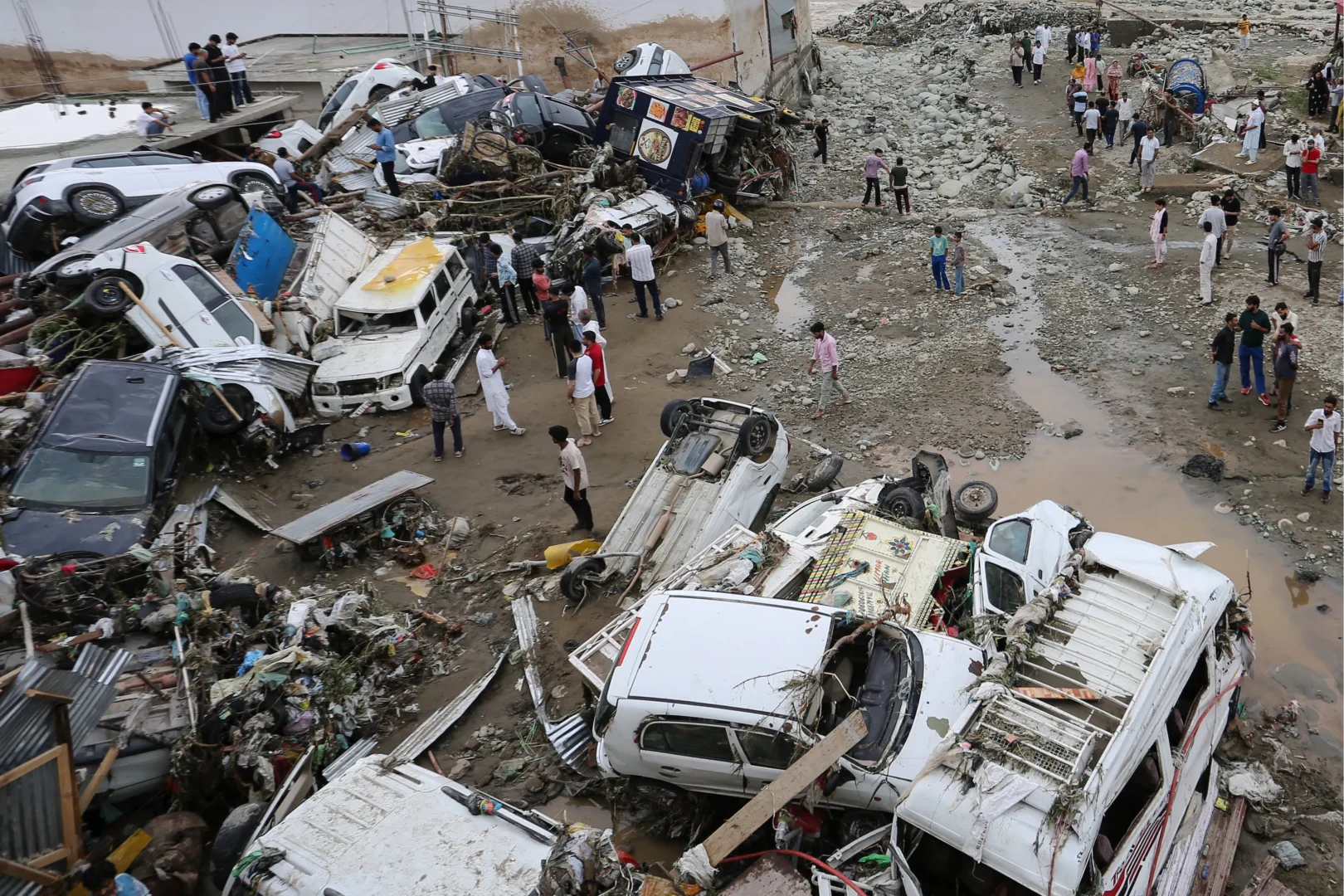
Flash floods tore through Rajouri district in Jammu, killing at least 11 people and leaving several others missing, according to local media reports.
The floods swept through roads, markets and transport facilities, damaging homes and disrupting daily life across affected communities.
Jammu and Kashmir Chief Minister Omar Abdullah described the disaster as a devastating blow to residents already grappling with difficult terrain and unpredictable weather.
He “expressed profound anguish over the massive flash flood in Rajouri” in the Jammu region of the territory, his office said in a statement.
The flood “has caused extensive damage to public and private property, including the bus stand, and disrupted countless lives,” the statement added.
Army personnel joined emergency responders in search-and-rescue efforts, pulling 11 people to safety, including five children.
Yet the immediate rescue effort is only part of the challenge.
Meteorologists warn that the worst may not be over.
India’s weather department has forecast the possibility of “extremely heavy rainfall” across parts of Jammu and Kashmir over the coming days, raising fears of further flooding and landslides in a region where steep mountains and fragile infrastructure often magnify the impact of severe weather.
The threat has already forced authorities into a difficult decision.
Officials announced the temporary suspension of the annual Amarnath pilgrimage, one of Hinduism’s most important religious journeys.
The pilgrimage was suspended “in the interest of the safety and well-being of all” pilgrims, the local government said.
It added that the journey would resume only when weather conditions improve and routes are declared safe.
The decision underscores how deeply the monsoon can affect not only daily life but also cultural and religious traditions that draw hundreds of thousands of people each year.
More than 400,000 pilgrims participated in the Amarnath pilgrimage last year.
Authorities also halted travel to the revered Vaishno Devi shrine in Jammu, another major pilgrimage site visited by millions annually.
The suspensions reflect a broader reality confronting India each monsoon season.
The rains are both essential and dangerous.
They replenish reservoirs, support agriculture and provide relief after months of intense heat. Yet they also expose weaknesses in urban planning, infrastructure resilience and disaster preparedness.
Across the country, floods, landslides and weather-related accidents have become a recurring feature of the monsoon months.
Also Read: Kenya floods death toll rises to 81 as heavy rains batter Nairobi
Scientists have increasingly warned that climate change is contributing to more erratic rainfall patterns, with longer dry periods followed by intense downpours that overwhelm drainage systems and trigger flash floods.
Mountain regions such as Jammu and Kashmir and the northeastern states are particularly vulnerable because heavy rainfall can quickly destabilise slopes and unleash landslides with little warning.
For residents of the affected communities, however, the debate over climate trends is secondary to the immediate task of recovery.
Families are searching for missing relatives. Emergency crews continue clearing debris. Authorities remain on high alert for further rainfall.
And as another round of storms approaches, communities across northern India are once again confronting a question that returns with each monsoon season:
How to live with a rainfall system that sustains millions of lives, but can become deadly within hours.
