


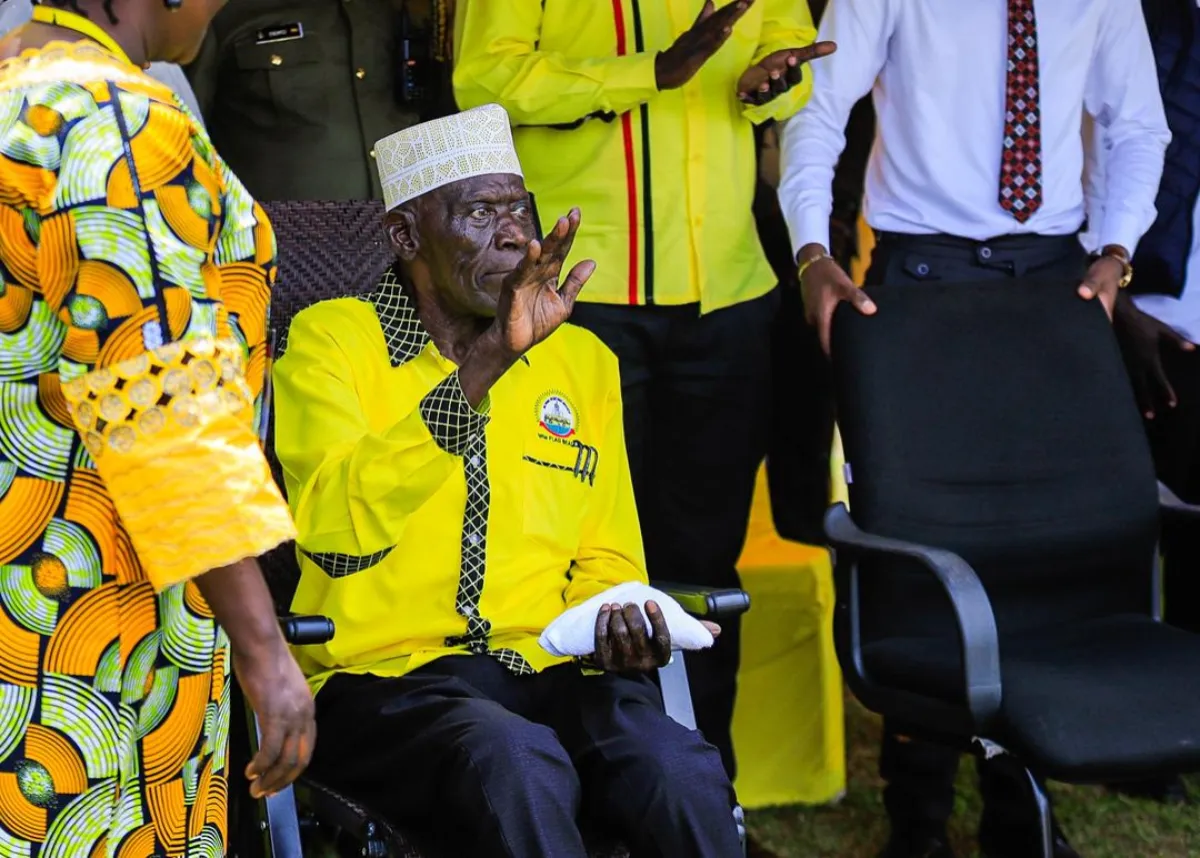
ADJUMANI, Uganda — Few Ugandans lived through—and helped shape—as many chapters of the country’s modern history as Gen. Moses Ali.
From the final years of colonial rule to the rise and fall of Idi Amin, from armed rebellion in the West Nile to the long rule of President Yoweri Museveni, Gen. Ali remained a constant presence in Uganda’s political and military life for more than half a century.
His death on Saturday, July 18, 2026, at the age of 87 brings to a close a career that defied easy categorisation. He was, at different moments, a teacher, soldier, cabinet minister, exile, rebel commander, peace negotiator, deputy prime minister and elder statesman. In many ways, the story of Moses Ali is also the story of Uganda’s often turbulent search for stability.
Former NRM National Vice Chairperson for Eastern Uganda Capt. Mike Mukula confirmed that Gen. Ali died at Nakasero Hospital after a period of ill health.
“It is with profound sorrow and a heavy heart that I have received the sad news of the passing of my dear friend, distinguished patriot, freedom fighter and statesman, Gen Moses Ali who departed this life today at 4:25pm at Nakasero Hospital,” Mukula wrote on X.
His family said the veteran politician had been hospitalised with unspecified ailments and had slipped into a coma before his death.
For many younger Ugandans, Gen. Ali was known primarily as a long-serving deputy prime minister and one of the most recognisable faces in the National Resistance Movement (NRM) government. But that public image represented only the final chapter of a political life that traversed some of the country’s most consequential moments.
To supporters and political opponents alike, Gen. Ali carried a nickname that captured both his longevity and influence: “The Lion of Adjumani.”
The title was more than a term of admiration. It reflected a reputation forged over decades in one of Uganda’s most complex political landscapes.
For more than half a century, Gen. Ali remained the dominant political figure in Adjumani and one of the most influential leaders in the wider West Nile sub-region, surviving military upheavals, exile, rebellion, peace negotiations and successive changes in government.
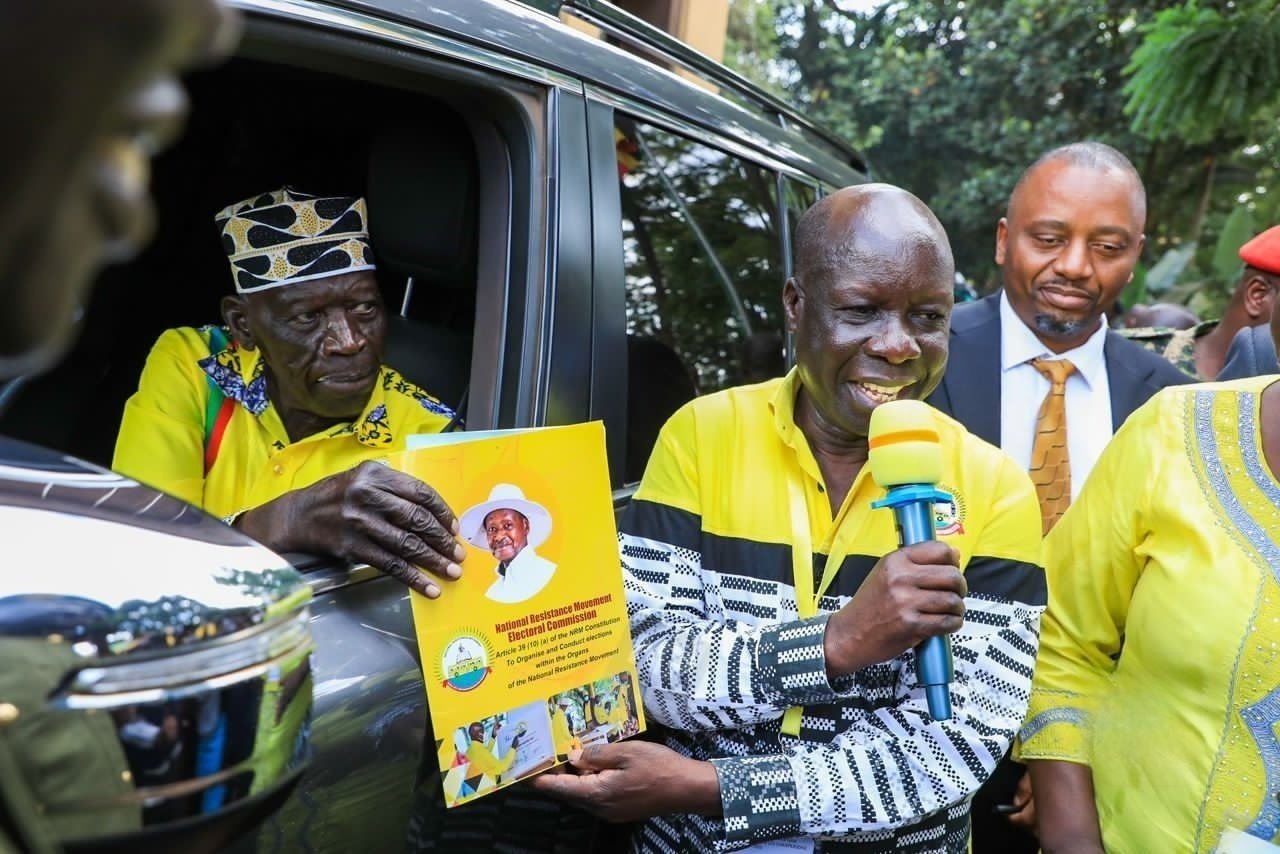
His supporters viewed him as a steadfast defender of West Nile’s interests, crediting him with helping secure infrastructure projects, government investment and post-conflict recovery programmes in a region that endured years of instability.
Political rivals, meanwhile, often pointed to his formidable electoral machinery and enduring grassroots networks, which made him one of the most difficult politicians to unseat.
Like the lion whose name he carried, Gen. Ali displayed an extraordinary instinct for political survival. He navigated the collapse of governments, military conflicts and shifting political alliances while remaining relevant across multiple generations of leadership.
Even as age and ill health gradually reduced his public appearances, his influence within both the ruling NRM and West Nile politics remained largely intact.
By the time of his death, he had become not only one of Uganda’s longest-serving public figures but also one of the last living links to several defining chapters of the country’s modern history.
Born on April 5, 1939, in Atabo Parish in present-day Adjumani District, Gen. Ali belonged to a generation that witnessed Uganda’s transition from British colonial administration to independence.
He initially worked as a teacher before joining the Uganda Army in 1968, entering military service at a time when the young nation was grappling with questions of identity, power and statehood.
Those questions would soon be answered through force.
When Idi Amin seized power in January 1971, Ali emerged as one of the new regime’s most influential figures. Trained in Israel and the United Kingdom, he rose rapidly through the ranks and attained the rank of Brigadier by 1974.
He occupied several senior government positions during the Amin years, including Minister of Finance and later Minister of Tourism, Wildlife and Antiquities. Like many senior officials of the period, his legacy became intertwined with one of the most controversial chapters in Uganda’s history.
Yet Gen. Ali’s political story did not end with Amin’s downfall.
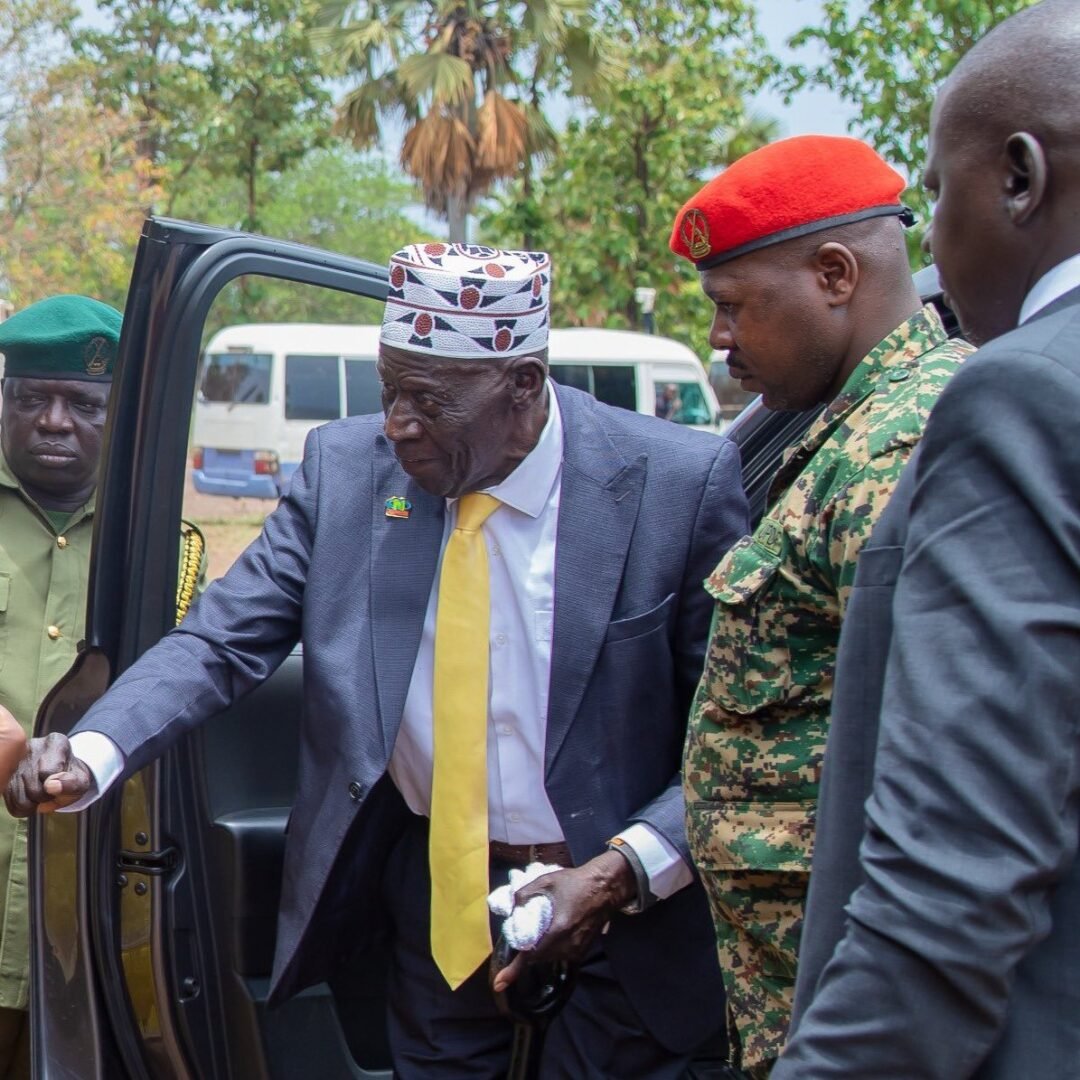
When Tanzanian forces and Ugandan exiles overthrew the Amin government in 1979, many of the regime’s senior figures disappeared from public life. Ali chose a different path.
After fleeing into exile in Sudan, he returned to politics through armed struggle, founding the Uganda National Rescue Front (UNRF), one of several insurgent groups operating in northern Uganda during the volatile years that followed Amin’s collapse.
The conflict left deep scars across West Nile.
Entire communities were displaced. Infrastructure collapsed. Economic activity ground to a halt. The region became synonymous with instability and neglect.
But it was during this period that Gen. Moses Ali underwent perhaps the most consequential transformation of his political life—from rebel commander to peace broker.
After the National Resistance Army (NRA) captured power in 1986, President Museveni faced the challenge of pacifying a country fractured by years of conflict. Rather than pursue a purely military solution, the new government opened negotiations with several armed groups.
Gen. Ali became one of the first major rebel leaders to embrace that process.
The 1988 peace agreement between the government and the UNRF remains one of Uganda’s most significant post-war settlements. The accord facilitated the integration of former fighters into the national army and helped restore relative stability to West Nile.
Political analysts have often pointed to the agreement as an early example of reconciliation taking precedence over retribution—a model that would later influence other peace efforts across the country.
For Gen. Ali personally, the accord marked the beginning of an unlikely political partnership.
The former rebel leader gradually became one of Museveni’s most trusted allies, serving in government for nearly four decades and helping to shape policies on peacebuilding, refugee management and regional development.
His longevity in public office was remarkable even by African political standards.
He served as Deputy Prime Minister, First Deputy Prime Minister, Minister for Relief, Disaster Preparedness and Refugees, Minister in the Office of the Prime Minister and adviser on security and northern Uganda affairs.
Yet his influence often extended beyond the titles he held.
Within the government, Gen. Ali occupied a unique position as one of the few leaders whose experience stretched across nearly every era of independent Uganda. Cabinet colleagues frequently regarded him as a repository of institutional memory—a man who could recall firsthand the decisions, conflicts and compromises that shaped the state.
His role became particularly significant during Uganda’s emergence as one of the world’s largest refugee-hosting countries.
As Minister for Relief and Disaster Preparedness, Gen. Ali helped oversee policies that earned Uganda international recognition for its refugee settlement model, which sought to integrate refugees into host communities rather than confining them to isolated camps.
Supporters viewed the approach as evidence of Uganda’s humanitarian leadership. Critics argued that implementation often struggled to match policy ambitions. But few disputed Gen. Ali’s central role in advancing the framework.
Even as age reduced his public appearances, his political influence endured.
He remained the Member of Parliament (MP) for Adjumani West and retained strong support in West Nile, where many residents viewed him not simply as a politician but as a symbol of the region’s reintegration into national politics after years of marginalisation.
His final electoral victory came only months ago, when he successfully retained his parliamentary seat.
Yet by then, his health had visibly declined.
Following the 2026 elections, Gen. Moses Ali reportedly requested to be relieved of ministerial responsibilities, citing the need to focus on his health. When President Museveni announced his new Cabinet in May, the veteran statesman was absent from the list.
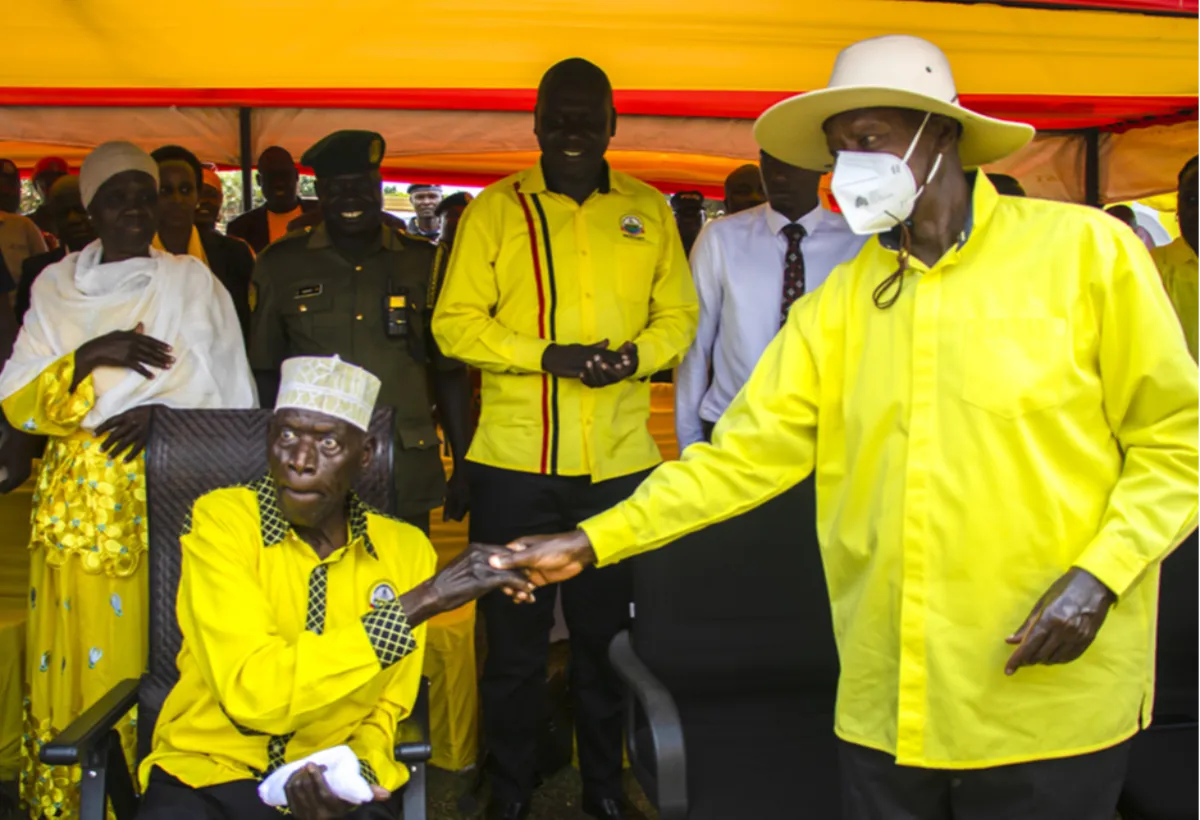
His son, Siraji Musa Ali, was later appointed Minister of State for Works and Transport, a move many observers interpreted as recognition of the family’s long-standing contribution to public service.
Now, with Gen. Moses Ali’s passing, Uganda loses one of the last prominent figures whose career directly connected nearly every major chapter of the country’s post-independence history.
His life was not without controversy. Few public figures who operated through Uganda’s most turbulent decades could claim such a record.
But whether viewed as soldier, politician, rebel, negotiator or statesman, Gen. Ali occupied a place in Uganda’s national story that few others can match.
For more than five decades, he remained a participant in the country’s defining struggles and transformations.
In death, he leaves behind not only a political legacy but also a living reminder of how Uganda’s modern history was shaped—through conflict, compromise, survival and, ultimately, reconciliation.
