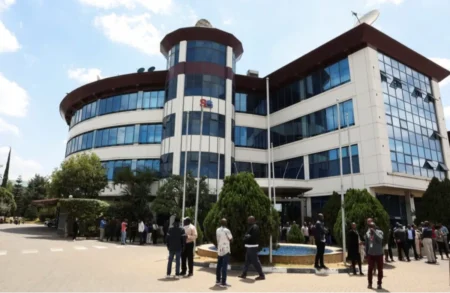


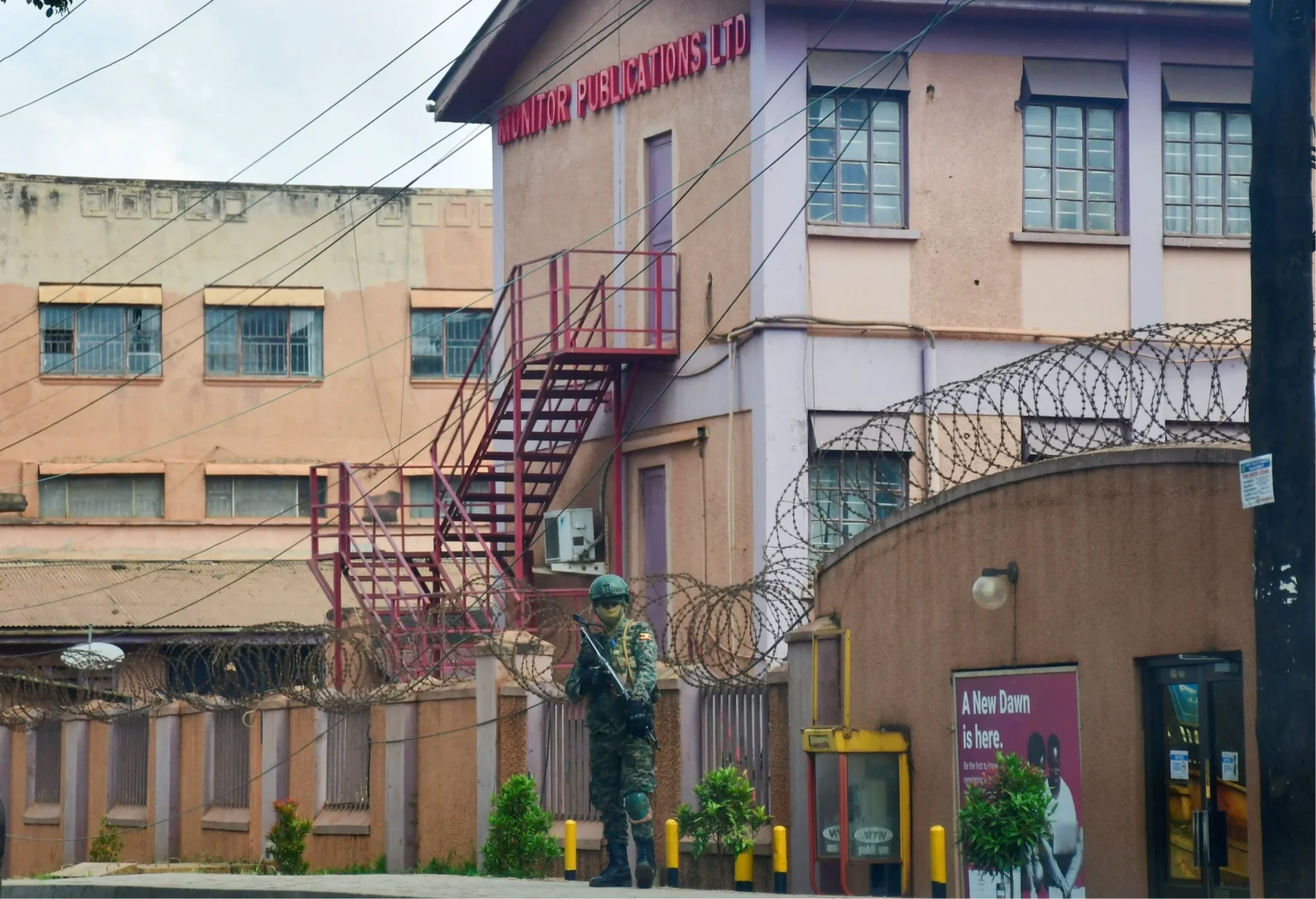
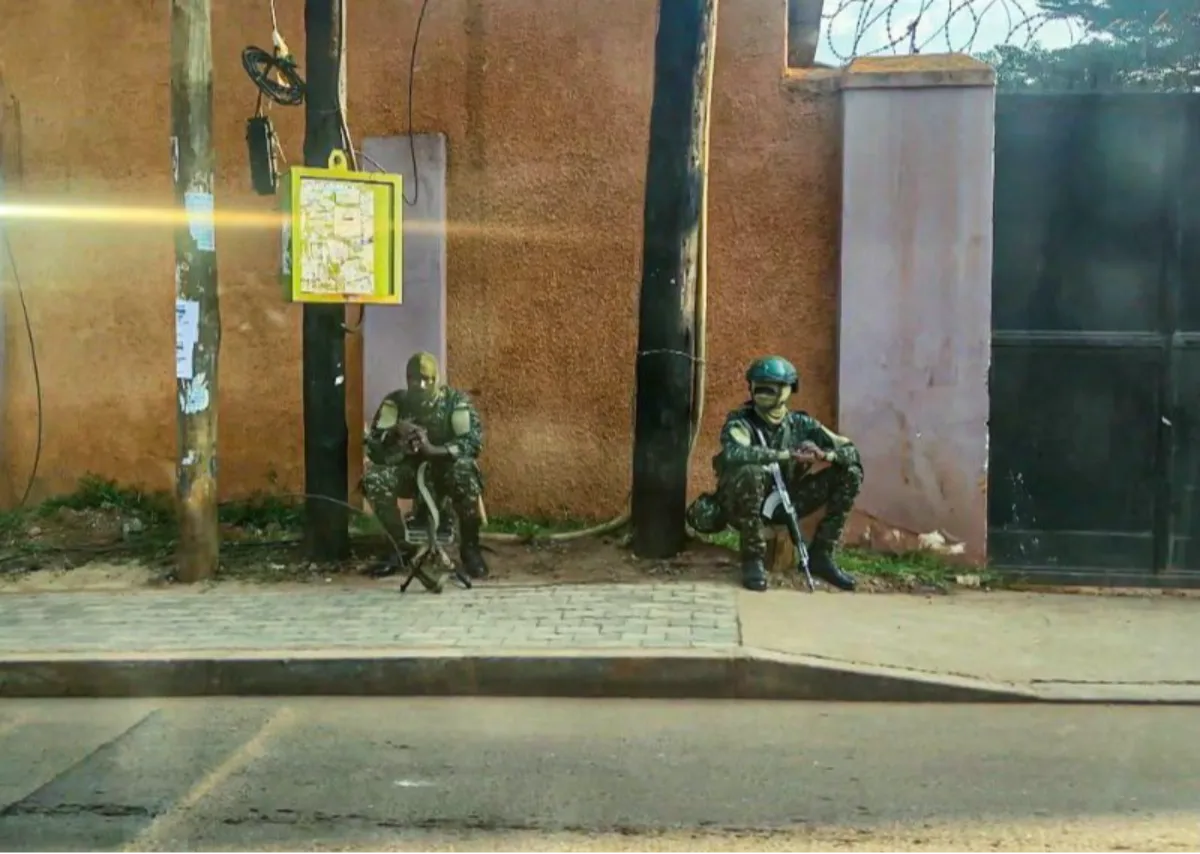
NAIROBI, Kenya — On a Sunday night in June 2026, armed security personnel once again surrounded Nation Media Group’s headquarters in Namuwongo, Kampala.
Inside the compound sat some of Uganda’s most recognisable media brands: Daily Monitor, NTV Uganda, Spark TV, KFM and Dembe FM.
Outside stood soldiers.
By morning, television screens had gone dark, radio broadcasts had fallen silent and journalists were locked out of their workplace.
For younger Ugandans, the scene appeared extraordinary.
For veteran journalists, it felt painfully familiar.
The closure marked the third time Daily Monitor and its sister outlets had been shut down by state security agencies since the newspaper was founded more than three decades ago.
The circumstances differed.
The political moments were different.
The officials involved changed.
But the underlying pattern remained remarkably consistent.
Each confrontation emerged after reporting on politically sensitive subjects involving power, the military, national security or succession politics.
Each triggered a fierce debate about the limits of state authority.
And each raised the same enduring question: how much space exists for independent journalism in Uganda when reporting collides with the interests of those in power?
To understand the significance of the latest shutdown, one must look beyond the current headlines and into the history of a newspaper that has spent much of its existence navigating a complicated relationship with the state.
The newspaper that chose a different path
When the Monitor was founded in 1992, Uganda was emerging from years of political instability and rebuilding many of its institutions.
The publication was born out of a breakaway from The Weekly Topic, a newspaper associated with senior figures within the National Resistance Movement (NRM).
From its earliest days, however, the new publication charted a different editorial course.
Rather than align itself closely with the establishment, the Monitor sought to position itself as an independent watchdog willing to investigate and publish stories that others might avoid.
That editorial philosophy earned the newspaper a loyal readership.
It also attracted powerful enemies.
Media scholars often argue that the relationship between governments and independent newspapers follows a predictable cycle.
The press gains influence.
Investigative reporting increases.
Public scrutiny intensifies.
Political tensions emerge.
The history of Daily Monitor appears to fit that pattern almost perfectly.
Long before social media transformed information flows and before digital platforms disrupted traditional journalism, the newspaper had already become one of Uganda’s most influential and closely watched news organisations.
Its growing influence ensured that its reporting would carry political consequences.
The first raid
The first major confrontation arrived in October 2002.
Uganda was heavily engaged in military operations against the Lord’s Resistance Army in northern Uganda.
The conflict dominated national discourse and security considerations often shaped public debate.
Then, the Daily Monitor (then known as The Monitor) published a report stating that a Uganda People’s Defence Forces (UPDF) helicopter had been shot down by the Lord’s Resistance Army (LRA) during Operation Iron Fist.
Government officials disputed the account, insisting the aircraft had crashed because of mechanical failure.
The disagreement quickly escalated beyond a dispute over facts.
Only days earlier, President Yoweri Museveni had publicly described the Monitor as an “enemy newspaper” during Independence Day celebrations, accusing it of undermining national security and assisting rebel propaganda.
The rhetoric soon gave way to action.
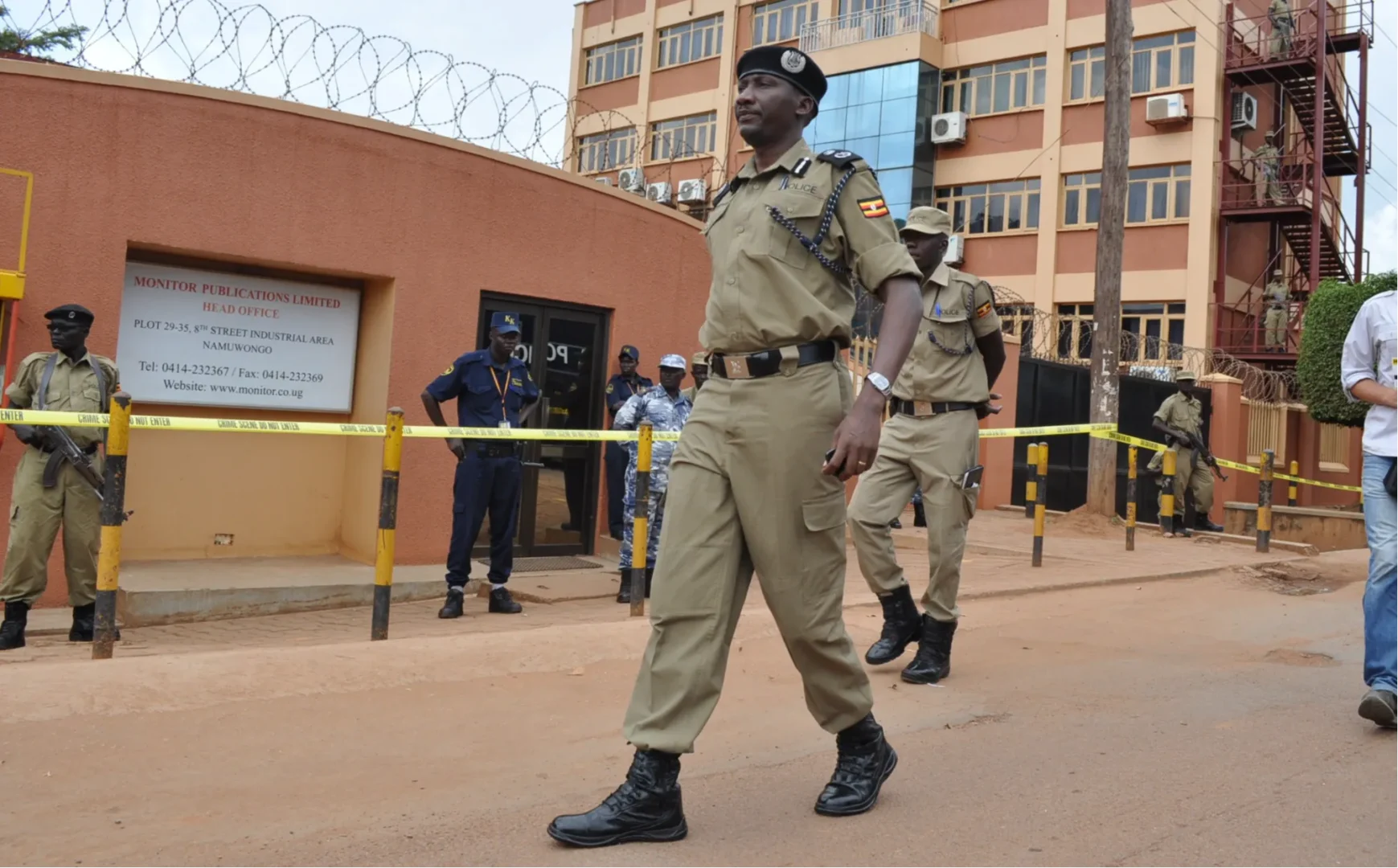
On October 11, 2002, heavily armed security personnel raided the newspaper’s headquarters in Namuwongo.
Computers and documents were confiscated.
Operations were suspended.
Journalist Frank Nyakairu was arrested in Gulu.
For more than a week, one of Uganda’s largest newspapers was effectively shut down.
The message was unmistakable.
Reporting on military affairs carried risks.
Yet the closure also elevated the Monitor’s profile.
What might have been a dispute over a single article became a national conversation about press freedom.
Ironically, attempts to silence the newspaper strengthened its identity as an independent institution willing to challenge official narratives.
The KFM crisis
Three years later, tensions resurfaced.
This time the focus shifted from print to radio.
In August 2005, KFM aired an episode of Andrew Mwenda Live discussing the helicopter crash that killed South Sudanese leader Dr John Garang on on July 30, 2005.
During the programme, journalist and political analyst Andrew Mwenda questioned the condition of the aircraft provided to Garang and suggested serious concerns regarding its maintenance.
The response was swift.
Andrew Mwenda was arrested.
KFM was shut down.
Authorities also threatened action against the Daily Monitor itself.
Although negotiations eventually allowed KFM to resume broadcasting, the episode reinforced a pattern that was becoming increasingly difficult to ignore.
Whenever reporting intersected with politically sensitive security matters, state intervention often followed.
For journalists working within the organisation, the lesson was becoming familiar.
The newsroom was no longer simply a place of reporting.
It had become a frontline in a broader contest over information, accountability and power.
The battle over NTV Uganda
The tensions extended beyond newspapers and radio.
In 2006, Nation Media Group (NMG) prepared to launch NTV Uganda.
The television station represented a major expansion of the company’s influence and reach.
Yet before broadcasts could properly begin, government authorities switched off transmitters and removed equipment, citing licensing and technical compliance concerns.
To critics, however, the dispute appeared inseparable from the government’s broader relationship with the Daily Monitor.
One senior manager would later describe the situation bluntly.
“The child was being killed before being born.”
After months of negotiations and parliamentary pressure, NTV was eventually allowed to proceed.
But the episode further deepened perceptions that the media group’s troubles extended beyond isolated disputes.
Many observers increasingly viewed them as symptoms of a larger struggle over independent journalism itself.
The shutdown that changed everything
If the earlier confrontations exposed tensions, the events of May 2013 transformed them into one of Uganda’s most consequential press freedom battles.
The trigger was a leaked letter attributed to Gen David Sejusa, then Coordinator of Intelligence Services.
The letter alleged a plot targeting senior officials opposed to what became widely known as the “Muhoozi Project” — a supposed succession strategy involving then Brigadier Muhoozi Kainerugaba.
The story dominated national conversation.
Then police arrived.
On May 20, 2013, officers sealed off the Daily Monitor compound.
Printing presses stopped.
Computer servers were disabled.
Radio transmissions ceased.
Daily Monitor, KFM and Dembe FM fell silent.
Authorities argued they were investigating allegations involving forged documents and official signatures.
Monitor executives described the raid as shocking and unnecessary.
What followed was an 11-day closure that quickly evolved into a landmark legal battle.
Years later, Justice David Wangutsi delivered a judgment that would become one of the most significant media freedom rulings in Uganda’s recent history.
The court found that police had exceeded their authority.
The search warrant had sought a document.
What authorities executed, the judge concluded, was effectively the shutdown of an entire media organisation.
The ruling was devastating for the state.
Not only did the court declare the closure unlawful, it awarded substantial damages to Monitor Publications.
Interest accumulated.
Legal costs mounted.
Time passed.
By 2025, when government opted against further appeals and settled the matter, taxpayers had paid approximately Shs3.1 billion.
The amount far exceeded the original award.
What began as an 11-day shutdown had become a 12-year legal and financial burden.
The return of familiar questions
The latest shutdown in 2026 arrives against this historical backdrop.
The circumstances differ.
The political context has evolved.
The media landscape itself has changed dramatically.
Yet the similarities are difficult to ignore.
Once again, the confrontation centres on reporting linked to military affairs.
Once again, security agencies are involved.
Once again, journalists find themselves unable to perform their work.
And once again, Uganda is debating where the boundary lies between national security concerns and constitutional protections for press freedom.
Media historian Dr Sarah Namusoke argues that the repeated clashes reveal a deeper institutional challenge.
“These incidents are not isolated events,” she says.
“They reflect unresolved tensions about the role of independent journalism in holding power accountable.”
The Daily Monitor’s history illustrates that those tensions have survived multiple political eras, technological transformations and shifts in public discourse.
More than one newspaper
The story of Daily Monitor is ultimately larger than a single publication.
It is also larger than individual governments, ministers or security officials.
At its core, it is a story about the competing forces that shape democratic societies.
Governments seek stability, security and control over sensitive information.
Also Read: Why Daily Monitor and NTV Uganda may not reopen anytime soon
Journalists seek transparency, accountability and public access to information.
Those objectives sometimes overlap.
They sometimes collide.
When they collide, institutions are tested.
Courts are called upon to interpret constitutional rights.
Citizens are forced to consider what kind of media environment they wish to live in.
And history becomes the ultimate judge.
Over the past 24 years, the Daily Monitor has survived raids, closures, lawsuits, equipment seizures, political pressure and repeated accusations that its journalism threatened national interests.
Yet it has continued publishing.
That persistence explains why the newspaper occupies a unique place in Uganda’s media history.
Its story is not merely about a newspaper.
It is about the evolving relationship between power and scrutiny.
Between authority and accountability.
Between the state’s desire to control information and the public’s right to receive it.
The latest shutdown may eventually end, just as previous closures did.
Court cases may follow.
Political tensions may subside.
Broadcasts may resume.
But the larger questions raised by the Daily Monitor’s history are unlikely to disappear.
Because for more than three decades, the newspaper’s experience has mirrored one of Uganda’s most enduring national debates:
Who gets to decide what the public is allowed to know?
And what happens when journalists refuse to let others answer that question on their behalf?