



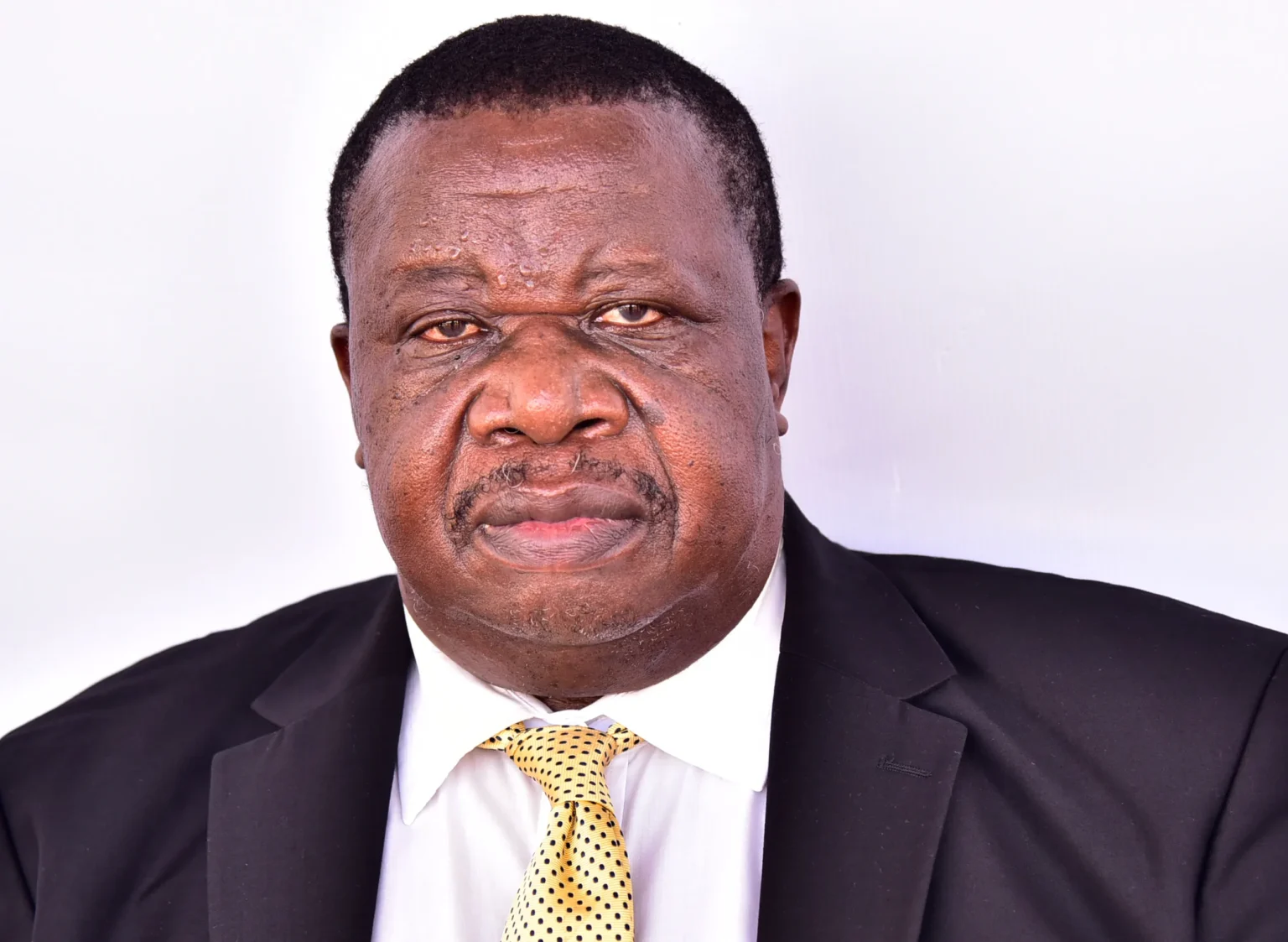
BUIKWE, Uganda — Water and Environment Minister Maj Gen (Rtd) Kahinda Otafiire has strongly defended his ownership of land in Njeru, Buikwe District, insisting he legally acquired the property and accusing critics of deliberately portraying him as a land grabber in the long-running dispute surrounding the government-owned Njeru Stock Farm.
The minister’s response comes amid renewed public scrutiny over ownership claims at the strategically important livestock facility, days after reports emerged that six Uganda People’s Defence Forces (UPDF) soldiers deployed at the farm were arrested following an operation reportedly initiated after President Yoweri Museveni received complaints about alleged illegal occupation and evictions on parts of the land.
In a statement published on his X account on Tuesday, Otafiire said recent media reports and social media discussions had distorted facts surrounding his involvement in the disputed property.
“There has been a deliberate drive to distort the facts and portray a specific narrative as I being a land grabber of the whole stock farm land,” Otafiire said.
Otafiire outlines land purchase history
According to the minister, he purchased land located on former Plots 3 and 4, Block 295 in Njeru in 2016 from the late Fred Lukwajju and Christopher Lule.
He said the sellers were administrators of the estates of the late Enoka Sebowa and Guster Seruwo and had obtained letters of administration and court orders from the High Court in Jinja authorising the issuance of certificates of title.
Otafiire maintained that his acquisition followed legally recognised procedures and involved approximately 640 acres that had already been subdivided and sold to numerous investors.
He further argued that the land in question had attracted significant private investment over the years, with multiple companies and individuals acquiring portions of the property.
Industrial developments cited
To support his position, Otafiire listed more than 25 companies and private investors that he said acquired portions of the same land and have since established businesses and industrial operations in the area.
Among the entities he named were:
- Modern Titles Limited
- Modern Laminates Limited
- Modern Agro Industries Limited
- Modern Organizers Limited
- Kiira Plastics Limited
- A-One Limited
- PAO Products
- Sino Glass Manufacturing Limited
- Shreeji Glass (U) Limited
- Seyani Brothers
- Parie G Sweets Limited
He also cited several individual purchasers, including businessman Mandala Mafabi and former Chief Justice Steven Kavuma.
According to Otafiire, many of these investors have occupied and developed their properties without interference since 2018.
“All these companies and individuals have developed their parcels of land creating an industrial complex enjoying quiet possession on the land since 2018,” he said.
The minister questioned why he alone had become the focus of criticism despite numerous other owners holding titles in the same area.
Distinction between disputed plots
A key element of Otafiire’s defence is his assertion that the land he owns is separate from the portion occupied by Njeru Stock Farm.
He argues that the government livestock facility was located on former Plot 2, measuring approximately 190 acres, while his property falls under former Plots 3 and 4.
“My land has nothing to do with the former stock farm,” he stated.
The minister further claimed that government agencies and stock farm managers had repeatedly misrepresented the facts by suggesting he occupies land that belongs to the farm.
Rent dispute and court decisions
Otafiire also referred to previous legal proceedings involving the land, arguing that Njeru Stock Farm lost its claim over parts of the property after allegedly failing to meet lease obligations.
He cited comments previously made by State Minister for Animal Industry Bright Rwamirama, who reportedly acknowledged that the farm’s interests in portions of the disputed land had been weakened following prolonged rent disputes involving the estate of Barbara Lakeri Nalubaale, daughter of the late Ham Mukasa.
According to Otafiire, the High Court in Jinja upheld an order of re-entry after the Ministry of Agriculture and stock farm management allegedly failed to honour lease terms.
“The Order of re-entry was confirmed by the High Court of Jinja following Ministry of Agriculture and the Stock Farm’s failure to pay the lease terms,” he said.
He further claimed that stock farm authorities recently removed equipment, livestock and furniture from parts of the land, an action he interprets as evidence that they no longer have a legal interest in those sections.
Questions over government management
The minister used his statement to raise broader questions about the management of Njeru Stock Farm and the Ministry of Agriculture.
He questioned why government authorities allegedly failed to pay rent for years despite budgeting for the expenditure.
“It is rather interesting why the stock farm management and Ministry of Agriculture have continuously cried foul and tried to claim that I am occupying former Plot 2 and yet in reality my land is situated on Plots 3 and 4,” Otafiire said.
The allegations are likely to intensify scrutiny of how public land and agricultural assets have been managed in one of Uganda’s most commercially valuable industrial corridors.
Why Njeru Stock Farm matters
The dispute has attracted significant national attention because Njeru Stock Farm is not an ordinary government property.
The facility hosts Uganda’s liquid nitrogen production plant, which supports artificial insemination programmes and livestock breeding initiatives across eastern Uganda and beyond.
Also Read: Muhoozi–Otafiire clash exposes deeper NRM power struggle
The farm plays a critical role in government efforts to improve livestock genetics, dairy productivity and agricultural modernisation.
Because of its strategic importance, any uncertainty over ownership, management or access to the land has implications for national agricultural programmes.
A dispute far from over
The latest statement underscores the complexity of a dispute that has evolved over years through court battles, competing land titles, estate claims, government interests and private investment.
While Otafiire insists his ownership is lawful and distinct from stock farm land, questions surrounding the historical ownership, lease arrangements and management of the broader Njeru property continue to generate controversy.
With the recent arrests of soldiers deployed at the farm and renewed presidential attention to the matter, the Njeru Stock Farm dispute appears far from settled.