


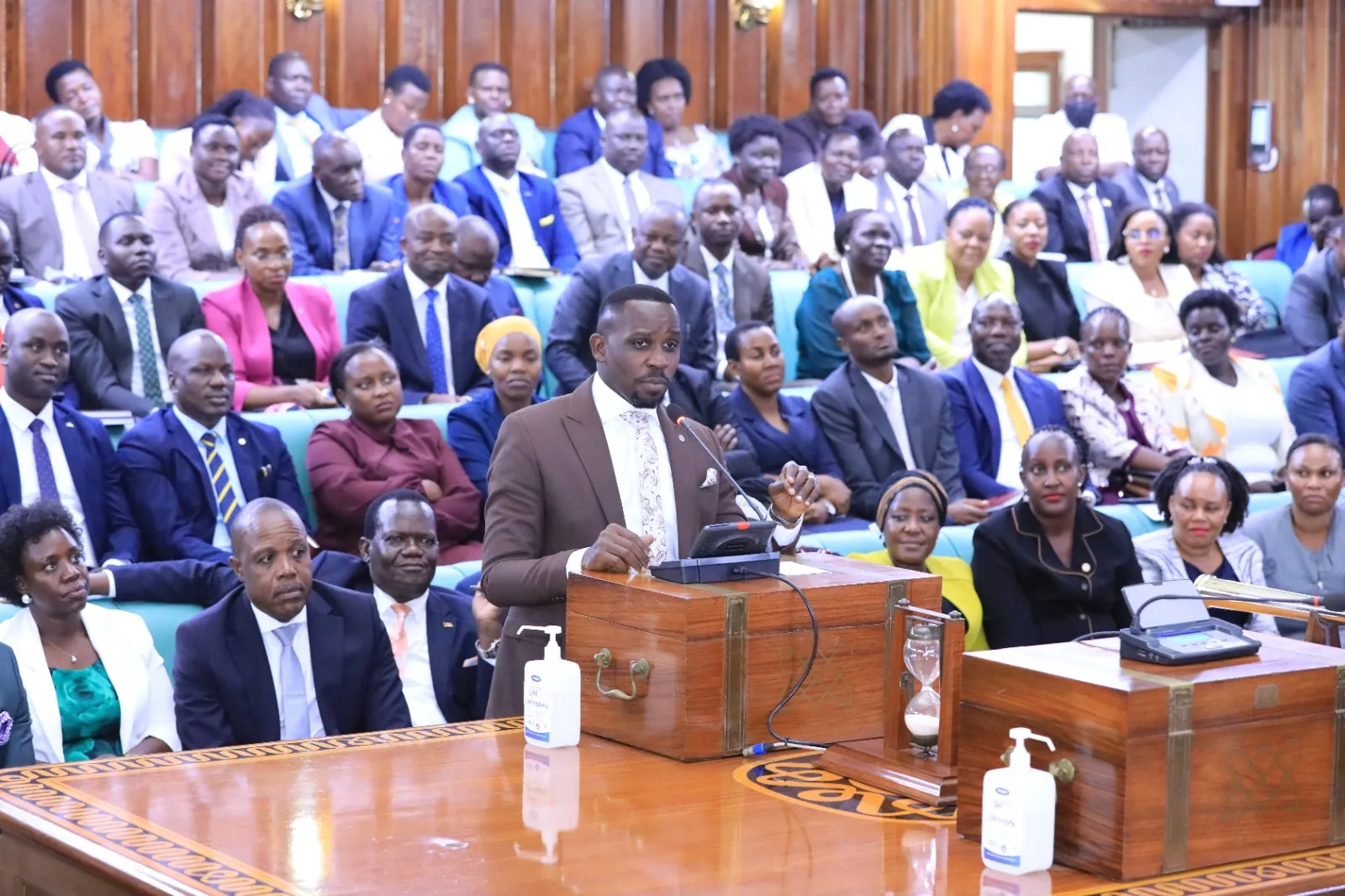
KAMPALA, Uganda — Members of Uganda’s 12th Parliament are facing acute congestion in the legislative chambers, with some lawmakers reportedly forced to sit on the floor, stand in doorways and occupy sections of the public gallery as seating shortages worsen.
The overcrowding has renewed scrutiny of the long-delayed Ush220.2 billion parliamentary chambers project, which was launched nearly a decade ago but remains incomplete despite substantial public investment.
The current Parliament comprises more than 529 members, far exceeding the capacity of the colonial-era chamber, which was originally designed to accommodate about 80 legislators.
The growing mismatch between the size of Parliament and available infrastructure has increasingly become a challenge during plenary sessions, with lawmakers often competing for limited seating space.
Because seating arrangements operate largely on a first-come, first-served basis, members frequently arrive early to secure places inside the chamber.
The situation has occasionally seen ruling National Resistance Movement (NRM) legislators occupy vacant seats on the opposition side when designated government benches fill up.
In response to the worsening congestion, Speaker Jacob Marksons Oboth-Oboth announced during plenary proceedings on June 10, 2026, that lawmakers would be allowed to sit on either side of the House regardless of party affiliation.
The directive effectively introduced a temporary “free sitting” arrangement aimed at accommodating the unusually large number of legislators attending sessions.
However, the Speaker maintained that front-row seats would remain reserved for ministers and shadow ministers.
The move reflects the growing pressure on Parliament’s existing infrastructure as the legislature continues to expand.
The seating crisis has also revived debate over the stalled parliamentary chambers project being undertaken by Roko Construction Company.
The project officially commenced in July 2017 and was intended to provide Uganda’s legislature with a modern facility capable of accommodating its expanding membership.
Nearly nine years later, however, the project remains unfinished despite repeated budget allocations.
The delays have attracted criticism from legislators across the political divide, with concerns being raised about accountability, cost escalation and value for money.
Leader of the Opposition (LoP) Joel Ssenyonyi has been among the most vocal critics of the prolonged delays.
He has repeatedly questioned why billions of shillings continue to be allocated to the project while Parliament remains without a completed chamber.
Ssenyonyi has also raised concerns about the continued expenditure on rented office space despite government investment in the unfinished parliamentary complex.
At one point, he suggested Parliament should reconsider approving additional funding until clear accountability and progress reports are provided.
Also Read: Questions over independence as Uganda’s new Speaker assumes office
Following concerns raised during the May 28 plenary sitting, Speaker Oboth-Oboth directed the Clerk to Parliament to provide a comprehensive update on the status of the project.
The Speaker gave Parliament’s administration two weeks to explain the delays, outline progress made so far and provide timelines for completion.
The anticipated report is expected to shed light on the causes of the prolonged construction delays and whether additional public funds will be required to complete the project.
For many lawmakers, the report will be critical in determining whether Parliament can finally resolve a space crisis that has left some legislators without seats in one of the country’s most important institutions.
