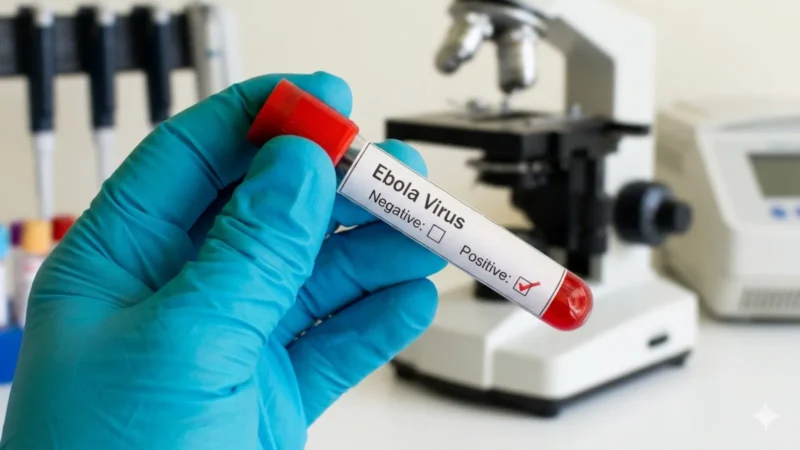


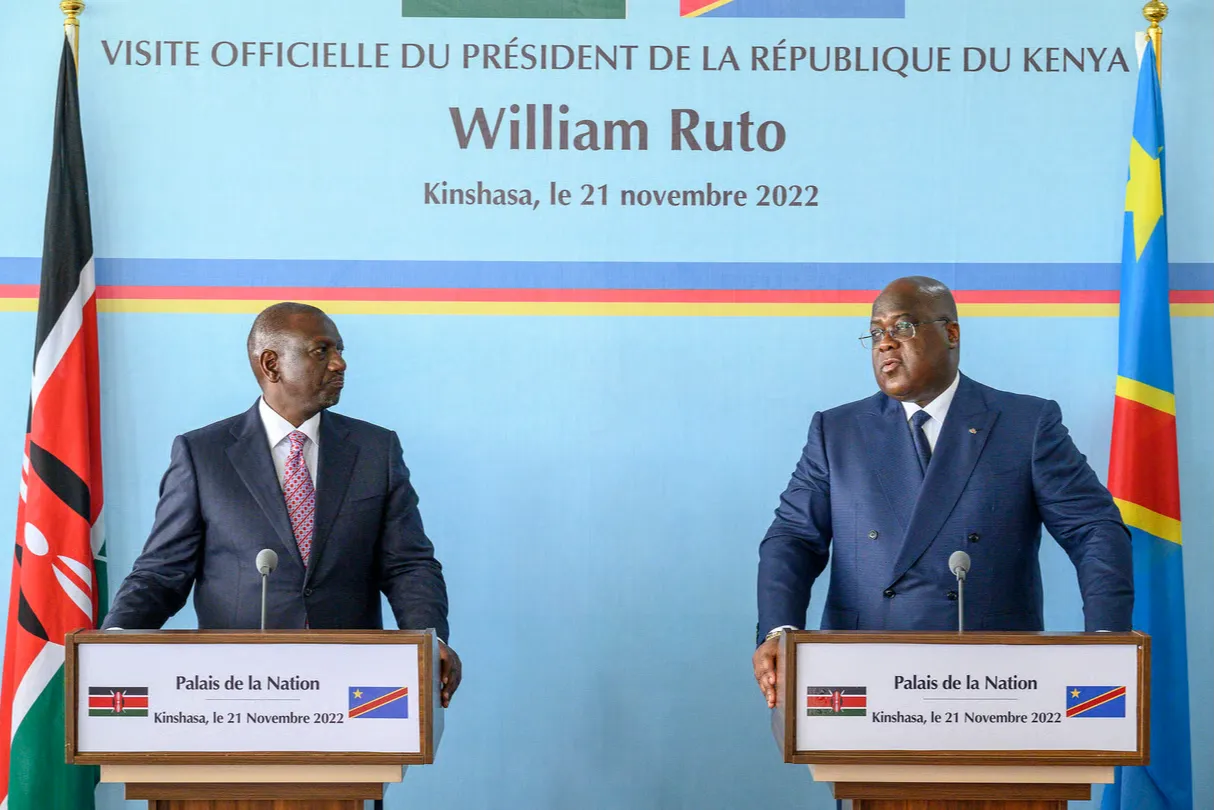
KINSHASA, DR Congo — The Democratic Republic of Congo (DRC) has defended its ability to manage Ebola outbreaks amid growing controversy surrounding a proposed United States-backed Ebola quarantine arrangement in Kenya that has sparked legal challenges, public concern, and political opposition.
Speaking during an interview on the BBC’s Focus on Africa programme, DRC Government Spokesperson and Information Minister Patrick Muyaya said the country possesses extensive experience in responding to Ebola outbreaks and remains capable of handling the current situation.
Muyaya revealed that Congolese authorities have been working closely with U.S. officials since the outbreak began and suggested that any Ebola-related response infrastructure could be established within the DRC rather than outside its borders.
“We have been talking with the U.S. government since the beginning of the outbreak, and some of the specialists here are already working with the U.S. government,” Muyaya said.
“I need to remind the world that DRC has experience and expertise on this epidemic. The last time we had an outbreak in Kasai, we finished it in six weeks.”
Muyaya’s comments come amid mounting debate in Kenya over reports that the United States planned to establish an Ebola quarantine and monitoring facility for American citizens at a military installation in Laikipia County.
The proposal has triggered criticism from sections of the public, civil society groups, and political leaders who have questioned both the necessity of the facility and the process through which it was reportedly being implemented.
On Friday, the High Court in Nairobi temporarily halted the project after issuing conservatory orders suspending the establishment of any Ebola exposure, quarantine, isolation, or treatment facility linked to the arrangement.
The ruling followed an urgent petition filed by Katiba Institute, which argued that the proposed facility raises significant constitutional, public health, and national security concerns requiring judicial scrutiny.
Following the court ruling, the United States government acknowledged the legal challenge and said it was engaging Kenyan authorities to address concerns surrounding the project.
The proposed facility was reportedly intended to support the monitoring and care of American citizens returning from Ebola-affected areas in eastern DRC.
Media reports have indicated that the United States Public Health Service Commissioned Corps was preparing to deploy specialised Ebola response personnel to Kenya as part of the arrangement.
The reports have fuelled further public debate, particularly in Laikipia County, where local leaders have questioned why Kenya should host such a facility when the outbreak remains centred in the DRC.
Several Kenyan lawmakers have argued that international resources should instead be directed toward strengthening outbreak control efforts within the DRC itself.
They contend that containing the virus at its source would be more effective than establishing facilities outside the affected country.
Also Read: Can Africa stop Ebola before it becomes another global crisis?
The DRC has experienced multiple Ebola outbreaks over the past two decades and has developed one of Africa’s most experienced outbreak-response systems. Health authorities in the country have previously worked alongside international partners, including the World Health Organization, to contain several major Ebola epidemics.
As legal proceedings continue in Kenya, the High Court’s conservatory orders remain in effect, preventing any implementation of the proposed facility pending further hearings.
The controversy intensified further after reports emerged that a U.S. military cargo aircraft had arrived in Kenya carrying equipment linked to Ebola preparedness efforts, although authorities have not publicly confirmed any connection between the shipment and the disputed quarantine plan.
For now, the debate continues to highlight broader regional questions about outbreak management, national sovereignty, public health preparedness, and the role of international partners in responding to cross-border health emergencies.