


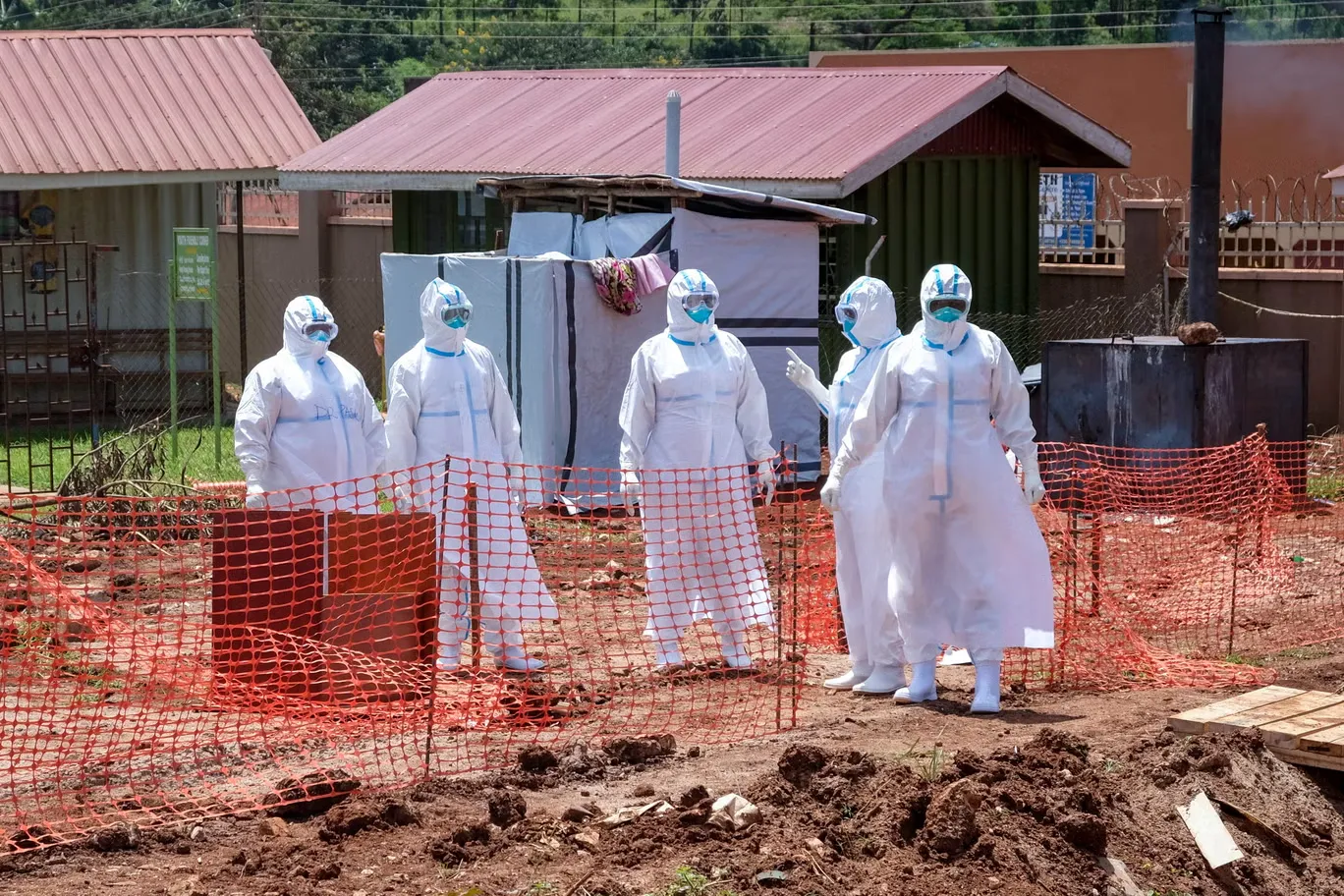
KAMPALA, Uganda — Uganda has confirmed two new Ebola virus disease cases in the capital Kampala, both involving Congolese nationals, bringing the country’s cumulative number of infections to nine, including one death, according to the Ministry of Health.
The confirmation signals continued cross-border transmission risks as authorities intensify surveillance, contact tracing, and isolation measures in the city and surrounding districts.
The development was announced on Friday by the Ministry of Health, which said rapid response teams had swiftly isolated one of the patients after they developed symptoms consistent with Ebola. The second case was identified through ongoing contact tracing as a close contact of an earlier confirmed patient.
Health officials said both patients are Congolese nationals and were detected in Kampala, where surveillance has been heightened due to increased population movement between Uganda and the Democratic Republic of Congo.
The ministry said all contacts linked to the newly confirmed case have been traced and placed under close monitoring to prevent further spread.
“All contacts of this new confirmed case have been identified and are under close follow up,” the ministry said in its statement.
The confirmation brings Uganda’s total Ebola infections to nine, with one recorded fatality since the outbreak was first detected.
The new infections in Kampala have raised concern among health authorities, given the risk of urban transmission in densely populated areas with high mobility and informal settlements.
Kampala, Uganda’s capital and largest city, is a key transport and commercial hub, increasing the potential for rapid disease spread if containment measures are not effectively maintained.
Ugandan health teams have expanded active surveillance in health facilities, reinforced screening at border points, and scaled up community engagement to encourage early reporting of symptoms.
The Ministry of Health has urged members of the public to remain vigilant and immediately report any symptoms associated with Ebola virus disease.
These include sudden onset of fever, intense fatigue, muscle pain, vomiting, diarrhoea, and unexplained bleeding.
Health officials emphasized that early detection and timely medical intervention significantly improve survival rates and reduce transmission risks.
Uganda’s latest cases underscore persistent cross-border health challenges between Uganda and the Democratic Republic of Congo (DRC), where Ebola outbreaks have repeatedly emerged in recent years.
Frequent movement between border communities for trade, family visits, and economic activity continues to complicate containment efforts despite strengthened screening and surveillance systems.
Public health authorities have repeatedly warned that porous borders and delayed case detection in remote areas remain key drivers of transmission.
Ugandan health authorities, working with international partners, continue to implement contact tracing, isolation of confirmed cases, and heightened monitoring of suspected infections.
Also Read: Uganda bans concerts, rallies and public events to contain Ebola
The government has also strengthened coordination with local leaders and health workers to improve community awareness and reduce misinformation surrounding the outbreak.
While the situation remains under active control, officials caution that continued vigilance is necessary to prevent further spread, particularly in urban centres.
The Ministry of Health reiterated that anyone experiencing symptoms should seek immediate medical attention rather than self-medicating or delaying treatment.
Uganda has experienced multiple Ebola outbreaks in the past, and health authorities maintain that rapid response systems and community surveillance remain critical tools in controlling transmission.
The current situation continues to be closely monitored as regional health agencies coordinate efforts to limit further cross-border spread.
