


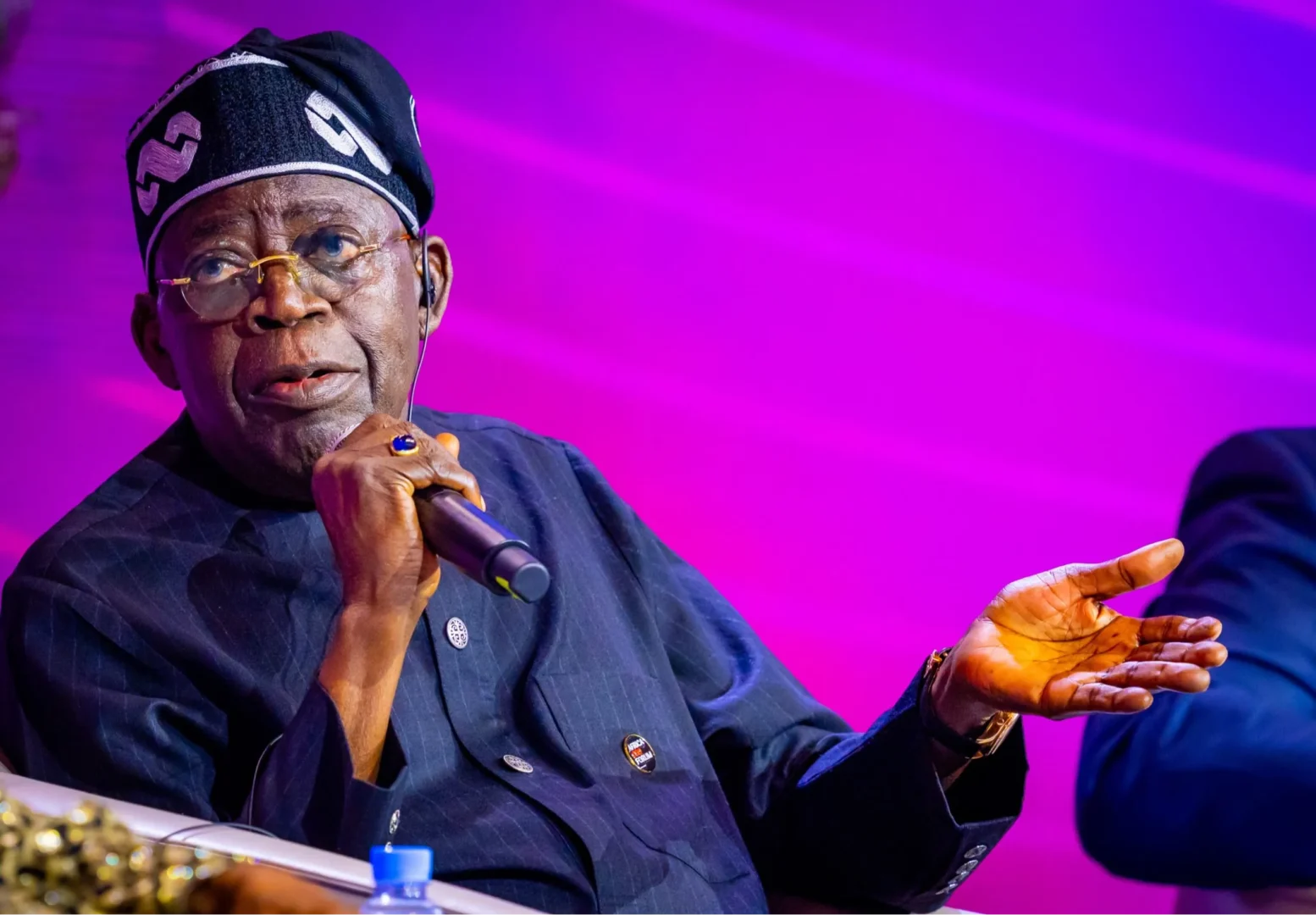
ABUJA, Nigeria — Nigerian President Bola Ahmed Tinubu on Friday defended his administration’s sweeping economic reforms, saying they had stabilised Africa’s largest economy and restored investor confidence despite mounting pressure on households facing one of the country’s worst cost-of-living crises in decades.
In a statement marking three years since taking office, Tinubu said difficult policy decisions implemented since 2023 were beginning to produce macroeconomic gains, including stronger public finances, increased infrastructure investment, and renewed market confidence.
“Today, I can say with confidence that Nigeria has stabilised and is moving forward again. Across the country, visible progress is taking shape,” Tinubu said.
The Nigerian leader, who is expected to seek re-election in January, pointed to a sharp rise in stock market performance, expanding infrastructure projects, and renewed investment in the oil and gas sector as evidence that reforms were starting to reshape the economy.
Painful reforms trigger economic shock
Since assuming office in 2023, Tinubu’s administration has implemented a series of aggressive economic reforms aimed at addressing long-standing fiscal pressures and foreign exchange imbalances.
The measures included the removal of a costly petrol subsidy, cuts to electricity subsidies, and the devaluation of the naira currency — moves economists said were necessary to stabilise government finances but which also triggered sharp increases in fuel prices, transport costs, electricity bills, and food inflation.
The reforms contributed to a severe cost-of-living squeeze that has left millions of Nigerians struggling with rising household expenses and declining purchasing power.
Despite the hardship, Tinubu insisted the reforms had laid the groundwork for long-term recovery.
“The foundation for recovery has been laid,” he said, urging Nigerians to remain patient as the benefits of the reforms gradually become more visible.
Government cites infrastructure and investor confidence
Tinubu highlighted what his administration described as signs of economic recovery, including a near fivefold increase in stock market performance to a record 250,000 points and rising market capitalisation.
He also said the government was investing heavily in infrastructure, with more than 2,700 kilometres of roads either under construction or undergoing rehabilitation across the country, alongside ongoing rail modernisation projects.
According to the president, reforms in the oil and gas sector have also helped attract fresh investment while boosting domestic refining capacity, reducing reliance on imported fuel and easing pressure on foreign exchange reserves.
Tinubu further revealed that efforts were ongoing to clear approximately 4 trillion naira in power sector debts while expanding electricity transmission infrastructure and generation capacity.
Improved electricity supply, he said, remained central to Nigeria’s industrial growth ambitions.
Security challenges remain
Beyond the economy, Tinubu said security agencies had intensified operations against armed groups, criminal gangs, and insurgent movements operating across different parts of the country.
Nigeria continues to face multiple security crises, including banditry in the northwest, communal violence in central states, separatist tensions in the southeast, and a prolonged Islamist insurgency in the northeast.
Also Read: Nigeria labels bandits as terrorists, launches $3.7bn ‘total war’ on crime
Attacks on military installations by militants have reportedly increased in recent months, underscoring the continued fragility of the security situation despite ongoing military operations.
Political pressure ahead of re-election
Tinubu’s remarks come as political pressure builds ahead of the next presidential election cycle, with opposition groups and civil society organisations increasingly scrutinising the social impact of the government’s economic programme.
While supporters argue the reforms were necessary to prevent deeper economic instability, critics say ordinary Nigerians are bearing the brunt of adjustment policies through rising inflation, unemployment pressures, and reduced affordability of essential goods.
The administration, however, maintains that stabilising the economy was unavoidable after years of subsidy-driven fiscal strain and foreign exchange distortions.
As Nigeria approaches another election season, the success or failure of Tinubu’s reform agenda is expected to remain one of the country’s defining political and economic debates.
