

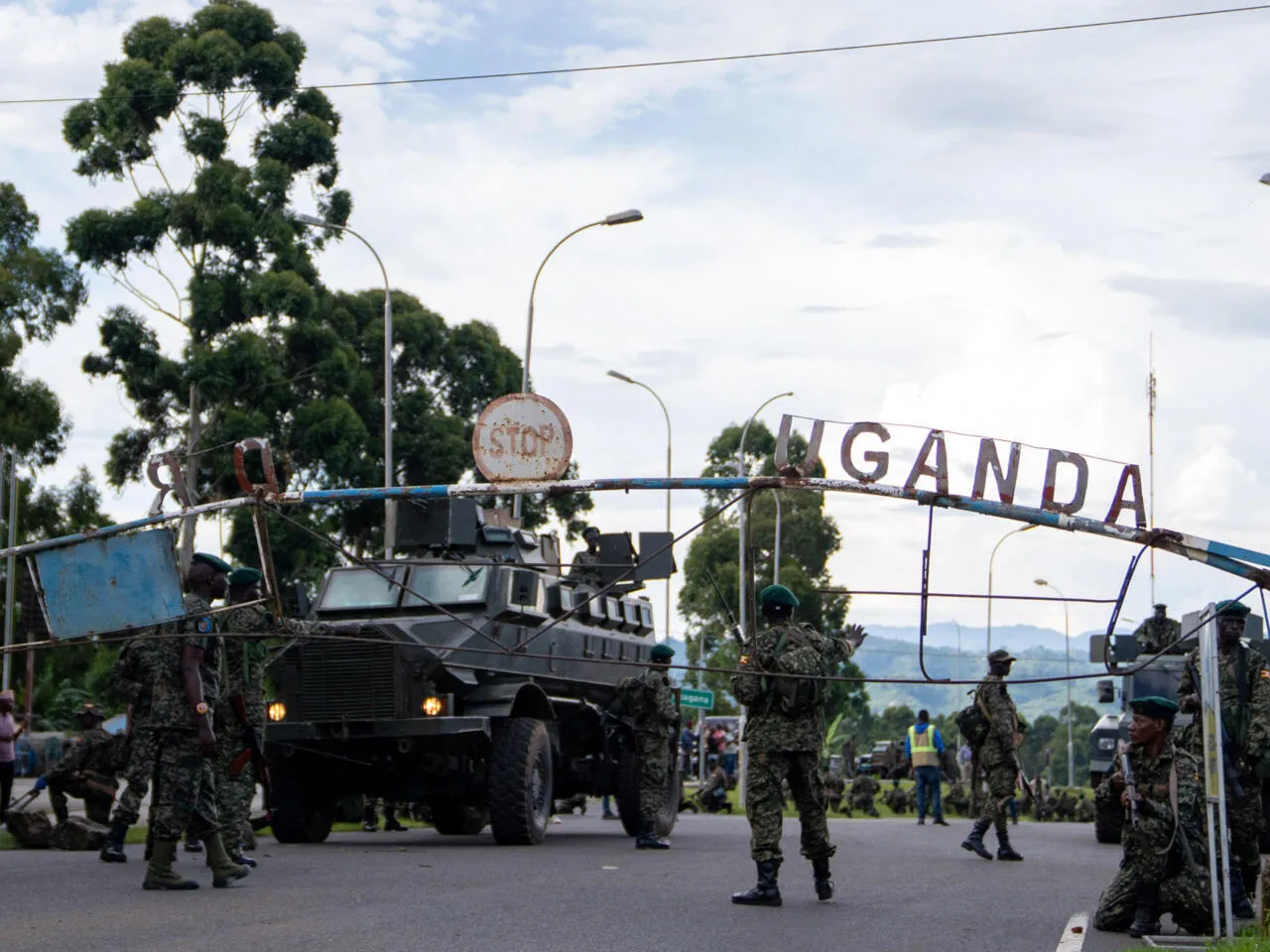
KAMPALA, Uganda — Ugandan authorities on Wednesday ordered the immediate closure of the border with the Democratic Republic of Congo (DRC) as suspected cases of a rare Ebola strain surged to nearly 1,000 in the neighbouring country, with additional cases also emerging within Uganda.
The decision, announced on Wednesday evening, comes after the Ministry of Health confirmed that the number of Ebola cases in Uganda has increased to seven, including one death.
Permanent Secretary at the Ministry of Health, Dr Diana Atwine, said the government had activated nationwide containment protocols targeting border points, schools, media houses and local administrative units.
“Uganda is temporarily closing the border with the DRC with immediate effect,” Atwine said in a statement seen by Vivid Voice News.
She added that limited exemptions would apply to authorised Ebola response teams, humanitarian operations, essential cargo transport and security movements, all subject to strict health screening procedures.
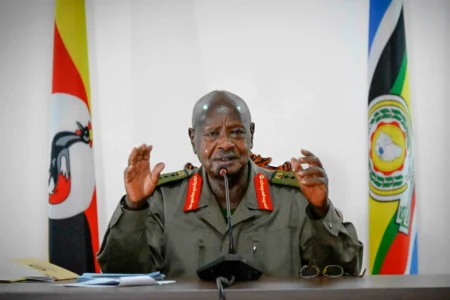
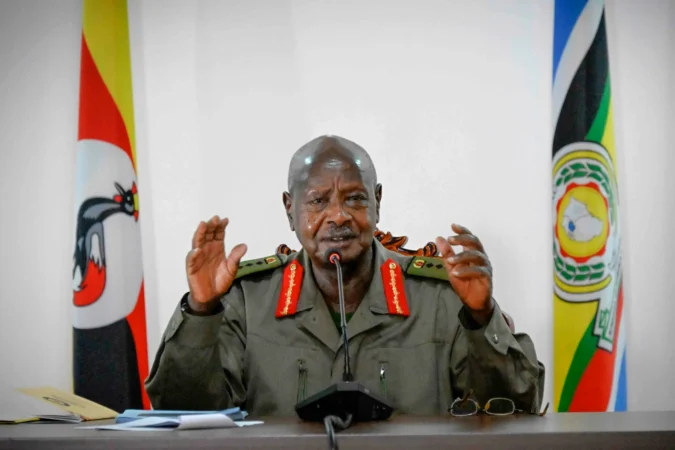
The move was reinforced by Chief of Defence Forces (CDF) Gen Muhoozi Kainerugaba, who said security agencies had already begun sealing off crossing points along the border.
“The security forces are sealing our entire border with the DRC until further notice. No movement of people between the two countries is permitted,” Gen Muhoozi posted on X.
He warned that attempts to breach the directive would endanger lives, citing the ongoing Ebola outbreak in the DR Congo.
The closure marks one of Uganda’s most stringent border control measures in recent years, reflecting heightened concern over cross-border transmission in a region where movement between Uganda and eastern Congo is frequent among traders, refugees and transport operators.
Dr Atwine said all authorised entrants would undergo mandatory health screening, completion of locator forms and continuous monitoring at designated entry points.
She also announced that any person entering Uganda from the DRC would be required to observe a 21-day self-isolation period under supervision of health and district surveillance teams.
In border districts, schools have been instructed to remain open but to strictly enforce Ebola prevention guidelines. School administrators must identify learners who recently returned from the DRC and monitor their temperature daily for 21 days.
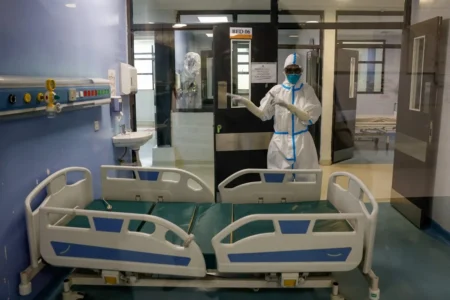
Health authorities further directed that designated facilities be established to isolate students who develop symptoms such as fever during the monitoring period.
Resident District Commissioners (RDCs) and Resident City Commissioners (RCCs) have been tasked with enforcing compliance with all Ebola prevention measures issued by the Ministry of Health and the National Task Force.
In a major public communication directive, the government ordered all media houses to allocate at least 30 minutes of daily prime-time programming to Ebola awareness campaigns.
“All media houses are required to dedicate at least thirty (30) minutes of prime-time programming daily to public education and sensitisation on Ebola prevention, detection, and reporting,” Atwine said.
Members of the public have been urged to remain calm but vigilant and to report any suspected symptoms to the nearest health facility or through the Ministry of Health toll-free line 0800-100-066.
Also Read: US announces $13m Ebola response package for Uganda and DR Congo
Although no new confirmed cases have been reported since May 25, officials say the number of contacts linked to infected individuals continues to rise, many of them health workers.
Uganda currently has a total of seven confirmed cases and one death linked to the outbreak.
The country has previously experienced several Ebola outbreaks but is widely regarded as having one of Africa’s most robust response systems, anchored on aggressive contact tracing, surveillance and rapid isolation.
According to the World Health Organization (WHO), Ebola is a severe and often fatal disease, with case fatality rates ranging from 25 to 90 percent depending on the outbreak and speed of response. Since its discovery in 1976, Ebola has caused more than 15,000 deaths globally.