


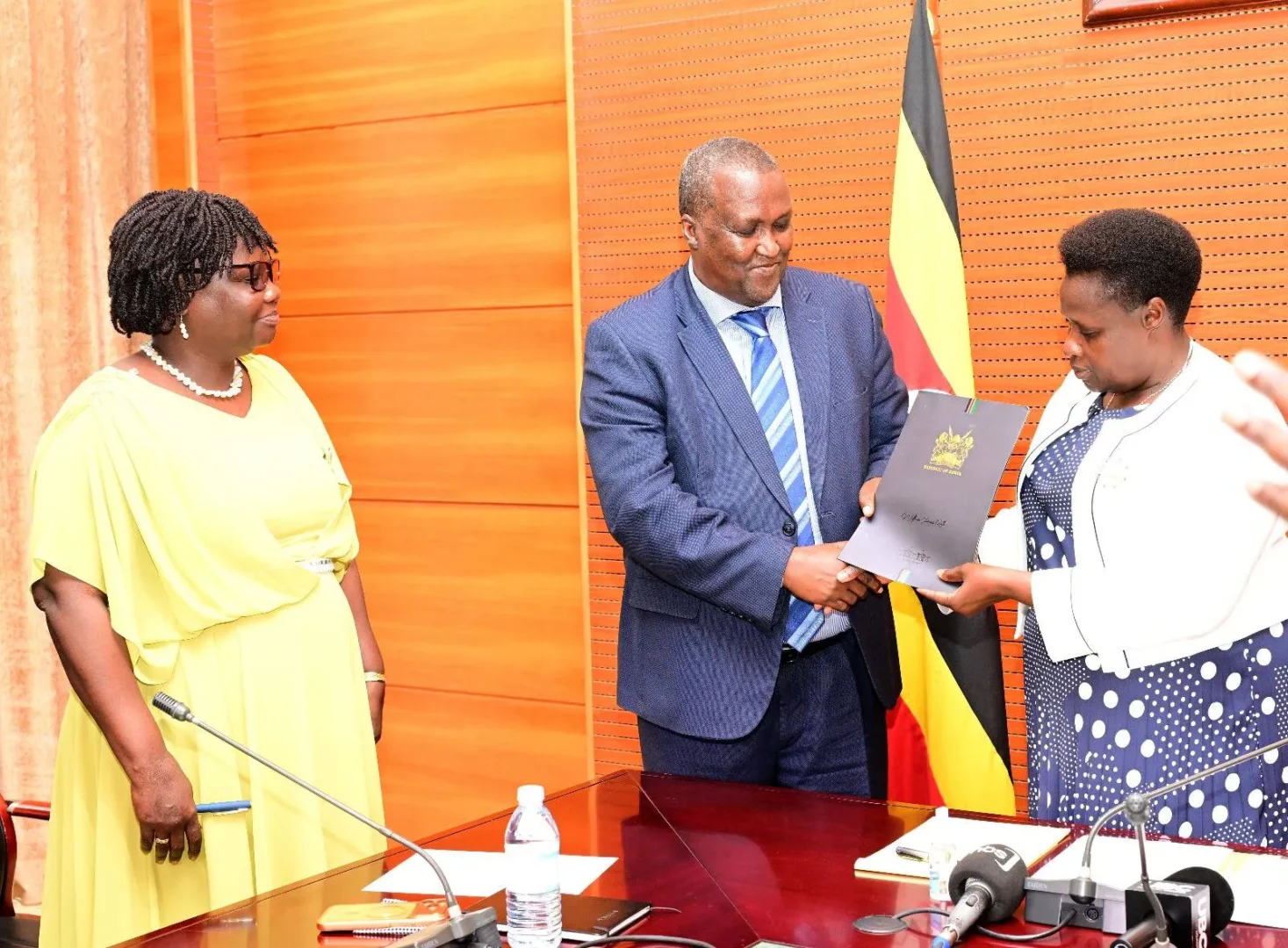
KAMPALA, Uganda — Kenya and Uganda have agreed on a cultural reconciliation roadmap to address the 2022 killing of three Ugandan geologists and two Uganda People’s Defence Forces (UPDF) soldiers in Karamoja, in a move aimed at easing cross-border tensions and restoring community relations.
The framework, known as “Okukaraba”, was unveiled during high-level talks in Kampala between Ugandan officials and a Kenyan delegation led by John Munyes Kiyonga, who delivered a special message from President William Ruto to President Yoweri Kaguta Museveni.
Shift from judicial to cultural justice
Under the Okukaraba framework, both governments agreed to pursue reconciliation, compensation and restoration of relations through a culturally grounded justice mechanism, rather than relying solely on formal judicial processes.
The two countries also committed to establishing compensation arrangements for the families of the victims killed in the 2022 attack, which was attributed to suspected cross-border herders.
Uganda’s outgoing Vice President Jessica Alupo described Kenya’s engagement as a significant diplomatic step.
“This is not a small matter, and President Ruto’s decision to send a special envoy with a personal message speaks volumes about Kenya’s commitment to healing the wounds caused by this tragic incident,” she said.
Acknowledging accountability and reconciliation
Alupo said Uganda welcomed measures already taken by Kenyan authorities, including the neutralisation of suspected perpetrators and Nairobi’s acceptance of the Okukaraba framework proposed by President Museveni.
She described the killings as a national tragedy that affected not only the victims’ families but also Uganda’s scientific community and defence forces.
“The Okukaraba is not merely a cultural ceremony; it is a profound and recognised mechanism for justice, healing and the restoration of social harmony,” she said.
Compensation and implementation plans
Technical teams from both countries have been directed to begin immediate consultations on compensation structures, timelines and preparations for a formal reconciliation process.
“Time is of the essence, and the families who have waited four years deserve to see this resolved,” Alupo said.
She added that Uganda would handle the process in good faith, emphasising the need for closure for victims’ families and stability for border communities.
Alupo also called for a resolution regarding detained Turkana herders currently held in Uganda, saying they should be repatriated through a “dignified” process once the framework is implemented.
Wider bilateral cooperation
Beyond the reconciliation process, the talks also focused on strengthening broader bilateral relations between the two countries.
Officials discussed implementation of a Uganda-Kenya memorandum of understanding on resource sharing and cross-border cooperation, initially agreed in 2024 and reaffirmed during President Museveni’s state visit to Nairobi in July 2025.
Also Read: Ugandan ex-minister Agnes Nandutu jailed 4 years over Karamoja iron sheets scandal
The agreement is expected to provide a long-term framework for managing shared resources, improving cross-border trade and enhancing regional security coordination.
Technical teams have been tasked with developing a comprehensive settlement formula under the Okukaraba framework, including compensation packages to be agreed in consultation with Uganda’s Attorney General and affected families.
They are also expected to propose monitoring and implementation mechanisms for the bilateral agreements and submit recommendations to both heads of state within a defined timeline.
