


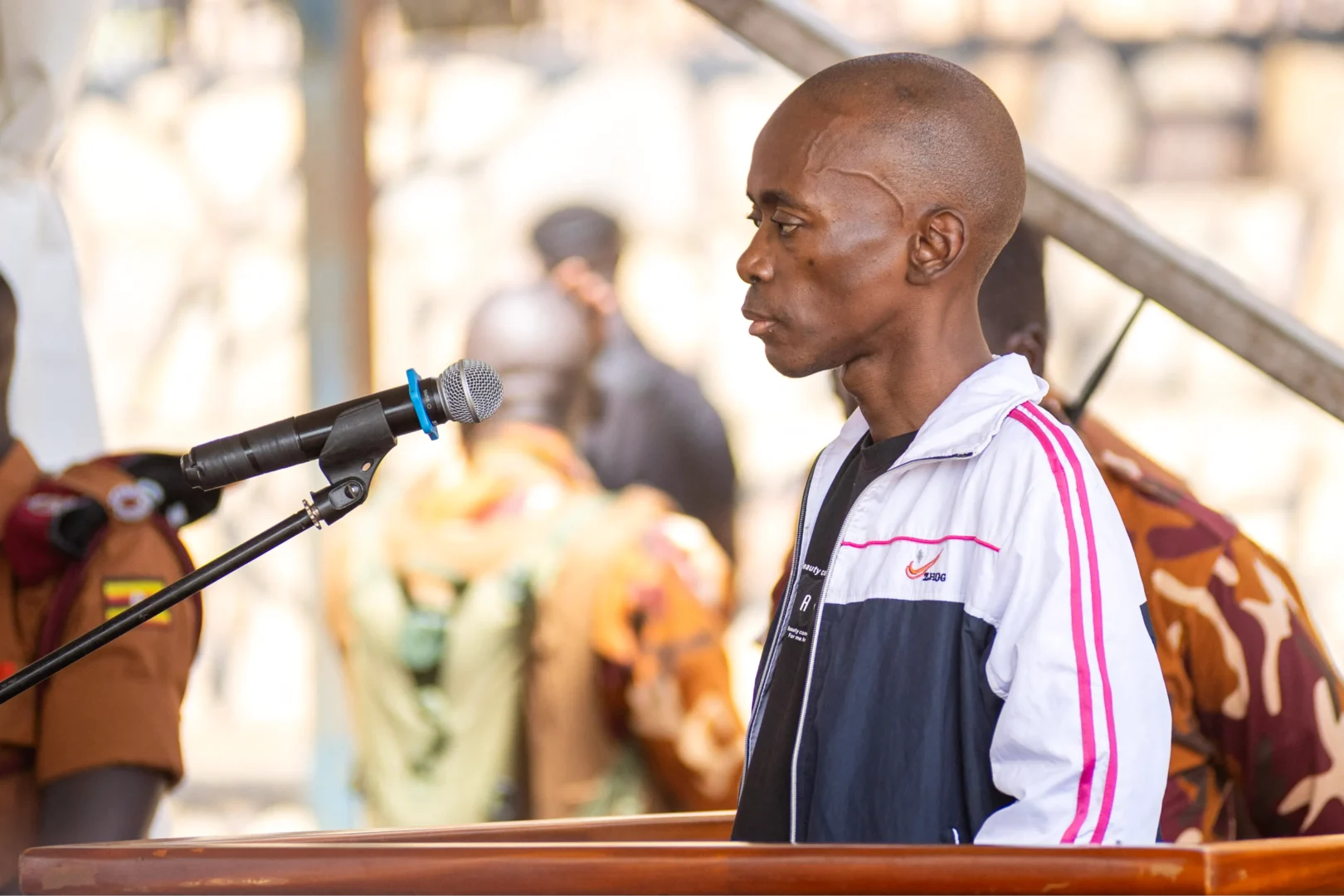
KAMPALA, Uganda — By the close of business on Thursday, Uganda is expected to receive a decisive ruling in one of its most disturbing recent criminal cases, as Christopher Okello Onyum, the prime suspect in the murders of toddlers at a daycare centre in Ggaba, learns his fate.
The judgment comes just 29 days after the country was shaken by the killings, in which Okello allegedly hacked four children, all under the age of three, to death. The case has triggered national outrage and renewed debate around child safety, mental health, and the administration of justice in high-profile crimes.
In an unprecedented move, authorities established a mobile court within the affected community, a decision widely seen as an attempt to bring justice closer to victims and restore public confidence.
The court has sat for ten days over a period of less than three weeks, following a directive from Yoweri Museveni ordering the judiciary to “take court to the people of Ggaba.”
Legal observers note that while mobile courts have occasionally been used in remote areas, deploying one in a high-profile murder trial marks a significant departure from conventional judicial practice in Uganda.
Okello, described as an American national of Ugandan descent, has faced testimony from 18 prosecution witnesses linking him to the killings. The defence, led by lawyer Richard Kumbuga, called only three witnesses, citing logistical challenges.
Central to the defence strategy is an insanity plea. Kumbuga urged the court to consider Okello’s mental health history, referencing a reported admission at Butabika National Referral Hospital in 2020 and seeking corroborating medical testimony.
However, lead prosecutor Jonathan Muwaganya rejected the claim, arguing that the accused’s past hospitalisation may have been calculated.
“The truth is that after killing his brother, the family took him to Butabika as they prepared to whisk him to the United States,” Muwaganya told court.
The prosecution further suggested that Okello had previously evaded accountability, raising the possibility of additional charges depending on the outcome of the current case.
The ruling, to be delivered by trial judge Alice Komuhangi Khaukha, is expected to hinge on a critical legal question: whether Okello was mentally incapacitated at the time of the killings or fully aware of his actions.
Also Read: Ggaba toddler murder suspect breaks down in court as key evidence is presented
Under Ugandan law, a successful insanity defence could significantly alter sentencing, potentially leading to confinement in a mental health facility rather than a conventional prison term.
The case has amplified scrutiny over systemic issues, including:
- Oversight of daycare centres and child protection frameworks
- The handling of mental health cases within the criminal justice system
- The balance between swift justice and due process
Legal analysts say the speed of proceedings, just under a month from incident to verdict, reflects increasing pressure on courts to deliver timely justice in cases that generate widespread public concern.
Whether the court prioritises psychiatric considerations or prosecutorial arguments, the outcome is likely to set an important precedent for how Uganda handles complex criminal cases involving mental health claims.
