


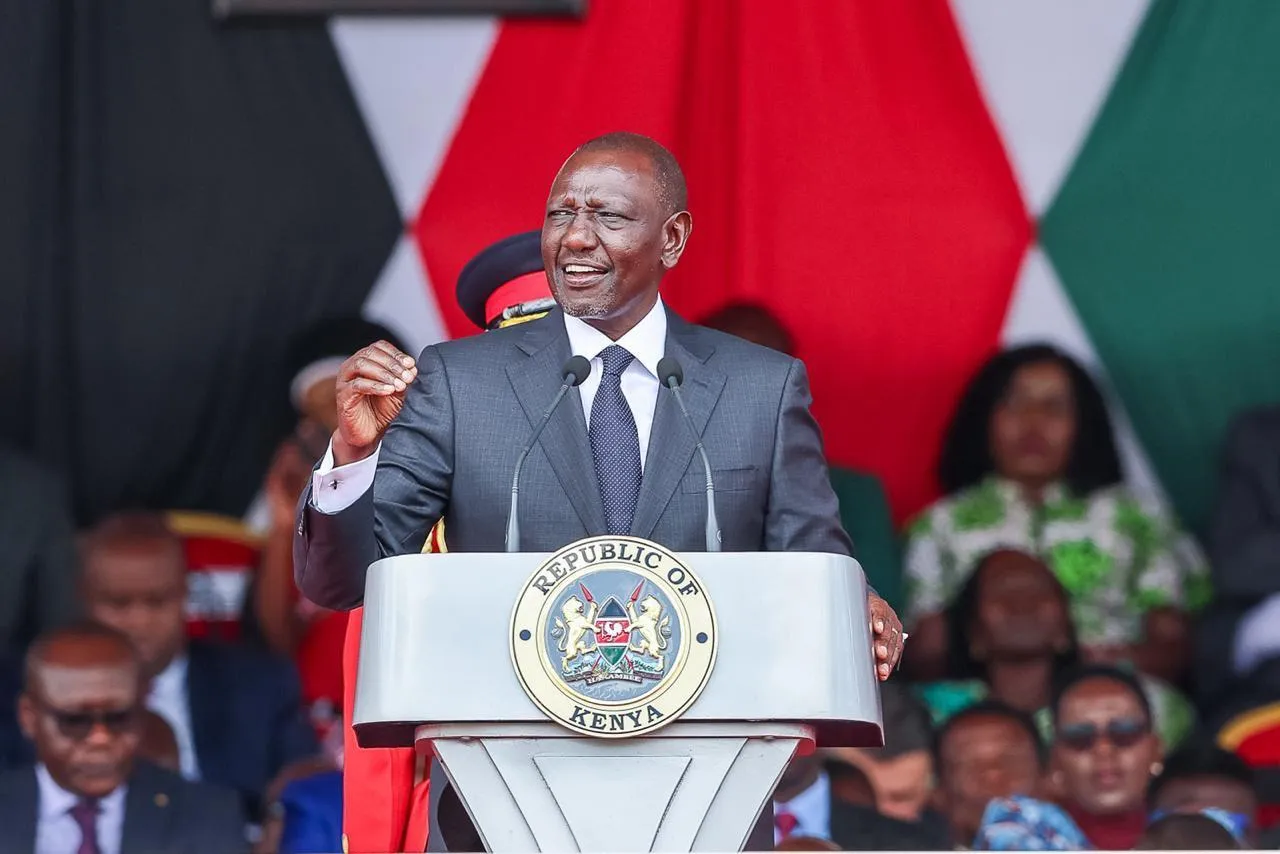
NAIROBI, Kenya — President William Ruto has announced a major policy shift aimed at reforming Kenya’s music industry, with the government moving royalty collection and distribution onto the eCitizen platform.
Speaking during the Kenya National Drama Festival State Concert at State House in Nairobi on Friday, the President said the move is designed to improve transparency and curb exploitation of artists by intermediaries.
“To ensure that those in the creative economy earn their rightful returns, we have also taken a major step by migrating the collection and distribution of music royalties onto e-Citizen,” Ruto said.
“This is a bold and transformative reform.”
Kenya’s creative sector has for years raised concerns over opaque royalty systems, with artists frequently alleging underpayment and lack of accountability by collective management organisations (CMOs).
“For too long, royalty collection has lacked transparency, and that is a statement of fact,” the President said.
He cited past discrepancies to highlight the scale of the problem, noting that in one instance a CMO collected Sh109 million on behalf of artists but distributed only Sh13 million.
“This means that the rightful beneficiaries, the artistes, only received 12 per cent while the cartels, the middlemen, the brokers, and everybody in between took the rest,” Ruto said.
“This is not only unfair, but it is also unjust,” he added.
Under the new system, stakeholders will be able to monitor royalty collections and distributions in real time, a move the government says will eliminate secrecy and improve accountability.
“Today, we are correcting that, making sure that collection of royalties happens on a transparent platform, so that it is possible to know how much money has been collected,” Ruto said.
He added that the platform will also provide visibility into how revenues are shared among stakeholders.
“It is open to everybody, and it is also possible to know how it has been distributed between all the stakeholders.”
The President emphasised that artists should be the primary beneficiaries of their work, with intermediaries playing a limited role.
“It is my position that the rightful owners of royalties are the artists, not the people collecting, not all the other people,” he said.
Also Read: eCitizen platform to introduce commercial adverts in major system upgrade
“They should just earn a small percentage.”
The move aligns with wider government efforts to digitise public services and strengthen oversight through platforms such as eCitizen, which already hosts thousands of government services.
Industry observers say the success of the reform will depend on implementation, regulatory enforcement, and whether existing collective management structures are integrated or restructured.
The announcement comes amid increasing pressure from artists and industry stakeholders for reforms to address long-standing governance issues within Kenya’s music sector.
If effectively implemented, analysts say the changes could significantly reshape the country’s creative economy by improving earnings, restoring trust, and formalising revenue flows.
