


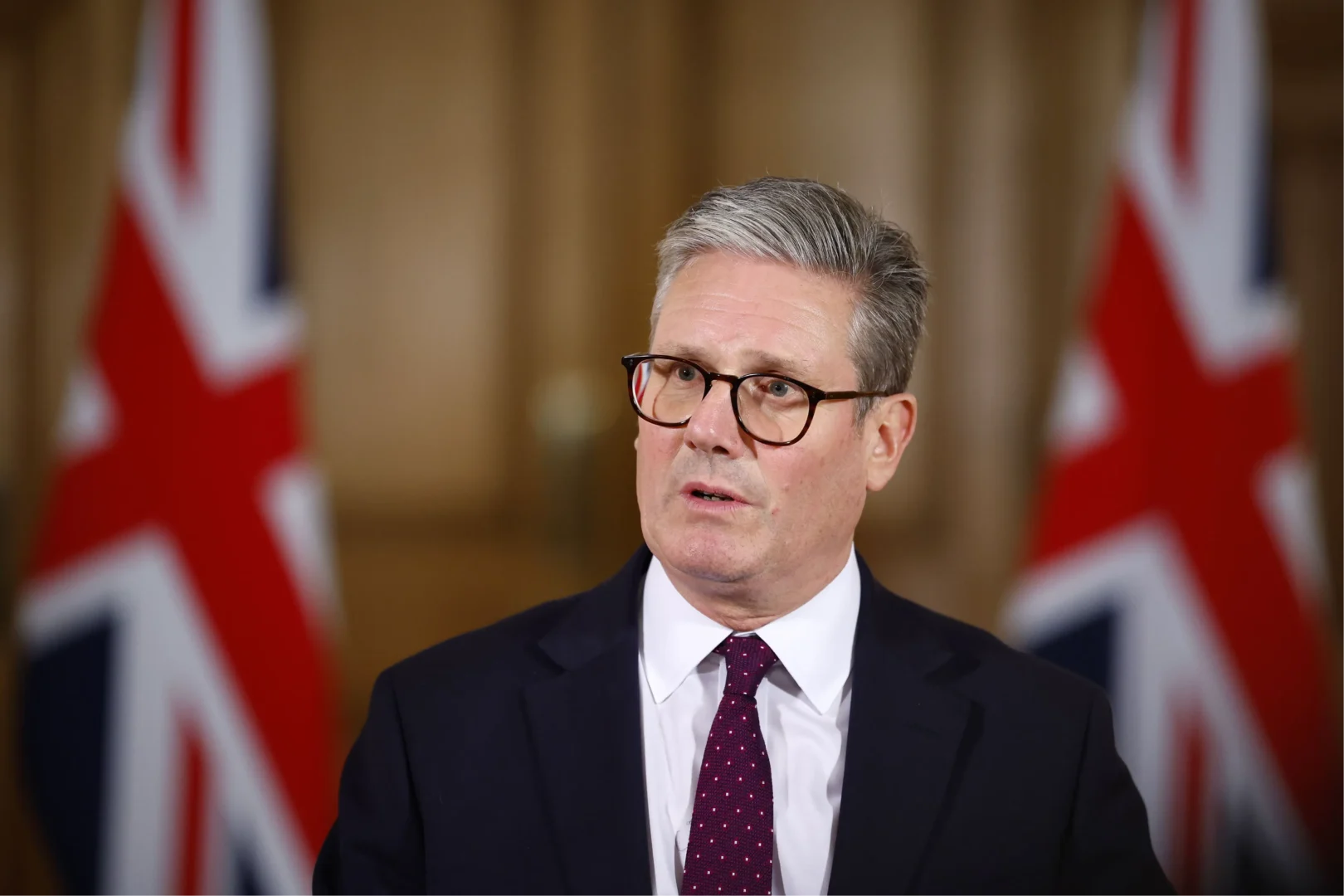
UK Prime Minister Keir Starmer has welcomed a breakthrough ceasefire between Iran and the United States, describing it as a critical opportunity to stabilise one of the world’s most volatile regions.
Speaking during an official visit to Gulf states, Sir Keir said the agreement offered “a moment of relief to the region and the world,” while cautioning that sustained diplomatic engagement would be essential to prevent a relapse into conflict.
“I welcome the ceasefire agreement reached overnight, which will bring a moment of relief to the region and the world,” he said.
“Together with our partners we must do all we can to support and sustain this ceasefire, turn it into a lasting agreement and reopen the Strait of Hormuz.”
The truce follows weeks of escalating hostilities that raised fears of a broader regional war, with global energy markets particularly exposed. Central to the agreement is the reopening of the Strait of Hormuz, a narrow but vital waterway through which roughly 20% of global oil supplies pass.
The blockade had triggered sharp spikes in crude oil prices, intensifying inflationary pressures worldwide and amplifying cost-of-living concerns from Europe to Africa.
Sir Keir is expected to use his Gulf tour to rally international backing for mechanisms that will safeguard maritime security and ensure uninterrupted energy flows. Downing Street confirmed he will “discuss diplomatic efforts to support and uphold the ceasefire” before returning to the UK.
The ceasefire was secured under mounting pressure from former US President Donald Trump, who had issued stark warnings to Tehran, saying “a whole civilisation will die” if Iran failed to agree to terms and unblock the strategic corridor.
In a post on Truth Social, Trump said the deal remained contingent on Iran agreeing to the “COMPLETE, IMMEDIATE, and SAFE OPENING of the Strait of Hormuz.”
Iran signalled conditional acceptance. Foreign Minister Abbas Araghchi stated that Tehran would comply “if attacks against Iran are halted,” adding that safe passage through the strait would be guaranteed for a two-week period.
In London, the opposition Conservative Party cautiously endorsed the agreement. Shadow housing secretary James Cleverly described the ceasefire as a pivotal moment for Iran.
He said the pause in hostilities was an “opportunity for Iran to make some serious choices” about its conduct domestically and internationally.
Cleverly reiterated that preventing Iran from acquiring nuclear weapons remains an “absolute priority,” adding: “So we’ll welcome this two-week ceasefire, but it’s time that mustn’t be wasted.”
The conflict, which erupted in February, followed coordinated strikes by US and Israeli forces targeting Iranian facilities amid intelligence concerns over Tehran’s nuclear ambitions.
Iran retaliated with missile and drone attacks across the Gulf, targeting both military and economic infrastructure.
The standoff rapidly evolved into a global economic concern, with disruptions in shipping lanes and rising fuel costs underscoring the strategic importance of the region.
Also Read: Why the US and Israel attacked Iran — and what it means for a potential war
In response, the UK convened a virtual summit involving more than 40 countries to coordinate maritime security efforts, followed by a military planning conference aimed at protecting post-conflict shipping routes.
While the ceasefire has temporarily eased tensions, analysts warn that its conditional nature and limited timeframe leave the situation precarious.
Diplomatic sources suggest that failure to reach a broader agreement within the two-week window could see hostilities resume.
For now, global attention remains fixed on whether this fragile pause can evolve into a durable settlement, one that not only stabilises the Gulf but also addresses the deeper nuclear and security concerns at the heart of the conflict.
