


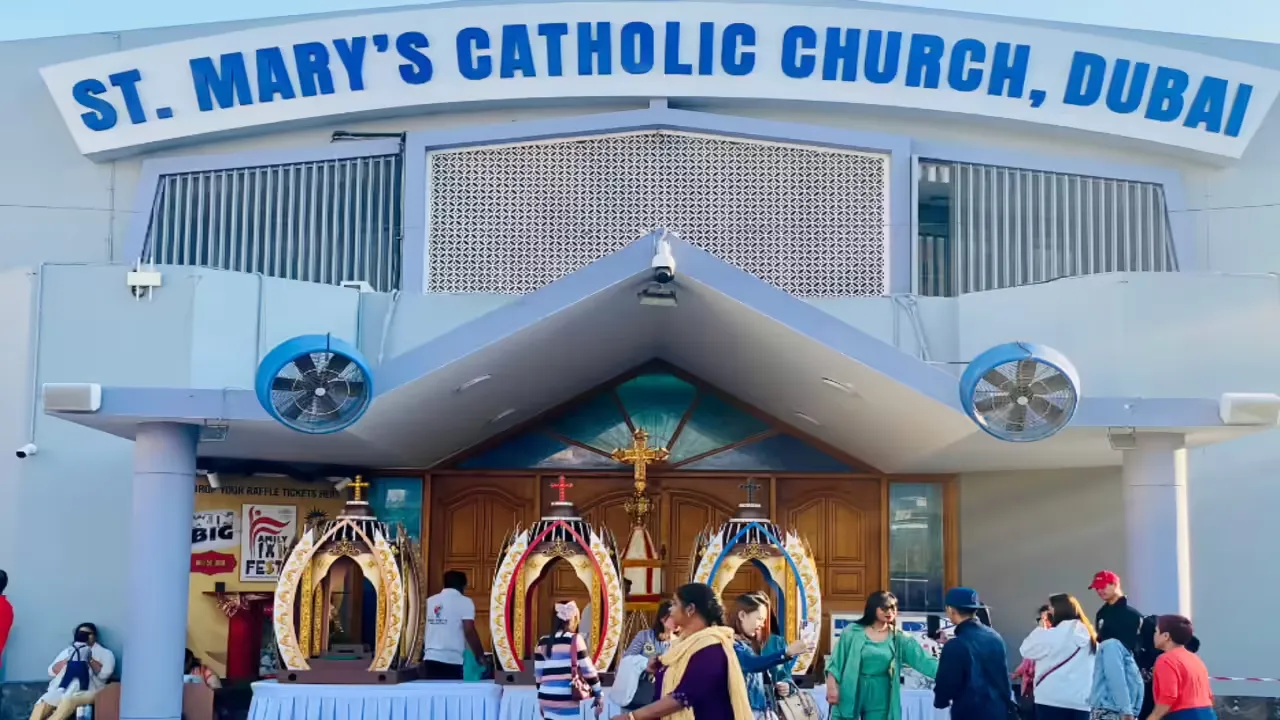
DUBAI, United Arab Emirates — Catholic churches in Dubai have cancelled public worship services ahead of the Easter period, citing security concerns linked to the escalating conflict in the Middle East.
In notices published on Friday, two of the emirate’s largest parishes confirmed the cancellation of all masses, in compliance with government safety directives.
St Francis of Assisi Church announced on its website that, following official instructions, “all Masses at our Church are cancelled until further notice.”
The church, located in the Jebel Ali area, urged worshippers to prioritise safety, adding: “Parishioners are requested to refrain from visiting the Church premises, in the interest of safety and community well-being.”
A similar announcement was issued by St Mary’s Catholic Church, which confirmed that its Good Friday service would instead be conducted virtually via its YouTube channel.
The precautionary measures come against the backdrop of a rapidly deteriorating security situation in the region. The coastal Jebel Ali area has reportedly experienced multiple missile and drone incidents in recent days, linked to retaliatory strikes by Iran targeting Gulf-linked assets.
The escalation follows a major military offensive launched on February 28 involving Israel and the United States, significantly heightening tensions across the Gulf.
While the United Arab Emirates has not been a direct combatant, authorities have stepped up precautionary measures, particularly around critical infrastructure and densely populated areas, including places of worship.
Also Read: President Ruto urges unity, hope and faith in Easter message to Kenyans
The suspension of masses in Dubai marks a rare disruption of Easter observances in the UAE, which is home to a large expatriate Christian community. Churches in the country typically see some of their highest attendance during Holy Week.
Religious leaders have increasingly turned to digital platforms to maintain engagement with congregants, reflecting a broader shift seen during previous crises such as the COVID-19 pandemic.
Analysts say the move underscores the far-reaching civilian impact of the ongoing conflict, with religious, commercial, and social activities increasingly affected by security concerns.
As tensions persist, authorities across the Gulf are expected to maintain heightened alert levels, raising the possibility of further restrictions on public gatherings in the coming days.
