


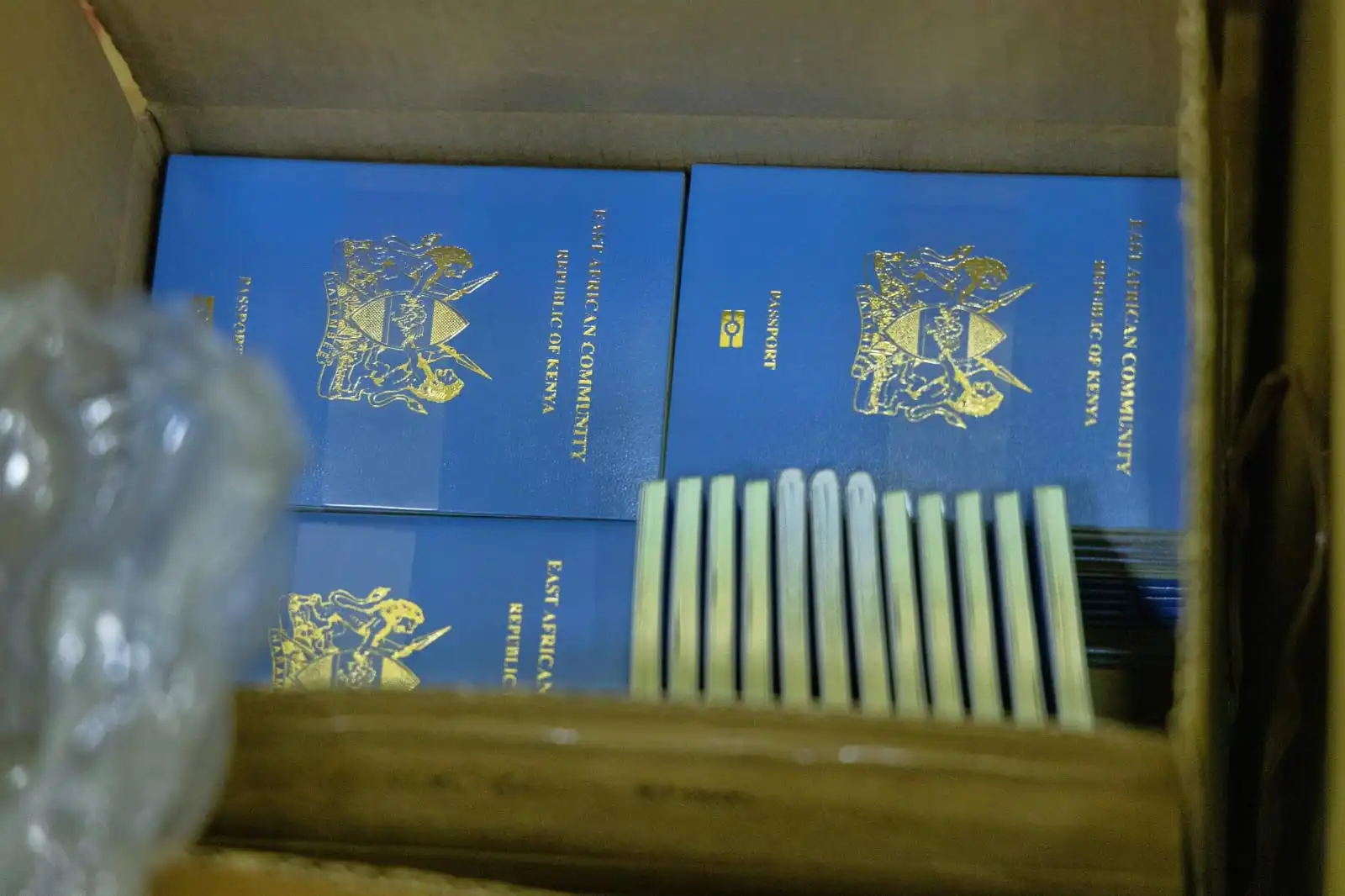
NAIROBI, Kenya — The Kenyan government is facing mounting scrutiny after leaked documents suggested that individuals linked to Sudan’s paramilitary Rapid Support Forces (RSF) may have obtained Kenyan passports through irregular processes.
Nearly a week after the allegations surfaced, the Ministry of Interior and the Department of Immigration have yet to publicly explain how Kenyan travel documents allegedly ended up in the hands of foreign nationals connected to a force accused of atrocities in Sudan.
At the centre of the controversy is an internal document from the Department of Immigration, which reportedly listed several names, mostly Sudanese nationals, alongside Kenyan passport tracking numbers.
The leak emerged around the same time the United States expanded sanctions against figures associated with the Rapid Support Forces, including senior officials accused of human rights abuses in the Darfur region.
A Kenyan passport is both a travel document and formal recognition of citizenship, conferring constitutional protections and access to state services. Any irregular issuance, legal experts warn, raises significant national security and diplomatic concerns.
Alleged beneficiaries
Among those reportedly named is Algoney Hamdan Dagalo, a senior RSF official sanctioned by the United States. He is a brother of RSF commander Mohammed Hamdan Dagalo, widely known as Hemedti.
The RSF has been repeatedly accused by international rights groups and the United Nations of involvement in killings, sexual violence and ethnic targeting during Sudan’s ongoing conflict.
Also said to appear on the list is Zimbabwean businessman Wicknell Chivayo, a high-profile figure who frequently visits Kenya and who has faced scrutiny in Zimbabwe over government-linked contracts.
Allegations that he may have acquired Kenyan citizenship through questionable channels have intensified calls for transparency.
The Department of Immigration has not publicly confirmed the authenticity of the leaked document.
Official silence
Five days after the revelations triggered public outrage, the issuing authority has remained silent. Director General Everlyne Cheluget attended a public function in the days following the leak but did not address the controversy.
Interior Cabinet Secretary Kipchumba Murkomen has also not issued a statement, despite growing pressure from civil society groups, lawyers and members of the public.
The silence has fuelled speculation and heightened demands for accountability, particularly given Kenya’s stated commitment to regional stability and international law.
Legal and constitutional questions
Lawyer Wahinya, who launched an online campaign seeking clarification from immigration authorities, visited Nyayo House to request an audience with Cheluget.
Invoking Article 35 of the Constitution, which guarantees the right to access information, he argued that Kenyans are entitled to know how the named individuals obtained citizenship documentation.
Under the Kenya Citizenship and Immigration Act, foreign nationals applying for citizenship must submit documentation through the Foreign Nationals Management Information System (FNMIS).
Applications are subjected to background checks and security vetting by the National Intelligence Service before a final decision is made by the Cabinet Secretary.
Successful applicants are then formally registered in the national population database prior to passport issuance.
If confirmed, the alleged issuance of passports to RSF-linked figures would raise questions about whether the established vetting process was bypassed or manipulated.
Regional and diplomatic implications
Sudan has been engulfed in conflict since April 2023, when fighting erupted between the Sudanese Armed Forces and the RSF.
The war has displaced millions and drawn international condemnation over alleged war crimes, particularly in Darfur.
The United States and the European Union have imposed sanctions on individuals tied to the RSF, citing responsibility for atrocities.
Also Read: Pressure mounts on Kenya over claims foreign nationals received passports
Any suggestion that Kenya may have inadvertently, or deliberately, facilitated mobility for sanctioned figures risks straining diplomatic relations and undermining Nairobi’s position as a regional mediator.
Security analysts note that passport integrity is central to international travel agreements and intelligence cooperation. Allegations of compromised documentation could invite heightened scrutiny of Kenyan travel documents abroad.
Civil society organisations and constitutional lawyers argue that transparency is essential to restore public trust. The longer authorities remain silent, observers say, the more reputational damage the country risks.
With no official clarification forthcoming, pressure continues to build for a comprehensive investigation into the alleged passport approvals and the role of any officials involved.
