


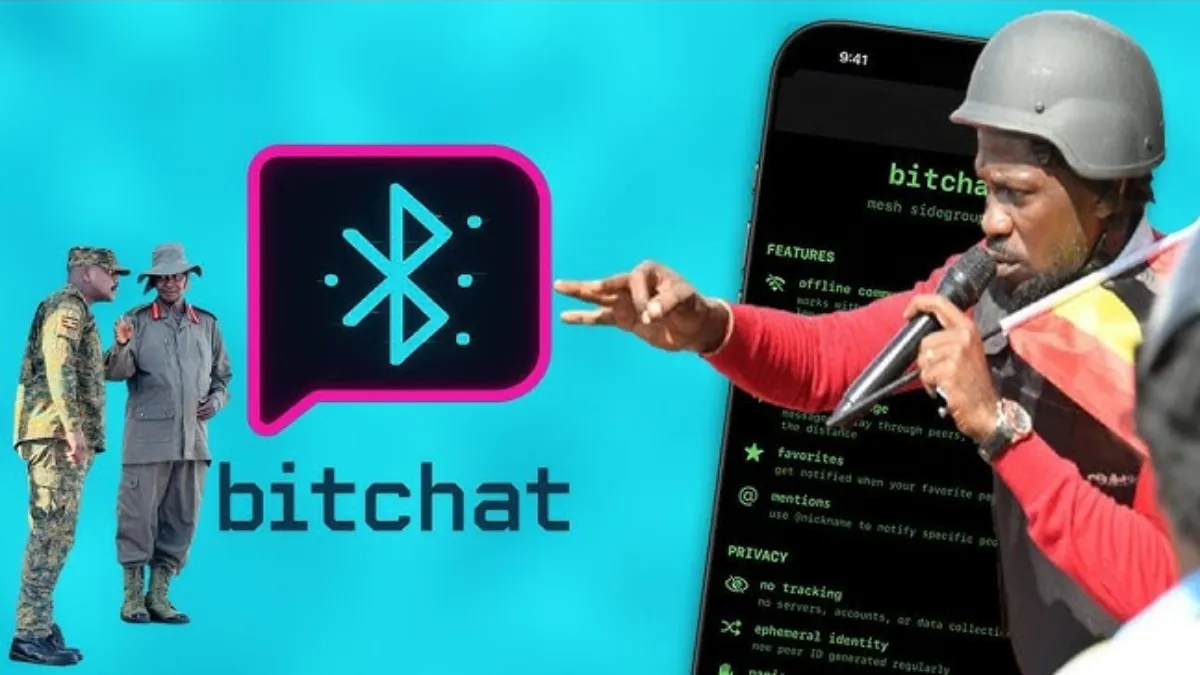
KAMPALA, Uganda — Uganda’s opposition leader Robert Kyagulanyi, popularly known as Bobi Wine, has called on his supporters to prepare for a potential government-imposed internet shutdown ahead of the January 14, 2026 general elections, urging them to download Bitchat, a decentralized messaging application capable of operating without internet connectivity.
Speaking during an address to supporters this week, the National Unity Platform (NUP) leader warned that President Yoweri Museveni’s government could again disable social media and internet services during the election period, citing past disruptions that severely limited communication, election monitoring, and information flow.
“They have done it before, and they can do it again,” Wine cautioned, referring to previous election cycles marked by sweeping digital blackouts.
A history of internet shutdowns
Uganda has a documented history of restricting internet access during politically sensitive moments. The most notable case occurred during the January 2021 elections, when the government enforced a four-day nationwide internet blackout, shutting down social media platforms and most online services.
Authorities at the time claimed the shutdown was necessary for national security. However, human rights organizations, election observers, and opposition leaders argued that the blackout suppressed free expression, hindered election transparency, and obstructed real-time reporting of events on the ground.
Bobi Wine now says the same tactic could be deployed again in 2026.
What is Bitchat?
Bitchat, launched in July 2025 by Twitter co-founder Jack Dorsey, is a decentralized, peer-to-peer messaging platform designed to function without internet or cellular networks.
The application allows users to communicate directly with nearby devices using Bluetooth mesh networking, enabling the transmission of text messages, images, and files even when conventional communication infrastructure is unavailable.
Unlike mainstream messaging services, Bitchat does not require phone numbers, email addresses, or centralized servers, making it particularly difficult for authorities to monitor, block, or shut down.
The app gained international attention after being widely adopted during recent protests in Madagascar and Nepal, where demonstrators continued organizing and sharing information despite internet disruptions imposed by authorities.
Lessons from a previous election App
This is not the first time Bobi Wine has turned to technology to counter information restrictions.
During Uganda’s previous election cycle, his movement introduced a homegrown election-monitoring application named “U Vote” intended to help citizens document and transmit voting irregularities in real time.
However, the effort was severely undermined when the government imposed the nationwide internet blackout, rendering the platform largely unusable at the most critical moment of the vote.
The experience, Wine says, exposed the vulnerability of digital tools that depend on continuous connectivity.
With Bitchat’s offline capabilities, the opposition leader hopes to close that gap.
Digital strategy meets political reality
Wine’s appeal underscores the growing role of digital resilience in modern African elections, where technology is now both a tool of political mobilization and a potential target of state control.
Also Read: Starlink and Uganda’s 2026 election battle: Who controls the internet controls the vote
By encouraging supporters to adopt offline communication infrastructure ahead of time, the opposition aims to maintain coordination, preserve evidence of electoral conduct, and sustain public engagement even under restrictive conditions.
The Ugandan government has not responded to Wine’s latest remarks.
As the country enters the final months before the 2026 polls, the warning highlights not only the political stakes of the election, but also the expanding battlefield of information, connectivity, and digital freedom in East Africa’s largest political contest in decades.
