


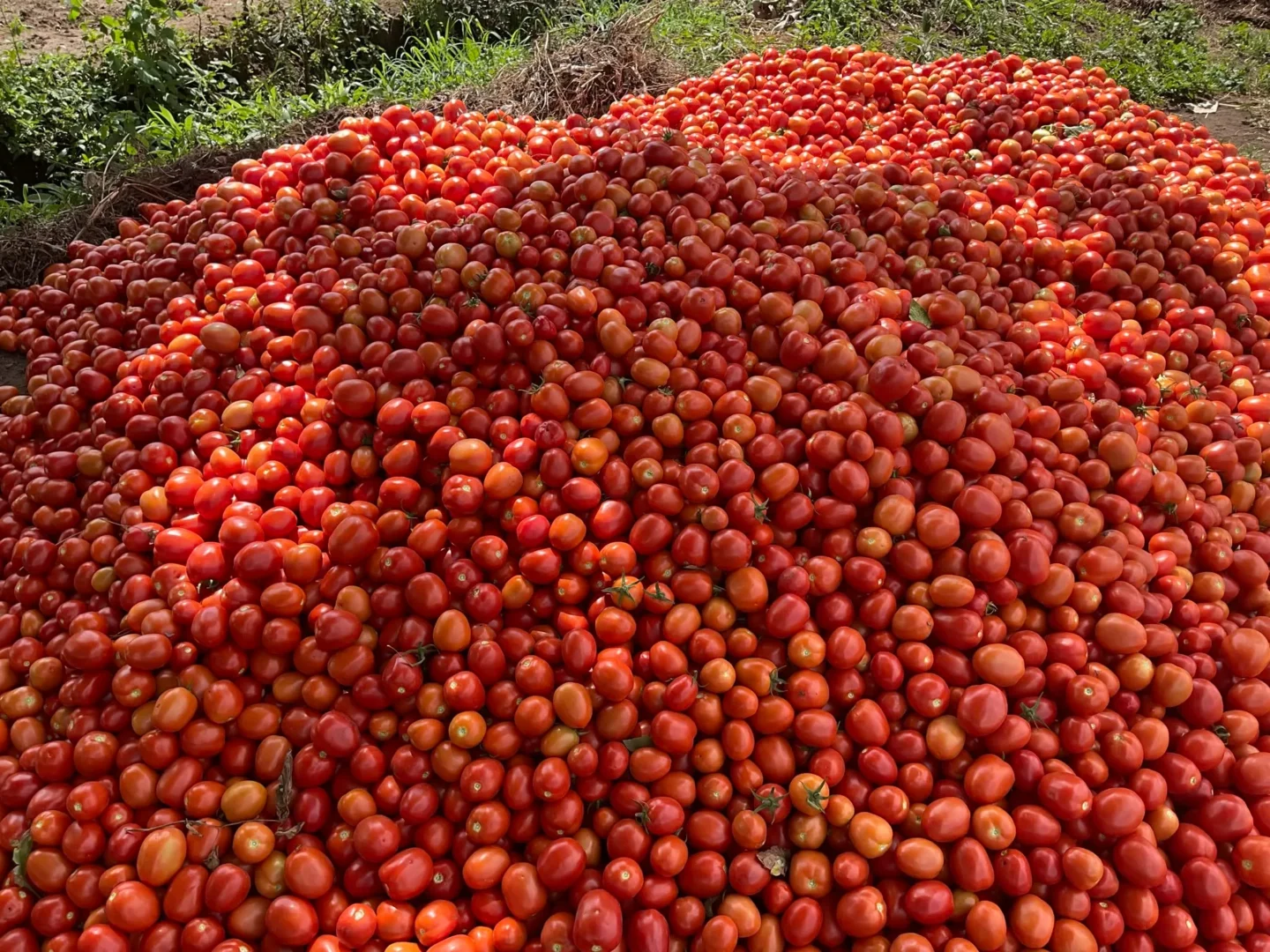
KAMPALA, Uganda — Fresh tomatoes displayed in market stalls are usually judged by their colour, firmness and appearance. But revelations from traders in Kampala have raised concerns about what may be happening to some of the produce after it leaves the farm and before it reaches consumers’ kitchens.
Traders at Nateete Market have admitted applying pesticides to tomatoes and other fresh produce to keep them looking fresh for longer, prompting renewed calls for stronger government action against the misuse and sale of counterfeit agricultural chemicals.
The admissions emerged during a food safety sensitisation campaign organised by Uganda’s Ministry of Agriculture, Animal Industry and Fisheries (MAAIF), the Centre for Agriculture and Bioscience International (CABI) and Kampala Capital City Authority (KCCA).
The campaign, dubbed “Yoza Bulungi, Olye Bulungi” — loosely translated as “Wash well, eat well” — is intended to discourage the application of chemicals to harvested food and improve awareness of the potential dangers of pesticide residues.
During the engagement, Dr Alexanda Samula urged traders to stop spraying tomatoes, watermelons, salads and other produce that had already been harvested and was being prepared for sale.
The warning highlights a food safety concern that extends beyond conventional pesticide use on farms: the possibility that chemicals are being applied again after produce has been harvested, potentially exposing consumers to substances they may not expect to find on food sold in local markets.
Traders acknowledge using chemicals on harvested produce
Some traders said they had previously regarded the practice as an ordinary way of preserving the appearance and shelf life of their products, without fully understanding the possible consequences.
Abubaker Mutaawe, a watermelon trader, said the sensitisation exercise had changed his understanding of the risks associated with the practice.
“This engagement has opened our eyes. Today, I have learnt that these chemicals can be dangerous to our health. We have been applying them to tomatoes thinking they help keep them longer on the shelves, without understanding the risks involved,” he said.
Hadija Namagembe, a tomato trader, welcomed the awareness campaign but called on the government to take action against agro-chemical dealers selling counterfeit products.
“We appreciate this campaign, but we need Government to put in place and enforce strict measures against dealers who sell fake agro-chemicals,” she said.
Her appeal points to a wider challenge within Uganda’s agricultural supply chain. Even when farmers and traders understand the need to use agricultural chemicals responsibly, the availability of poorly labelled, counterfeit or inadequately regulated products can complicate efforts to protect consumers.
The concerns also raise questions about whether market inspections and enforcement measures are sufficiently equipped to identify unsafe chemical use after produce has left farms.
Research raises concerns over pesticide residues in Uganda’s food supply
The admissions come against the background of scientific research documenting pesticide residues in commonly consumed fruits and vegetables in Uganda.
A 2022 study published in Pesticide Biochemistry and Physiology examined 160 fruit and vegetable samples collected at different stages of the food supply chain in the Kampala Metropolitan Area.
The samples came from farms, markets, street vendors, restaurants and households. Researchers detected multiple pesticide residues in 95.6 per cent of the samples examined.
The study identified several pesticide groups, including organophosphates, carbamates, pyrethroids, dithiocarbamates and neonicotinoids.
Importantly, the researchers found that residue concentrations could increase or decrease at different points between production and consumption, demonstrating that pesticide exposure is not necessarily confined to the farm.
The findings prompted calls for more regular monitoring of pesticide residues and greater awareness among farmers, traders and other people involved in handling fresh produce.
A separate 2023 exploratory study by Wageningen University and Research examined pesticide residues in vegetables collected from six markets across three regions of Uganda.
Researchers analysed 726 pesticide components and identified 19 different residues. Tomatoes recorded the highest occurrence of pesticide residues among the vegetables examined, while cabbage had the lowest.
Some detected substances exceeded international maximum residue limits, including standards established by the Codex Alimentarius and the European Union.
The report also identified methamidophos, a pesticide banned for use in Uganda, among the substances detected. Cypermethrin was reported to have exceeded acute toxicity limits.
The findings underline the need for stronger surveillance of agricultural chemicals and better controls over their use and distribution.
However, the detection of pesticide residues does not automatically mean that every sampled food item was unsafe to eat. The level of residue, the chemical involved and the applicable safety limits are important in determining the potential risk.
Why spraying harvested tomatoes raises concern
Pesticides are used in agriculture to control insects, weeds and diseases that can damage crops and reduce yields. When properly selected and applied according to approved instructions, they can play an important role in protecting food production.
The risk increases when chemicals are misused, applied in excessive quantities, used on crops for which they are not approved or sprayed too close to harvest.
Agricultural chemicals are subject to instructions governing dosage, application and the pre-harvest interval — the period that must pass between the final pesticide application and harvesting a crop.
These requirements are intended to allow residues to decline before food reaches consumers.
Applying pesticides to produce that has already been harvested creates a separate concern because the chemicals may be used outside the approved conditions for crop protection. The practice can introduce additional residues without necessarily improving the safety or quality of the food.
The problem is particularly difficult for consumers to assess because the appearance of a tomato cannot reliably establish whether it has been treated with chemicals or whether any residues present are within acceptable limits.
Washing fresh produce under clean running water can help remove dirt and some surface contaminants, but it cannot guarantee the removal of all pesticide residues, particularly substances that have penetrated the produce.
Consumers therefore cannot be expected to solve the problem through washing alone. Effective protection requires responsible chemical use, reliable inspections and controls that cover the entire food supply chain.
Government campaign targets Kampala and Masaka markets
The sensitisation exercise in Nateete forms part of a broader campaign launched on November 4, 2026, by MAAIF and CABI, working with KCCA and Masaka City authorities.
The initiative is initially targeting 10 major markets in Kampala and four markets in Masaka City.
The Kampala markets include Wandegeya, Kalerwe, Busega, Nakawa, Owino, Nakasero, Kasubi, Nateete, Usafi and Bugolobi.
The campaign seeks to change attitudes among farmers, traders and consumers by explaining that applying additional pesticides to harvested produce does not necessarily extend its shelf life and may instead increase exposure to chemical residues.
Christine Alokit, a communications and extension scientist at CABI, said the initiative would combine market engagements with printed and televised messages to promote safer handling of agricultural produce.
Also Read: Tomato prices soar in US as tariffs, inflation drive food costs higher
She said the campaign would also encourage better post-harvest handling methods and farming practices that reduce unnecessary dependence on agrochemicals.
Dr Monica Kansiime, CABI’s regional director for Africa, said improving knowledge across the food system was important in helping farmers, traders and consumers make safer decisions.
The initiative comes as Uganda faces the challenge of balancing agricultural productivity, consumer protection and confidence in locally produced food.
The bigger challenge is enforcement, not awareness alone
The traders’ admissions illustrate why food safety interventions cannot rely exclusively on public education.
Sensitisation can help people understand the dangers of applying chemicals to harvested produce, but lasting change will depend on whether regulators can control the sale and use of agricultural chemicals and identify unsafe practices in markets and along distribution networks.
That requires effective inspection of agro-input dealers, action against counterfeit and improperly labelled products, and accessible technical guidance for farmers and traders.
It also raises the importance of routine laboratory testing. Without consistent surveillance, authorities may struggle to establish how widespread unsafe practices are, which chemicals are involved and whether the residues found on food exceed established safety limits.
The 2022 Kampala-area study and the 2023 Wageningen research provide evidence that pesticide residues warrant closer attention.
However, more regular and geographically representative testing would help establish the scale of the problem across Uganda’s food markets.
For consumers, the issue is ultimately about confidence in the food they buy every day. Tomatoes and other vegetables are essential ingredients in many households, making safe handling and reliable oversight a matter of public health rather than simply a concern for agricultural producers.
The latest revelations in Nateete have brought an often-overlooked part of the food supply chain into focus.
Whether the campaign leads to meaningful improvements will depend on what follows the awareness exercises: stronger enforcement, credible testing and accountability for those who sell or apply agricultural chemicals irresponsibly.
