


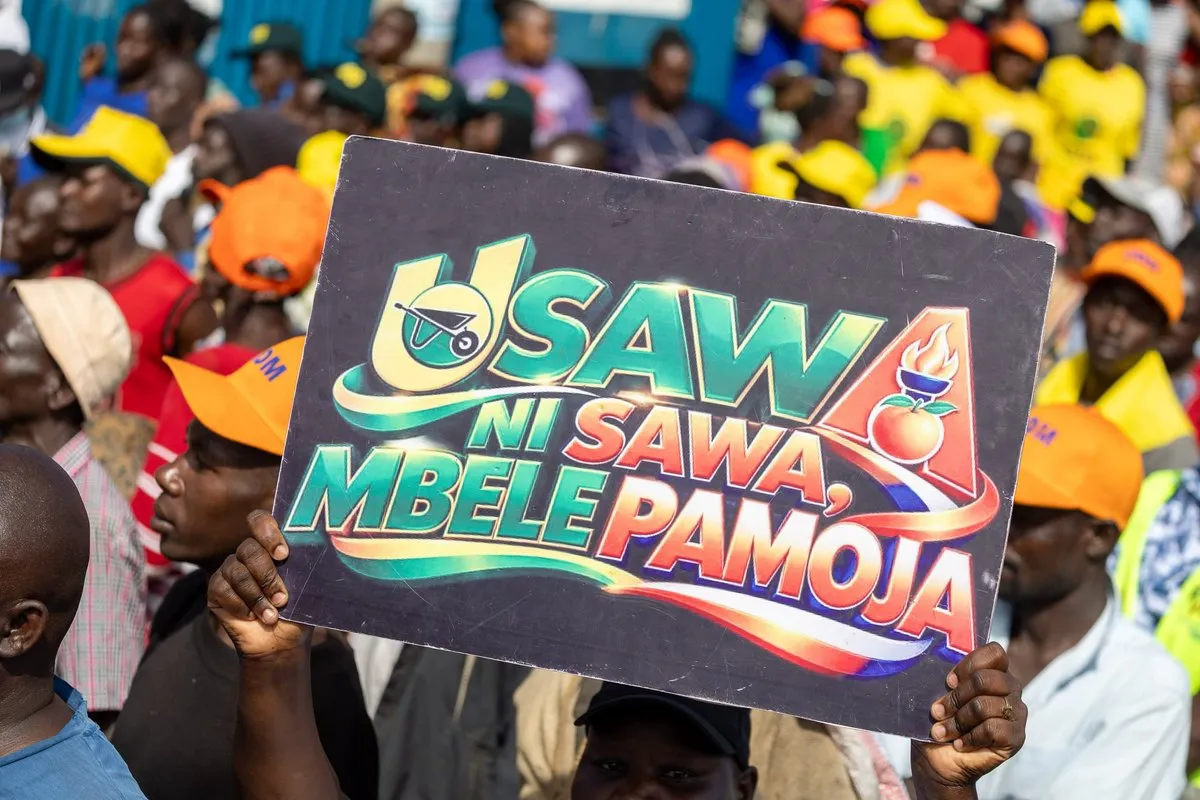
BUSIA, Kenya — President William Ruto has resumed his development tour of Western Kenya, returning to Busia County with a fresh package of infrastructure investments as his administration seeks to strengthen its political support in a region expected to play a significant role in the 2027 General Election.
Ruto began the second phase of the regional tour on Saturday, November 28, accompanied by Prime Cabinet Secretary Musalia Mudavadi, National Assembly Speaker Moses Wetang’ula and other leaders from the region.
The four-day programme, running until December 1, covers Busia, Bungoma, Kakamega and Vihiga counties, with the government focusing on road construction, electricity connectivity, modern markets, education infrastructure and other development initiatives.
The President’s return comes days after an earlier round of engagements across the same region, during which he inspected ongoing projects, launched new infrastructure and announced financial commitments to sugarcane farmers.
The renewed visit gives the administration another opportunity to showcase its development record while engaging communities whose support could prove influential in the contest for State House in 2027.
Ruto launches Sh3.3 billion road project in Busia
During his opening engagements in Butula Constituency, Ruto launched a road construction programme covering the Butula-Nambale-Amukura, Amukura-Machakusi and Kotur-Kocholia routes.
The 55-kilometre road package is estimated to cost KSh3.3 billion and is expected to improve transport links between communities, trading centres and agricultural production areas in Busia County.
The roads are particularly important to residents and businesses that depend on reliable transport to move farm produce, access markets and reach public services.
Poor road connectivity can increase transport costs, delay deliveries and limit access to economic opportunities, particularly for small-scale farmers and traders.
Ruto also flagged off a KSh1.3 billion Last Mile Electricity Connectivity Programme targeting approximately 16,000 households across Busia County.
The initiative is expected to extend access to the national electricity grid, particularly in areas where households and businesses have remained beyond the reach of reliable power connections.
Expanding electricity access is central to improving rural livelihoods, supporting small enterprises and enabling schools, health facilities and other institutions to operate more effectively.
The President’s Busia programme also included the commissioning of a modern market under the government’s Economic Stimulus Programme, aimed at providing traders with improved facilities and a more organised trading environment.
Bungoma, Kakamega and Vihiga next on the itinerary
After the Busia engagements, Ruto is scheduled to proceed to Webuye East Constituency in Bungoma County, where the programme includes the launch of the Misikhu-Naitiri Access Road and the laying of a foundation stone for a modern market.
The tour is also expected to extend to Navakholo and Ikolomani constituencies in Kakamega County, with additional market and electricity connectivity projects.
On Sunday, November 29, the President’s engagements are scheduled to cover Malava and Khwisero constituencies in Kakamega.
Monday’s programme is expected to take him to Mumias and Lugari in Kakamega, Kimaeti and Miyanga in Bungoma, as well as Emuhaya and Luanda in Vihiga County.
The tour is scheduled to conclude on Tuesday, December 1, with engagements in Hamisi Constituency in Vihiga, followed by Lurambi and Kakamega town in Kakamega County.
The projects form part of the administration’s wider development agenda, which has increasingly highlighted road infrastructure, electricity access, affordable housing and modern markets as interventions intended to stimulate economic activity outside major urban centres.
Sugarcane farmers await promised bonuses
Ruto’s return to Western Kenya is also significant for the region’s sugar industry, which supports thousands of farming households and remains an important source of rural employment and income.
During the first phase of his tour, the President announced a KSh1.2 billion bonus programme for sugarcane farmers and issued payments amounting to KSh195 million to growers supplying Nzoia Sugar Company.
He is also expected to follow through on commitments to issue bonus payments to farmers supplying Mumias Sugar Company.
Farmers linked to other sugar factories, including Chemilil, Muhoroni, Miwani and Sony, have also been mentioned in the administration’s wider payment plans.
The commitments come against a background of longstanding concerns among sugarcane growers over delayed payments, production costs, factory management and the financial sustainability of the sector.
For farmers, the significance of the announced bonuses will ultimately depend on whether the money reaches eligible growers, how quickly payments are made and whether wider reforms improve the reliability of payments for cane deliveries.
The sugar industry remains politically important in Western Kenya because its economic fortunes are closely tied to household incomes, employment and commercial activity in several counties.
Why Western Kenya matters to Ruto’s 2027 re-election bid
Beyond the infrastructure announcements, Ruto’s repeated visits to Western Kenya come as political competition begins to intensify ahead of the August 2027 General Election.
The region, comprising Busia, Bungoma, Kakamega, Vihiga and Trans Nzoia counties, is one of Kenya’s significant electoral blocs, with millions of registered and potential voters.
Its political importance was demonstrated in the 2022 presidential election, when the late Raila Odinga secured overwhelming support in several parts of the region against Ruto.
In Busia County, for example, Odinga received 226,152 votes, representing 81.66 per cent of the presidential vote, while Ruto secured 48,866 votes, or 17.64 per cent.
That electoral history makes Western Kenya an important target for Ruto as he seeks to expand his support beyond the political strongholds that helped propel him to power.
His administration has increasingly presented roads, electricity connections, modern markets, affordable housing and interventions in the sugar sector as evidence that Western Kenya is receiving greater attention from the national government.
Also Read: Kenya Kwanza leaders rally Western Kenya behind Ruto’s 2027 re-election bid
The involvement of influential regional figures, particularly Mudavadi and Wetang’ula, also provides the President with established political networks through which his administration can engage local communities and mobilise support.
However, government development spending does not automatically translate into electoral loyalty. Residents will ultimately judge the administration on whether promised projects are completed, public services improve and economic benefits reach households.
Opposition competition raises political stakes
Ruto’s renewed presence in the region also comes as opposition leaders seek to consolidate their own political support ahead of the next election.
Western Kenya’s voting strength makes it an important battleground for competing political formations, particularly if opposition leaders can agree on a common strategy and present a credible alternative to the government.
The region’s political alignment could therefore have implications beyond its county boundaries, especially in a presidential contest where the distribution of votes across several major blocs may determine the final outcome.
For Ruto, the challenge is not simply to launch projects or announce fresh investments, but to convince voters that his administration is delivering measurable improvements in their lives.
For the opposition, the challenge is to translate public dissatisfaction and political mobilisation into a coherent electoral alternative.
As the President continues his engagements across Busia, Bungoma, Kakamega and Vihiga, attention will increasingly shift from the announcements made at public rallies to the delivery of the projects and financial commitments being presented to residents.
With the 2027 election approaching, Western Kenya is likely to remain a major focus of political campaigning, development promises and competition for voter support.
