


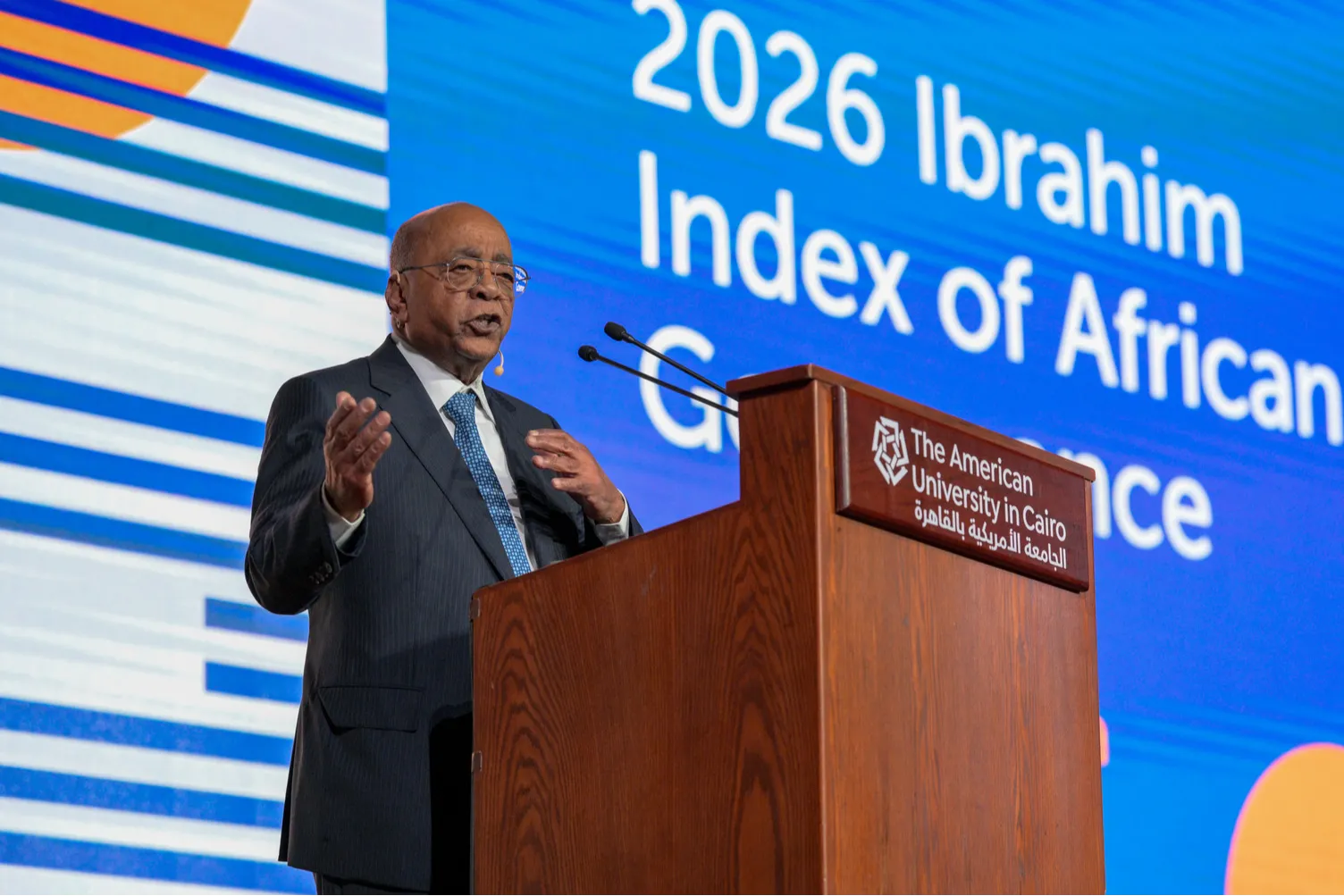
NAIROBI, Kenya — Kenya has been ranked 10th among 54 African countries in the 2026 Ibrahim Index of African Governance (IIAG), scoring 61.0 out of 100, despite significant deterioration in security, rule of law, media freedom and public procurement over the past decade.
The assessment by the Mo Ibrahim Foundation, released on October 31, 2026, places Kenya above the continental average of 50.1 and the Eastern Africa regional average of 47.5.
However, the country’s modest improvement in its overall governance score masks deepening weaknesses in some critical areas of public administration and accountability.
Kenya’s overall score increased by just 0.9 points between 2016 and 2025, indicating relatively limited progress over the ten-year assessment period.
The biggest improvement was recorded in Foundations for Economic Opportunity, which rose by 4.1 points to 65.3. Participation, Rights and Inclusion improved by 1.9 points to 62.4, while Human Development increased by 1.7 points to 62.3.
Security and Rule of Law was the only one of the four main governance categories to register a decline, falling by 4.2 points to 54.0.
The findings highlight a contrast between improvements in economic and social development and declining performance in areas that underpin public trust, accountability and the protection of citizens’ rights.
Public procurement records Kenya’s steepest decline
Public procurement emerged as one of Kenya’s weakest governance indicators, scoring 29.7 out of 100 after losing 36.4 points between 2016 and 2025.
The indicator assesses the integrity and competitiveness of government procurement processes, including competitive bidding and safeguards against corruption in public contracts.
The decline places procurement among the most concerning areas in Kenya’s governance assessment, particularly given the role of public contracts in delivering infrastructure, healthcare, education and other essential services.
Public perception of anti-corruption efforts also deteriorated, falling by 10.8 points to 27.9.
The broader anti-corruption category scored 38.6, down 6.7 points over the decade. The indicator measuring the absence of corruption in the public sector stood at 35.6, reflecting a decline of 4.9 points.
The figures point to persistent concerns about the integrity of public institutions and the effectiveness of efforts to address corruption.
Kenya also recorded a decline in public perception of accountability, which fell by 14.6 points to 39.9.
The findings do not establish that every procurement process is corrupt or identify individual officials responsible for wrongdoing.
Rather, they measure performance across indicators used to assess the broader governance environment.
Rule of law, media freedom and civic space under pressure
Kenya’s Security and Rule of Law score fell to 54.0, with the deterioration reflecting setbacks in several underlying indicators.
Public perception of the rule of law dropped by 20 points to 37.3, while the impartiality of the judicial system declined by 19.1 points.
The broader accountability and transparency category also lost 2.3 points, settling at 55.6.
Media freedom recorded a decline of 12.9 points to 56.6, highlighting concerns about the environment in which journalists and media organisations operate.
Freedom of association and assembly fell by 12.5 points to 25.0, while political pluralism declined by 12.4 points to 65.4.
The findings also show that Kenya’s Participation, Rights and Inclusion category improved overall, even as some of its individual indicators deteriorated.
This distinction is important because the category combines several measures, including democratic elections, political participation, civil society space, media freedom, protection against discrimination and women’s equality.
The scorecard therefore points to uneven performance rather than a uniform improvement or decline across the country’s democratic institutions.
The index also recorded progress in the protection against discrimination indicator, which increased by 33.4 points to 55.6, one of Kenya’s most significant gains in the rights category.
Kenya records gains in education, internet and energy access
Despite the weaknesses in accountability and security, the report identified improvements in several areas associated with economic opportunity and human development.
Access to internet services increased by 21.9 points to 56.0, while access to energy improved by 20.8 points to 53.4.
Mobile communications also recorded a significant improvement, rising by 16.3 points to 85.5.
Education completion increased by 13.5 points to 89.9, placing Kenya fourth among the 54 countries on that indicator.
The country’s Human Development score stood at 62.3, with education scoring 70.4 and health recording 65.3.
Kenya also performed strongly in women’s equality, scoring 72.2 after improving by 9.6 points over the assessment period.
The Foundations for Economic Opportunity category, which includes public administration, infrastructure, the business and labour environment and rural economic development, scored 65.3.
Within that category, Kenya’s rural economy scored 81.5, ranking third in Africa, while the business and labour environment scored 60.5, placing fifth.
The improvements demonstrate that Kenya has made progress in expanding access to essential services and strengthening some aspects of its economic environment, even as governance challenges persist elsewhere.
Kenya ranks ahead of most East African neighbours
Kenya’s 10th-place position places it among Africa’s highest-scoring countries in the 2026 assessment and ahead of several neighbouring states.
Rwanda ranked 14th, Tanzania 18th and Uganda 28th. Ethiopia, Burundi, the Democratic Republic of Congo and Somalia also placed below Kenya.
The regional results, however, show different governance trajectories, with some countries recording improvements while others face warnings or continued deterioration.
Across Africa, Seychelles topped the rankings, followed by Mauritius, Cabo Verde, Botswana and South Africa.
Namibia, Morocco, Senegal, Ghana and Kenya completed the top 10.
At the bottom of the rankings, South Sudan occupied 54th position, followed by Somalia, Sudan, Eritrea and the Central African Republic.
Niger, the Democratic Republic of Congo (DRC), Chad, Libya and Guinea-Bissau also featured among the ten lowest-ranked countries.
The rankings reflect each country’s overall performance across the index’s four governance categories, rather than a single measure such as economic growth or political stability.
Mo Ibrahim warns against sacrificing governance for economic growth
The 2026 report also raises concerns about the wider direction of governance across Africa, warning that improvements in economic and human development could be undermined by deteriorating security, the rule of law and democratic participation.
According to the Foundation, the assessment covers the period from 2016 to 2025 and uses 96 indicators drawn from 51 independent data sources to evaluate governance in all 54 African countries.
The indicators are grouped into four main categories: Security and Rule of Law; Participation, Rights and Inclusion; Foundations for Economic Opportunity; and Human Development.
The index measures governance through the delivery of political, social, economic and environmental goods and services that citizens are entitled to expect from their governments.
Also Read: Kenya’s global influence is rising, so why is its passport still ranked 64th?
Mo Ibrahim, founder and chairman of the Foundation, cautioned that economic and social gains cannot be sustained without improvements in the institutions responsible for protecting citizens and ensuring accountability.
He said: “Economic and social gains will not last, and will remain weaker, without improvements in these fundamental governance pillars.”
The Foundation’s continental findings show that Security and Rule of Law deteriorated in 34 countries, representing 78 per cent of Africa’s population.
Participation, Rights and Inclusion also declined in 31 countries, covering 60 per cent of the continent’s population.
Infrastructure was the most improved of the index’s 16 sub-categories, recording progress in 52 countries, representing 84 per cent of Africa’s population.
Education improved in 34 countries, while health recorded progress in 40 countries.
The report nevertheless warns that gains in service delivery and economic development may prove difficult to sustain where institutions responsible for security, justice and public accountability continue to weaken.
For Kenya, the findings present a mixed picture: the country remains among Africa’s top 10 in overall governance, but its declining scores in procurement, public accountability, media freedom and the rule of law highlight areas requiring sustained institutional attention.
