


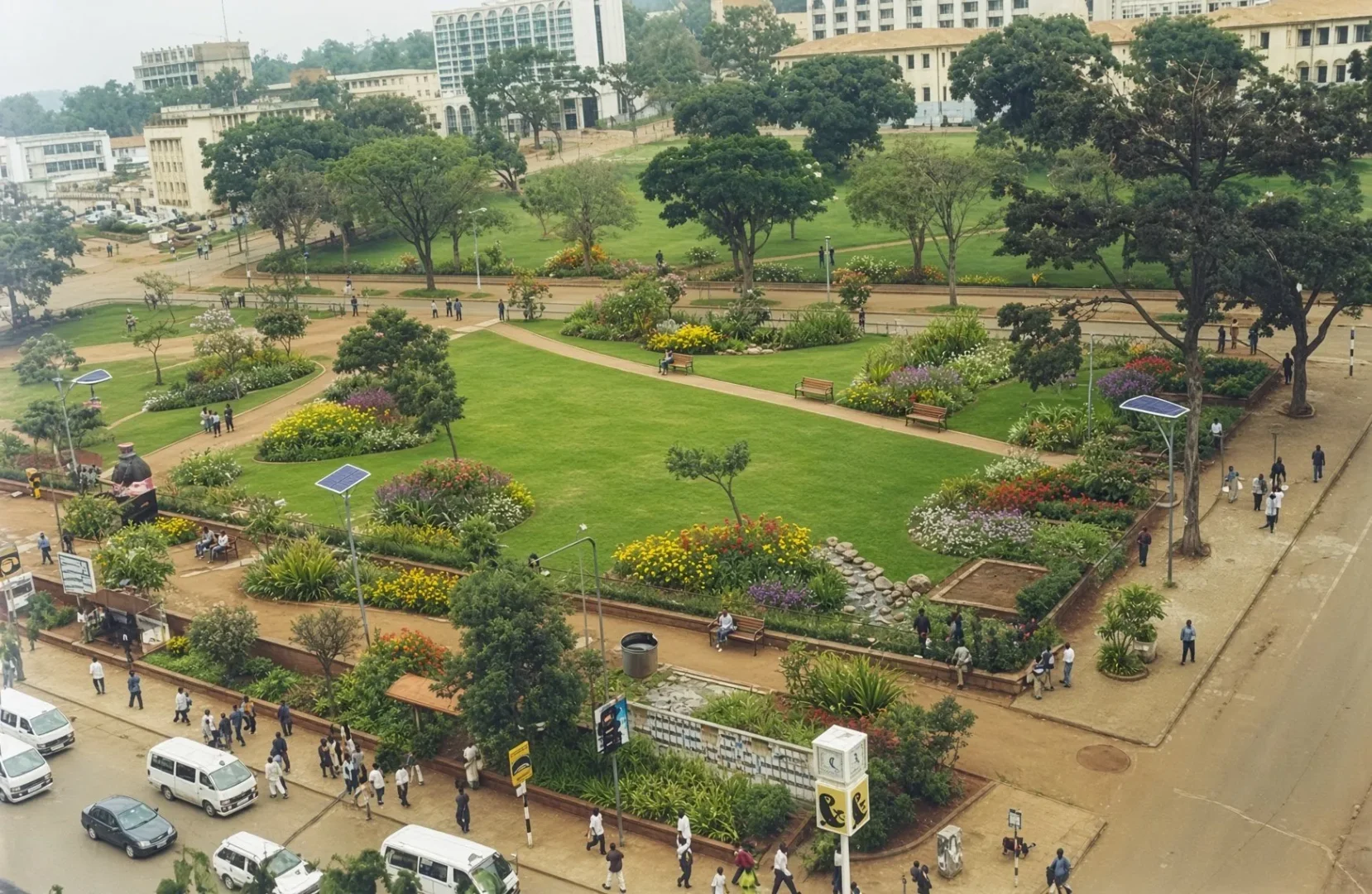
KAMPALA, Uganda — President Yoweri Museveni has directed the Ministry for Kampala Capital City and Metropolitan Affairs and the Kampala Capital City Authority (KCCA) to scrutinise a proposal to redevelop two acres of City Square into a solar-powered commercial complex, in a move that could reshape one of the capital’s most prominent public spaces.
The proposal, submitted by Kampala businessman Hajj Hassan Bulwadda, seeks to convert part of the square into an eco-friendly development featuring a hotel, a shopping mall and other commercial facilities, powered largely by solar energy.
In a letter dated 30 August 2026 addressed to Minister for Kampala Capital City and Metropolitan Affairs Minsa Kabanda, Museveni instructed her to examine the proposal, consult KCCA and report back to him. The directive was copied to Vice President Jessica Alupo and Prime Minister Robinah Nabbanja.
“I have received a letter from Hajj Hassan Bulwadda dated the 18th of August, 2026, proposing to develop the two acres at City Square in Kampala into a modern, eco-friendly real-estate complex, with a hotel, shopping mall, etc., using solar power, etc.,” Museveni wrote.
He instructed the minister in direct terms: “Study the proposal, discuss with Kampala Capital City Authority and come back to me.”
Bulwadda’s proposal, submitted on 18 August, envisions a commercial complex drawing much of its energy needs from solar power. If approved, the project would significantly alter the character and use of a site that has long served as open public ground in the heart of the city.
City Square, located in Kampala’s city centre, is a gazetted public green space that has for decades hosted national celebrations, public gatherings and everyday recreation.
It remains one of the few open areas in a central business district otherwise dominated by dense commercial development, giving residents a rare place to gather and rest amid the city’s congestion.
Any move to redevelop the square is likely to draw scrutiny over public access, urban planning standards, environmental impact and the preservation of Kampala’s dwindling green spaces. It could also reignite a broader debate over how the capital’s public assets should be managed as the city undergoes rapid commercialisation.
Echoes of the Nakivubo Channel proposal
The City Square proposal follows a similar pattern to one submitted roughly a year earlier by another prominent Kampala businessman, Hamis Kiggundu, who proposed redeveloping the Nakivubo drainage channel that runs through the city.
In a letter dated 2 August 2025, Museveni endorsed Kiggundu’s plan to clean, strengthen and cover sections of the channel at his own expense, with commercial structures to be built above it allowing him to recoup his investment.
Also Read: Ruto adds Kericho to city status race with Ksh12bn development plan
Museveni described the proposal as “imaginative and simple,” writing at the time: “Allow him to cover the channel after cleaning it and strengthening it at his own cost. What a godly proposal!” He further explained how Kiggundu would recover his money: “Allow him to build properties above it that will bring back the money. I approve of the plan. Help him to execute.”
That project has since drawn controversy, with city authorities, environmentalists and traders raising concerns over planning and environmental approvals, the use of public infrastructure, and the potential impact on drainage and public access in the area.
A recurring question over public land
While the City Square proposal differs in nature from the Nakivubo project, both place a prominent public urban space at the centre of a privately driven commercial development.
Together, the two cases are likely to revive longstanding questions about how Kampala’s remaining public assets should be managed, and how much weight is given to public access and environmental considerations when private developers propose to repurpose them.
Minister Kabanda has yet to indicate a timeline for completing her assessment or reporting back to the President.
