


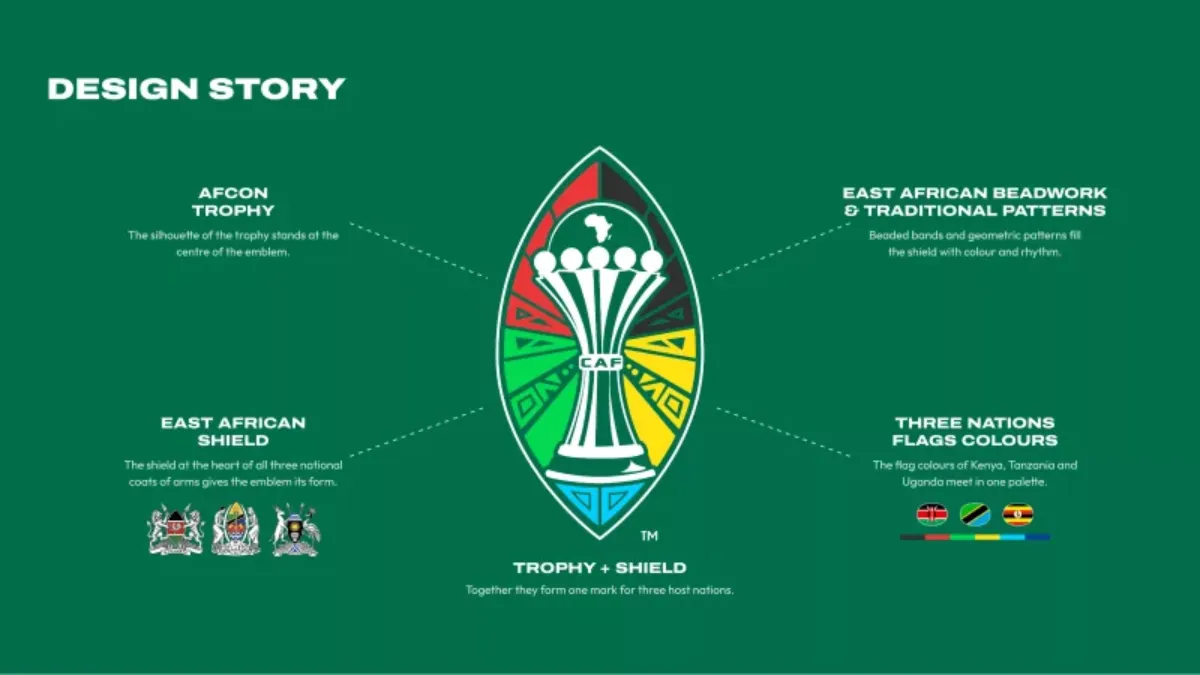
NAIROBI, Kenya — The Confederation of African Football (CAF) has unveiled the official identity for the 2027 Africa Cup of Nations (AFCON), drawing inspiration from East Africa’s traditional shield to celebrate the cultural heritage and shared ambitions of tournament hosts Kenya, Tanzania and Uganda.
The emblem was launched simultaneously in the three countries on Thursday, November 19, 2026, marking another milestone in preparations for a tournament that will bring Africa’s premier international football competition back to East Africa.
Scheduled to begin on June 19, 2027, the competition will be the first AFCON jointly hosted by the three neighbouring countries, in a partnership CAF hopes will showcase the region’s cultural diversity and ability to stage a major continental sporting event.
The new identity will anchor the TotalEnergies CAF Africa Cup of Nations Pamoja 2027 branding, featuring prominently across tournament venues, promotional campaigns, digital platforms and other official activities.
Traditional shield takes centre stage
At the heart of the emblem is the traditional East African shield, a symbol associated with protection, strength, cultural identity and belonging.
CAF said the design draws on a shared heritage that connects the three host nations, with the shield also featuring in their respective national coats of arms.
In unveiling the identity, the continental football governing body described its guiding philosophy as “Honouring Our Past, Celebrating Our Culture and Symbolising the Africa of Tomorrow”.
The design places the silhouette of the AFCON trophy at its centre, topped by an outline of the African continent and accompanied by the CAF name.
The arrangement brings together the tournament’s sporting significance and the cultural symbolism of its hosts, presenting football as a platform for connecting different African identities and aspirations.
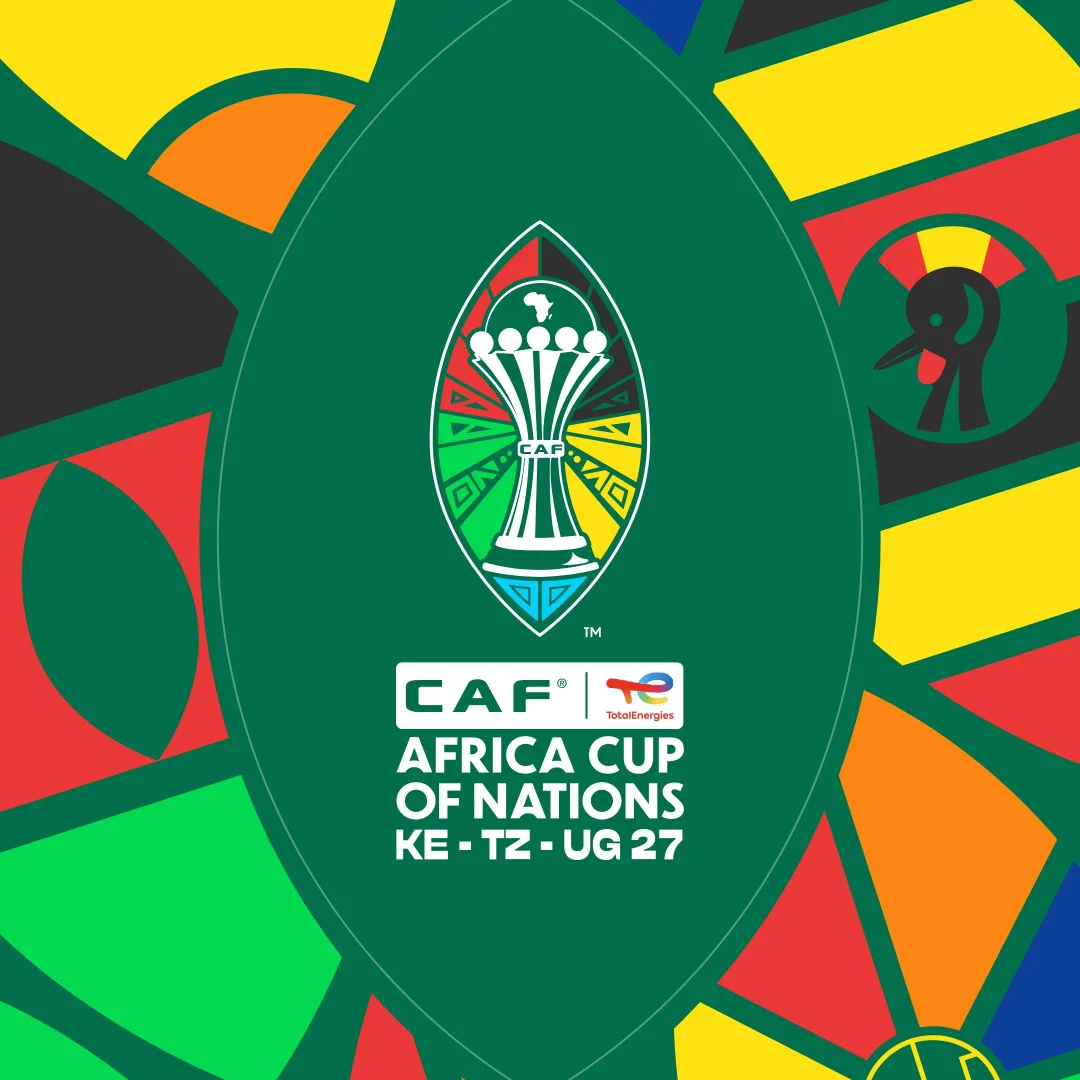
Colourful beadwork and geometric patterns inspired by traditional East African craftsmanship, textiles and weaving also feature prominently, giving the emblem a distinct regional character.
The colour scheme incorporates elements associated with all three host nations. Red and black appear towards the top, while green and yellow flank the trophy, with blue completing the design at its base.
CAF said the combination was intended to preserve the individual identities of Kenya, Tanzania and Uganda while creating a unified visual identity for the tournament.
Kenya, Tanzania and Uganda get distinct cultural designs
Beyond the main emblem, the AFCON 2027 branding incorporates 12 different shield patterns designed to reflect the cultural characteristics and national identities of the three countries.
Kenya’s pattern features bold horizontal bands representing strength, heritage and belonging.
Tanzania’s design uses diagonal lines inspired by its national flag, reflecting movement and the country’s connection to its land and water.
Uganda’s version incorporates warm, layered colours and the country’s iconic crested crane, a national symbol associated with pride and identity.
The different patterns will be incorporated into tournament installations, promotional materials and other visual elements, allowing each host country to contribute its own cultural expression to the wider AFCON identity.
The approach gives the tournament a regional character rather than presenting it as a competition hosted under a single national identity.
Why AFCON 2027 is significant for East Africa
The tournament, branded Pamoja 2027, takes its name from the Swahili word for “together”, reflecting the cooperation between Kenya, Tanzania and Uganda.
Its significance extends beyond football, as the three countries seek to demonstrate the benefits of regional collaboration through a major international sporting event.
For Kenya, the competition presents an opportunity to strengthen its position as a destination for international sporting events. Tanzania and Uganda will similarly have opportunities to showcase their sporting infrastructure, tourism attractions and cultural heritage to visiting supporters and international audiences.
Joint hosting, however, also brings considerable organisational demands.
Also Read: AFCON 2027: CAF moves coordination headquarters from Nairobi to Dar es Salaam
The three governments must coordinate stadium readiness, transport networks, accommodation, security, training facilities and other essential services across national borders.
Stadium construction and renovation remain particularly important, alongside improvements to supporting infrastructure needed to accommodate teams, officials, supporters and international media.
The success of the tournament will therefore depend not only on the strength of its branding but also on whether the three countries can deliver the infrastructure and operational standards required by CAF.
A new chapter for African football
The unveiling of the AFCON 2027 identity gives the East African hosting partnership a recognisable public face as preparations move towards the tournament.
It also offers CAF an opportunity to present the competition as more than a football championship, highlighting the cultural connections and shared ambitions of three neighbouring countries.
For supporters across the continent, the countdown to June 19, 2027, now carries another defining symbol: a tournament identity built around East African heritage and regional unity.
The bigger test, however, will be translating that symbolism into a successful tournament capable of meeting continental expectations and leaving a lasting sporting legacy for the three host nations.
