


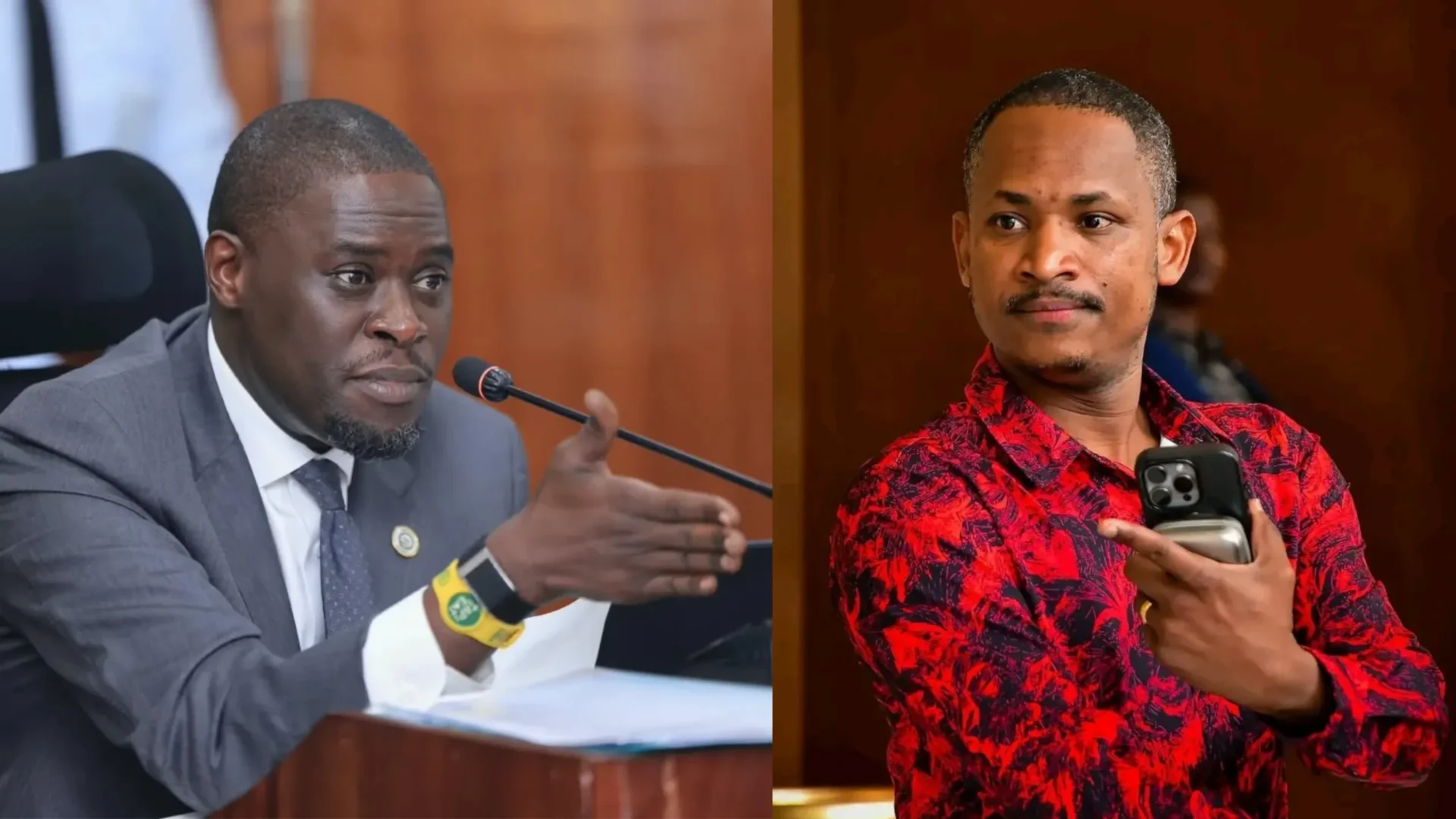
NAIROBI, Kenya — Nairobi Governor Johnson Sakaja has given Embakasi East MP Babu Owino six hours to remove social media posts linking him to a disputed development approval for the multi-storey building that collapsed in Eastleigh.
In a demand letter dated Sunday, October 25, 2026, Sakaja’s lawyers accused the legislator of publishing misleading information about a Nairobi City County development approval, warning that the posts were damaging the governor’s reputation and could trigger legal proceedings.
The letter concerns posts Owino published on X and Facebook at approximately 1:27pm on Sunday, challenging Sakaja’s account that the collapsed building lacked the necessary construction approval.
“Our client informs us that on 25th October 2026 at approximately 1:27 pm, you published on the X (formerly Twitter) and Facebook platforms a post regarding the alleged City County approval for development on LR/Parcel No. 36/11/40 situated in Eastleigh within Kamkunji Sub-county,” the letter stated.
Sakaja’s lawyers demanded the immediate removal of the posts, arguing that the information contained errors and was having a defamatory effect on their client’s professional reputation and public image.
“TAKE NOTICE THEREFORE THAT we have hereby been instructed to DEMAND that you pull down the said social media post with immediate effect due to the apparent error in the information published on your social media platforms and the already accruing defamatory effect that it is having on his professional reputation, public image and personal morale,” the letter stated.
The lawyers gave Owino six hours to comply, warning that failure to do so would prompt legal action, with the MP potentially facing associated legal costs and expenses.
The demand letter disputes the interpretation of the development approval document circulated by the legislator, particularly its attribution to Sakaja in his capacity as a registered physical planner.
There was no immediate confirmation in the information available for this report on whether Owino had complied with the demand or whether legal proceedings had been initiated.
Babu Owino alleges KSh120 million bribe
Owino has challenged Sakaja’s assertion that the county never approved construction of the building, publishing a document he says shows that the development received approval on February 13, 2024.
The MP alleged that Sakaja misled Kenyans about the approval status of the property and claimed that KSh120 million had changed hands as a bribe to secure approval for the development.
The bribery allegation has not been independently verified, and the document circulated by Owino does not, by itself, establish that a bribe was paid or that any official committed a criminal offence.
The dispute centres on the meaning and scope of the approval document and whether it authorised construction of the multi-storey structure that collapsed.
Sakaja has maintained that approval for a change of use of the property was separate from approval of the architectural plans required to construct the high-rise building.
The governor has said the county approved a change of use but did not approve the application for a proposed 15-storey building with a basement. He has also disputed the authenticity or interpretation of the document being circulated online.
According to reports on the dispute, the county says an application for the high-rise structure was submitted in November 2024 but was not approved.
The document shared by Owino, meanwhile, bears an approval date of February 13, 2024, a discrepancy that has become central to the public disagreement.
The conflicting accounts have intensified scrutiny of the development’s approval history, with questions emerging over the records held by county authorities and the National Construction Authority (NCA).
Sakaja releases documents defending county position
In response to the allegations, Sakaja released documents that he said supported the county’s position that construction had proceeded without the necessary approvals.
The documents included police reports dated July 16 detailing alleged breaches of county laws in connection with construction at the site and naming individuals linked to the project.
Other correspondence, reportedly dated two months earlier, showed that Sakaja had written to the Director of Public Prosecutions (DPP), raising concerns about stalled prosecutions involving county offences since 2024.
In the correspondence, the governor sought the gazettement of special prosecutors, a review of charging guidelines and approval for six nominated officers to strengthen enforcement of county laws, including action against alleged construction violations.
The documents form part of Sakaja’s defence against claims that the county had authorised the development.
However, their contents and the precise legal status of the disputed approval require examination alongside the underlying planning and construction records.
The governor’s position is that a change-of-use approval did not grant permission to proceed with the proposed high-rise construction.
The dispute also raises questions about whether enforcement notices were acted upon and whether the relevant authorities took sufficient steps to stop construction if the required approvals were absent.
Eastleigh collapse intensifies scrutiny of approvals
The political and legal confrontation follows the collapse of the multi-storey building along 9th Street, near Yusuf Haji Avenue, in Eastleigh on Friday, October 23.
The collapse triggered a multi-agency rescue operation involving emergency responders, the Kenya Red Cross and security agencies, as concerns mounted over people feared trapped beneath the rubble.
The National Police Service confirmed on Sunday that four people had been rescued and were receiving medical attention in hospital.
At the time of the latest reported update, Principal Secretary for Micro, Small and Medium Enterprises Development Susan Mang’eni said 47 people had been reported missing to the Kenya Red Cross.
Also Read: Sakaja seeks tougher penalties for developers after Eastleigh building collapse
Nine had since been traced and linked to their families, leaving 38 cases still unresolved at that point.
The figure represents reports of missing relatives and should not be interpreted as confirmation that all 38 people remained trapped beneath the rubble.
Families searching for missing relatives were urged to report to the Kenya Red Cross desk at the scene or call 1199 for assistance.
Investigations into the collapse and the development’s approval history remain ongoing. Authorities have yet to establish the definitive cause of the collapse or announce final findings on individual responsibility.
The dispute between Sakaja and Owino has consequently placed renewed attention on the distinction between planning permission, approval of architectural plans, project registration and the enforcement of construction regulations.
As the governor’s legal demand puts pressure on the MP to remove his posts, the underlying questions remain unresolved: what the disputed document authorised, whether the required construction approvals were granted and whether any public officials or private parties breached their legal obligations.
The findings of the relevant investigative and regulatory agencies will be central to establishing those facts.
