


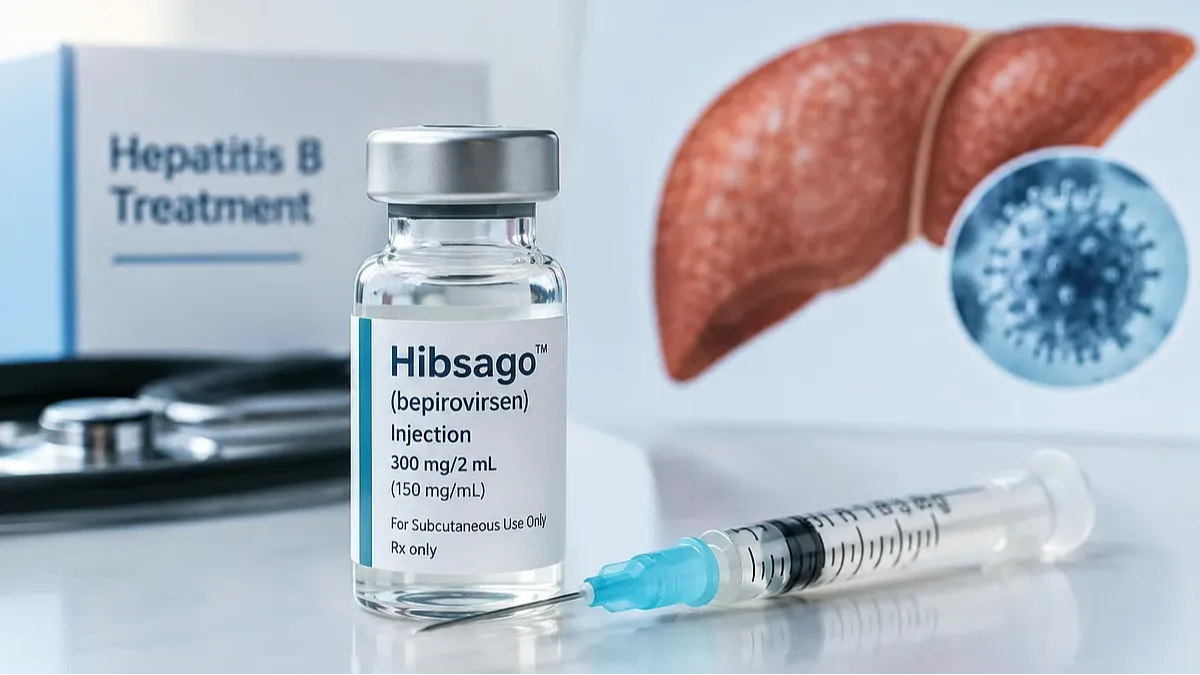
KAMPALA, Uganda — The United States Food and Drug Administration (FDA) has approved a new treatment for chronic hepatitis B that could allow some patients to stop taking antiviral medicines while maintaining control of the virus.
The drug, Hibsago (bepirovirsen), developed by pharmaceutical company GSK, was approved on October 20, 2026. It is the first antisense oligonucleotide therapy authorised by the FDA for chronic hepatitis B, a long-term liver infection that can lead to cirrhosis, liver failure and liver cancer.
The development has attracted attention in Uganda, where hepatitis B remains a public health concern. Ugandan physician and kidney specialist Dr Robert Kalyesubula welcomed the approval, describing it as a major medical breakthrough.
“The U.S. Food and Drug Administration (FDA) approved Hibsago (bepirovirsen) on October 20, 2026, as the first antisense oligonucleotide therapy for chronic Hepatitis B Treatment!” Kalyesubula said in a statement published on Friday.
“What a great breakthrough!” he added.
However, the treatment is not a universal cure. The FDA has restricted its use to certain adults without cirrhosis who meet specific clinical and laboratory criteria, and patients must initially take it alongside their existing hepatitis B medication.
What the new treatment does
Chronic hepatitis B is caused by the hepatitis B virus (HBV), which can remain in the body for years and progressively damage the liver.
Existing antiviral medicines can suppress the virus and reduce the risk of complications, but many patients need to continue treatment indefinitely to maintain control of the infection.
Hibsago works differently from conventional antiviral medicines. It is an antisense oligonucleotide, a type of treatment designed to target specific genetic instructions used by the virus to produce viral proteins and replicate.
By reducing the production of viral material and hepatitis B surface antigen (HBsAg), the drug may help the immune system regain control of the infection.
The FDA said the treatment offers some patients the possibility of maintaining viral control after all hepatitis B medication has been discontinued.
The agency also authorised a companion diagnostic test to help identify suitable patients and monitor them during treatment.
What the clinical trials found
The FDA based its approval on two clinical trials comparing Hibsago with a placebo, an inactive treatment.
According to the agency, 24% of patients who received Hibsago met the criteria to discontinue their existing hepatitis B medicine, compared with none in the placebo group.
Twenty-four weeks after stopping all hepatitis B treatment, 19% of patients who received Hibsago continued to have the virus under control, with HBsAg undetectable in their blood.
The results suggest that a proportion of eligible patients may be able to maintain control of the infection without continuous medication. However, most participants did not meet the reported criteria for stopping treatment, underscoring the limitations of the new approach.
GSK also reported results from the phase three B-Well trials, which found a functional cure response in 19% of participants receiving bepirovirsen, compared with none in the placebo group.
The company defines a functional cure as hepatitis B DNA and surface antigen remaining undetectable for at least 24 weeks after all treatment has stopped.
A functional cure does not necessarily mean that every trace of the virus has been eradicated from the body. Continued medical follow-up remains important.
Who qualifies for Hibsago?
The FDA approval covers adults with chronic hepatitis B who do not have cirrhosis and who meet three principal conditions: they must have been taking existing hepatitis B antiviral treatment for at least six months, have suppressed levels of the virus in their blood and have HBsAg levels of 3,000 international units per millilitre or less, measured using an authorised test.
Hibsago is administered by injection under the skin for up to 24 weeks alongside existing antiviral medication.
Patients must continue their conventional treatment for at least another 24 weeks after their final Hibsago injection. Doctors can then assess whether they meet the clinical and laboratory requirements for stopping treatment.
The decision to discontinue medication is therefore based on a patient’s response and test results, rather than simply completing the injection course.
Safety risks and monitoring
Despite the promising findings, Hibsago carries significant safety warnings.
The FDA issued a boxed warning for serious liver reactions and low platelet counts, which can increase the risk of potentially life-threatening bleeding.
The drug also carries warnings about worsening kidney function and serious inflammatory reactions, including vasculitis. Patients require regular blood tests and medical monitoring before and during treatment.
Common side effects include injection-site reactions, fever, fatigue and headaches. The FDA granted Hibsago Fast Track and Breakthrough Therapy designations, as well as Priority Review, before approving the treatment.
These designations are intended to facilitate the development or review of potentially important medicines; they do not remove the need for safety monitoring.
Doctors caution that patients already taking hepatitis B medication should not stop or change their treatment without medical supervision.
What the approval means for Uganda
The development could be significant for Uganda, where hepatitis B remains an important public health challenge.
Uganda’s Population-based HIV Impact Assessment survey estimated hepatitis B prevalence at about 4.1% among adults aged 15–64. Prevalence varied geographically, reaching 4.6% in the mid-northern region and falling to 0.8% in the south-west, according to the survey findings published by the Ministry of Health.
These figures are based on an earlier survey and should not be interpreted as a new 2026 prevalence estimate.
Also Read: Ministry of Health: All newborns in Uganda to get Hepatitis B vaccine at birth
For people living with chronic hepatitis B, long-term treatment can help prevent liver damage and lower the risk of serious complications.
A treatment that enables some eligible patients to stop medication could eventually offer an additional option for managing the disease.
However, US approval does not automatically authorise Hibsago for use in Uganda. Its availability would depend on regulatory review, procurement, pricing and access to the specialised laboratory testing required to identify suitable patients and monitor their response.
The FDA approval marks a new development in chronic hepatitis B treatment, but the benefit is limited to a subset of patients who meet strict eligibility criteria.
For now, Hibsago offers the possibility of sustained control without ongoing medication for some patients, rather than a guaranteed cure for the disease.
