


NAIROBI, Kenya — Livestreaming has become one of the fastest-growing segments of Kenya’s digital creator economy.
As audiences migrate from traditional television to TikTok, YouTube, and long-form live broadcasts, a new generation of creators is building businesses capable of attracting millions of views and lucrative commercial partnerships.
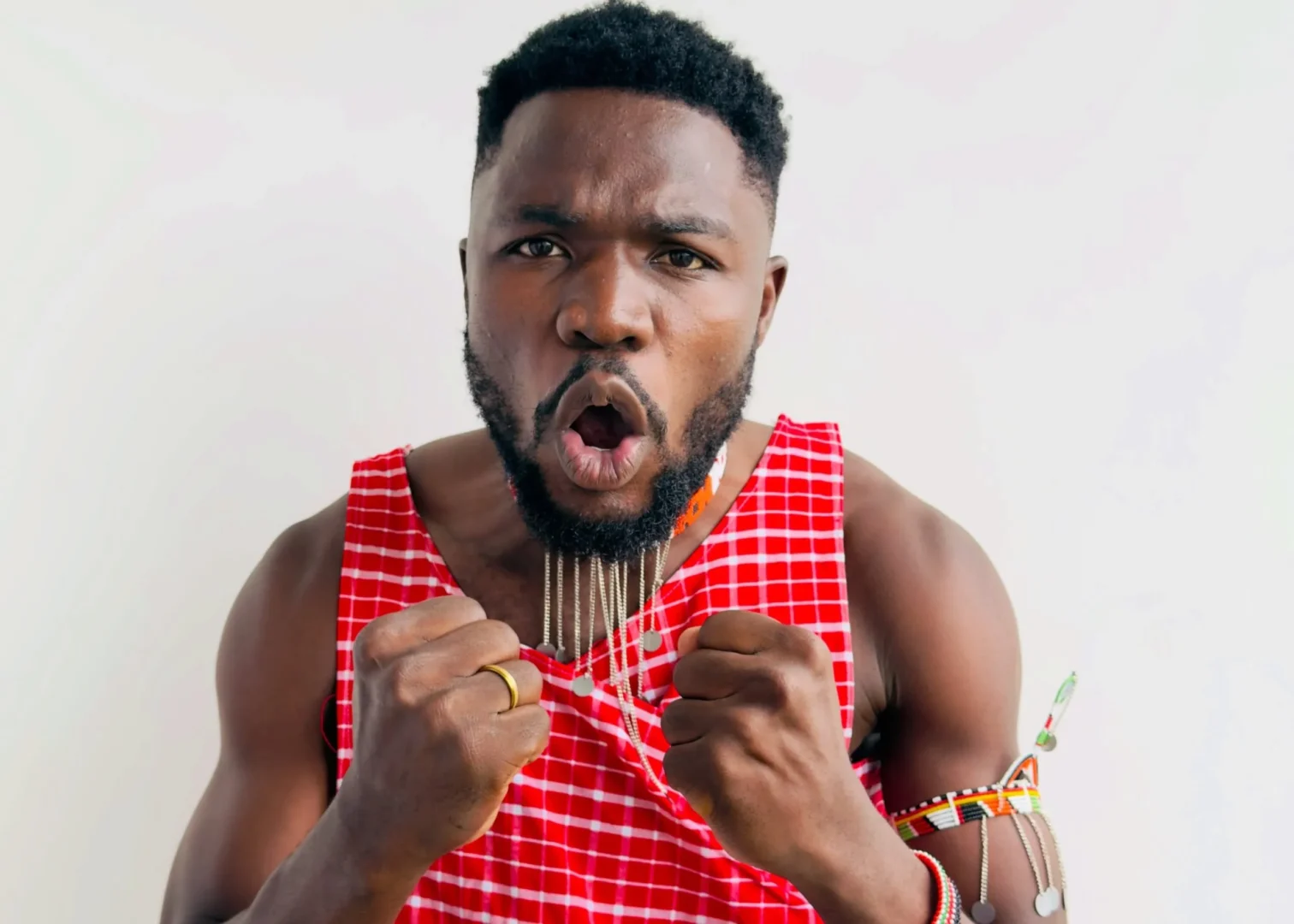
At the center of this shifting landscape is the Kenyan content creator known as Vindee. Recognized for his high-energy public broadcasts and regular streaming schedule, he has developed one of the country’s fastest-growing online audiences.
Yet, alongside his rapid ascent, a broader discussion has emerged within the digital media landscape—one that extends beyond Vindee himself to highlight a challenge facing the wider African creator economy.
His recent public remarks and career choices have sparked a debate about whether Africa’s next generation of digital streamers should emulate established global formats or focus on building distinctly local brands.
The debate over creative emulation
The conversation surrounding originality intensified recently following Vindee’s public appeal to the Confederation of African Football (CAF).
While broadcasting live from Germany, he lobbied for production and streaming access to the 2027 Africa Cup of Nations (AFCON). In his pitch, he explicitly referenced the unprecedented access that American streaming personality IShowSpeed secured during the 2026 FIFA World Cup.
This was not an isolated comparison. In several public appearances, Vindee has referenced IShowSpeed while discussing football-related livestreaming and international expansion, prompting comparisons between the two creators.
There is nothing inherently improper about studying successful creators, and Vindee has never suggested he intends to replicate IShowSpeed’s content wholesale.
Drawing inspiration from established figures is common across creative industries. Every evolving media market relies on pioneers whose structural choices influence those who follow.
Musicians routinely study the compositions of their predecessors, filmmakers adopt proven camera techniques, and journalists analyze the interviewing styles of veteran reporters. Digital creators follow a similar developmental path.
The journalistic question raised by Vindee’s trajectory is not whether emerging creators should study global figures, but how they synthesize that inspiration.
The ongoing debate rests on whether African streamers can adapt international formats to build a distinct identity that audiences recognize as uniquely their own, rather than a localized reflection of foreign content.
The pressure of platform mechanics
Vindee has steadily engineered his audience through an active schedule of street interactions, collaborative broadcasts, and multi-platform distribution across TikTok and YouTube.
This strategy has allowed him to expand his reach beyond local Kenyan neighborhoods to viewers in the diaspora. However, this growth occurs at a time when the digital frontier is becoming increasingly competitive.
In an environment governed by algorithms that prioritize constant engagement, creators frequently face structural pressure to replicate production formats that have already proven financially viable in larger Western markets.
IShowSpeed’s rapid rise has heavily influenced the conventions of modern IRL (in real life) livestreaming globally. His specific mix of football culture, travel vlogs, and unpredictable public interactions has become a highly recognizable template.
Consequently, many aspiring streamers view this model as a necessary framework for growth. The challenge for creators like Vindee lies in balancing the operational lessons of global streaming with their own creative direction.
Digital audiences also tend to distinguish between inspiration and imitation, rewarding creators who eventually develop a recognizable style of their own. Sustained audience loyalty typically favors creators who offer distinct perspectives on familiar realities.
The economics of the European tour
While comparisons to international creators persist, Vindee’s recent actions demonstrate a clear, independent commercial ambition.
Before pivoting heavily toward livestreaming, Vindee built much of his early audience through the viral “Ntakushanda” street-content series, which resonated with Kenyan viewers because it reflected local humour, language, and everyday experiences.
However, after an incident in late 2025 where a Ntakushanda prank went wrong and left him injured, Vindee shifted his focus toward unscripted real time live streaming.
That success demonstrated the commercial value of culturally authentic storytelling before his expansion into international content.
Building on that foundation, he recently transitioned to a European tour, relocating his operational base temporarily to Germany to produce international streaming content. Vindee has said he invested about KSh 2.5 million in the European tour.
This transition has presented documented operational hurdles. In his broadcasts, Vindee has discussed the practical difficulties of starting over in a foreign environment, citing language barriers, severe seasonal weather variations, and the logistical challenges of establishing new local production networks.
“You don’t know the places, but fortunately, I have a sister who is showing me around and taking me through the rules of the country. Also, the weather is not favourable. Sometimes there is too much sun, making it difficult to stream for many hours,” Vindee said.
Despite these friction points, the investment has expanded his brand’s footprint.
His integration into the local culture also became a focal point for his audience when he introduced his German partner during a recent broadcast, engaging his community by asking them to suggest a local Kenyan name for her.
“Five months ago I was doing street pranks. Today I’m earning over KSh1 million and streaming from Germany. Keep pushing until it finally works,” Vindee stated during a public reflection on his career progress, highlighting the rapid financial shifts possible within the modern digital economy.
Capitalizing on local narrative assets
The primary advantage for African creators navigating this global landscape remains their direct access to authentic local experiences.
The daily realities of Nairobi’s streets, the football subcultures of western Kenya, or the distinct social dynamics of regional urban centers offer unique material that global influencers cannot replicate.
Industry reports on digital consumption indicate that global media audiences are increasingly open to hyper-local storytelling when it is presented with high production values.
Rather than attempting to mirror external trends, regional creators often find greater long-term value by leaning into their immediate cultural environments.
As Vindee plans the next legs of his tour through the Netherlands and wider Europe, his career serves as a case study for the regional industry.
The trajectory indicates that Kenyan creators are no longer confined to localized platforms; they are actively investing capital to scale their operations globally.
The outlook for original voices
The world’s most successful digital creators generally achieve longevity by establishing a recognizable niche.
Jimmy Donaldson, better known as MrBeast, became known for increasingly ambitious challenge videos and philanthropic projects, while Kai Cenat built his audience through marathon livestreams and celebrity collaborations.
Also Read: Vindee responds after Jaymoh Decin issues boxing challenge
Neither achieved sustained relevance simply by replicating existing formats; each eventually established a distinct production style.
This represents both the primary challenge and the long-term opportunity for creators like Vindee.
While measuring progress against international figures provides an initial operational baseline, long-term brand equity depends on differentiation.
The ultimate milestone for the regional sector will be the emergence of an African streaming brand so distinctive that the next generation of local talent looks to them, rather than Western figures, as the primary blueprint.
Vindee’s career illustrates both the opportunities and dilemmas facing Africa’s rapidly expanding creator economy.
Global success increasingly requires learning from established creators, but lasting influence may depend on something far more difficult: developing a style that cannot be mistaken for anyone else’s.
As African livestreaming continues to mature, the creators who leave the deepest mark are likely to be those who become the reference point—not those who spend their careers chasing one.
