


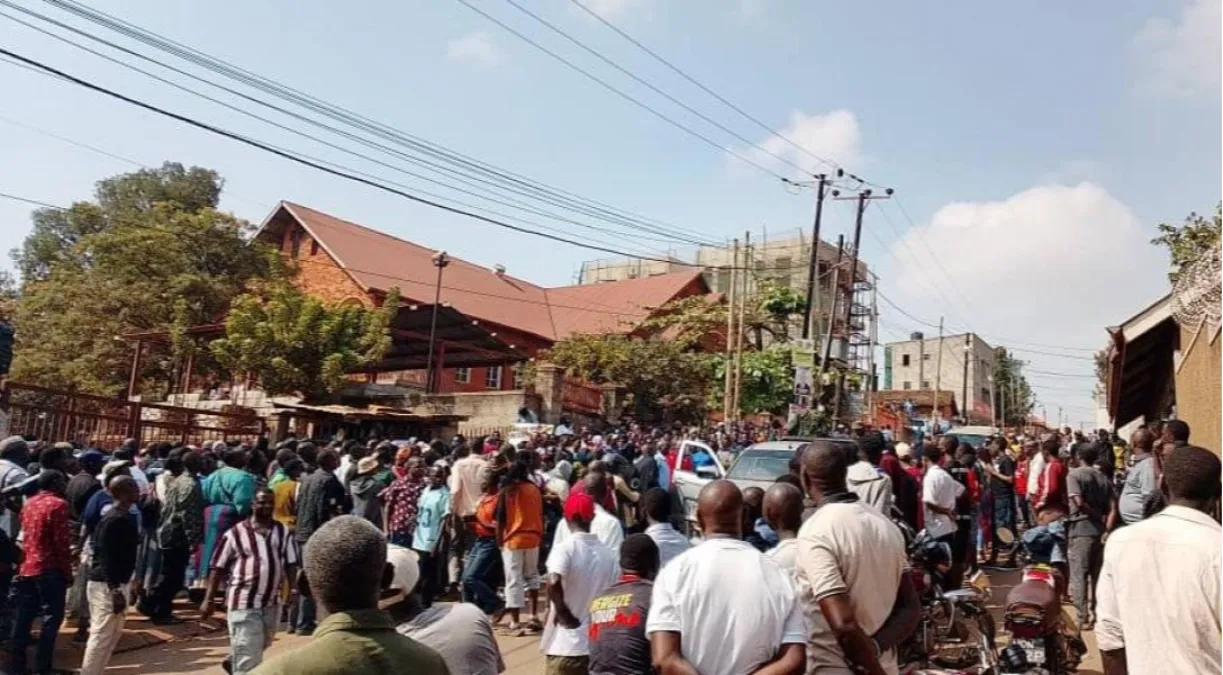
KAMPALA, Uganda — Voting at a Local Council I (LCI) election in Kampala’s Kyebando was briefly suspended on Tuesday after supporters of rival chairperson candidates clashed over access to a polling station, forcing security agencies to deploy the military to restore order.
The disturbance occurred at St Paul Primary School in Kyebando Centre Zone, where residents had gathered to elect their village chairperson.
According to eyewitnesses, supporters of incumbent chairperson Lazarus Kagimu, who is contesting as an independent candidate, took control of the entrance to the polling station early in the morning and allegedly allowed entry only to voters they believed supported their candidate.
The move triggered protests from rival camps, including supporters of National Resistance Movement (NRM) candidate Hajji Musa Nsereko and independent candidate Samuel Mwanje, who accused the group of preventing eligible voters from participating in the election.
Several residents were caught up in the standoff, with some remaining outside the polling area despite their names being called from the voters’ register.
Ronald, a resident of Kyebando Central Ward who said he has lived in the area for 19 years, described the disruption as an infringement on residents’ democratic rights.
He said voters had turned up expecting to elect their local leaders but instead found themselves caught in disputes between competing political camps.
The confrontation intensified as residents attempted to gain access to the polling station while supporters of rival candidates argued over who should be allowed inside.
Police officers initially monitored the situation as tensions escalated, but the disagreement persisted.
Security agencies later deployed the military to restore order and regulate access to the polling station.
Following the intervention, calm returned and voting resumed.
Also Read: Men dressed as women arrested during Uganda Women Council elections
Several residents criticised what they described as interference by candidates’ supporters, arguing that election officials—not political agents—should have controlled access to the polling venue.
They accused some agents stationed at the entrance of selectively allowing voters into the polling area based on perceived political affiliation.
Residents said such actions undermined confidence in the electoral process and called for stricter enforcement of election procedures at future village polls.
The incident was among a small number of election-related disputes reported during Uganda’s LCI elections, although voting generally proceeded peacefully in most parts of the country.
The grassroots elections are considered a critical component of Uganda’s local governance system, with village chairpersons serving as the first point of contact between communities and government institutions.
Authorities had not announced any arrests or confirmed whether investigations into the disruption would be launched by the time of publication.
