


KAMPALA, Uganda — For businesses that import fuel, machinery or raw materials, it is a statistic that may quietly save millions of shillings.
For policymakers, it is a sign that one of the economy’s most closely watched indicators is moving in the right direction.
And for economists trying to understand the shifting fortunes of East Africa’s currencies, it raises an increasingly important question:
Why is Uganda’s shilling strengthening while most of its regional peers are struggling to keep pace with the U.S. dollar?
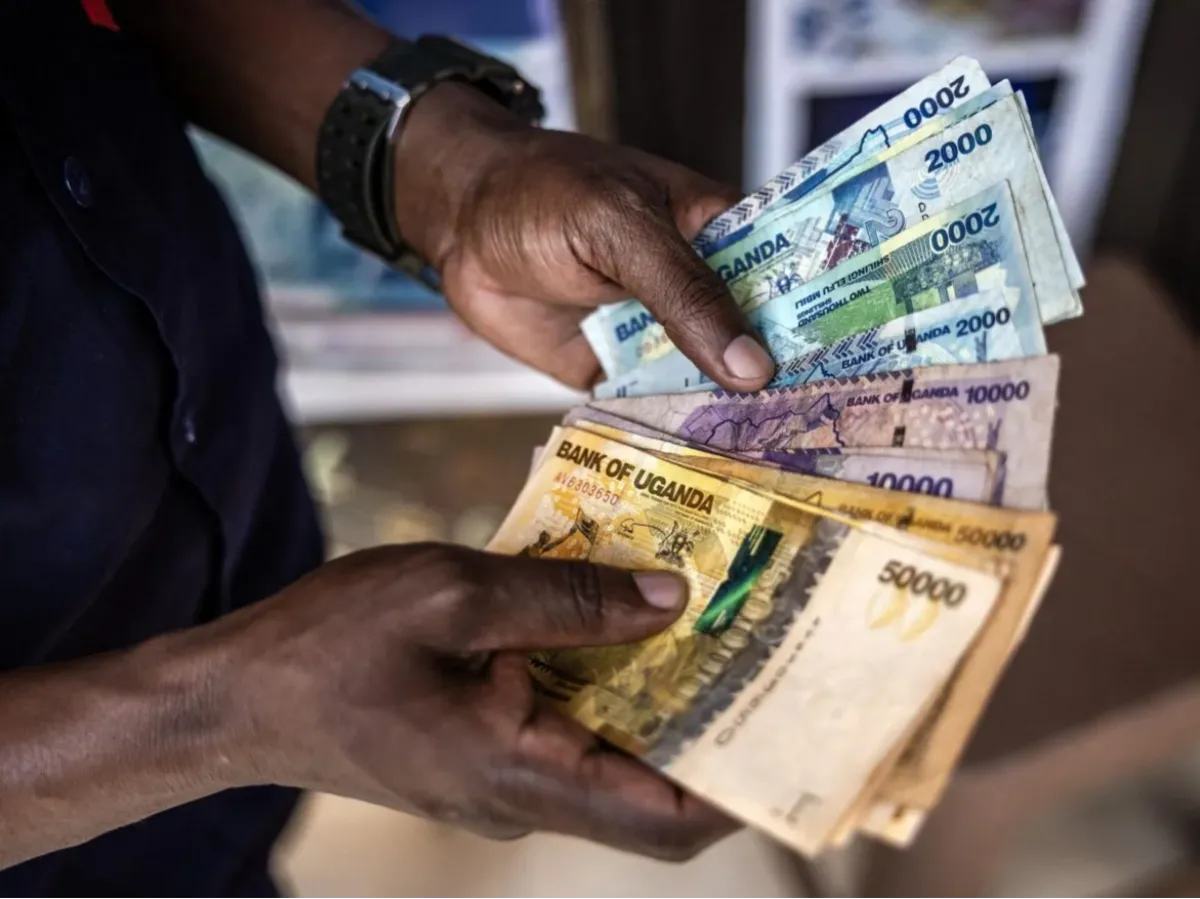
According to the Ministry of Finance’s latest Performance of the Economy Report, Uganda’s currency was the only one among major East African Community (EAC) economies to appreciate against the dollar in June.
The Ugandan shilling strengthened by 1.4 percent during the month, outperforming the Tanzanian shilling, Rwandan franc and Burundian franc, all of which weakened, while Kenya’s shilling remained largely unchanged.
“Among the EAC Partner States, the Ugandan Shilling was the only currency that registered an appreciation against the U.S. Dollar, strengthening by 1.4 percent,” the report stated.
At first glance, the movement may appear modest.
In foreign exchange markets, however, a gain of that magnitude over a single month is significant, particularly at a time when many developing economies continue to grapple with global currency volatility, elevated borrowing costs and uncertain international trade conditions.
A currency tells a story
Currencies rarely move in isolation.
Behind every appreciation or depreciation lies a larger economic story involving exports, imports, investor confidence, interest rates and capital flows.
The shilling’s recent performance reflects a convergence of several forces that have quietly reshaped Uganda’s foreign exchange position over the past year.
The Ministry of Finance attributes the appreciation primarily to rising foreign exchange inflows from commodity exports and offshore investors.
“The currency’s gains were driven by increased foreign exchange inflows from commodity exporters and offshore investors, which more than offset demand for dollars from importers and corporations,” the report noted.
In simple terms, more dollars entered Uganda’s economy than were leaving it.
That imbalance matters because foreign exchange markets operate according to the same principles that govern most markets: supply and demand.
When more dollars become available, their relative value tends to decline.
When demand for shillings rises at the same time, the local currency strengthens.
That is precisely what appears to have happened.
The gold factor
Although Uganda exports a range of agricultural and manufactured products, one commodity has increasingly emerged as a major driver of foreign exchange inflows.
Gold.
In recent years, gold exports have become one of Uganda’s largest sources of foreign earnings, generating substantial inflows of hard currency and providing an important buffer against external economic shocks.
Economists note that the global environment has amplified this effect.
Gold prices have remained elevated as investors seek safe-haven assets amid geopolitical uncertainty and concerns about slowing global growth.
Higher prices mean stronger export receipts.
Stronger export receipts mean more dollars entering Uganda.
And more dollars help support the shilling.
The result is a currency that has shown unusual resilience despite broader regional and global pressures.
A regional contrast
Uganda’s performance becomes more striking when viewed against developments elsewhere in East Africa.
According to the finance ministry report, the Tanzanian shilling depreciated by 0.8 percent against the dollar during June.
The Rwandan franc weakened by 0.13 percent, while the Burundian franc fell by 0.14 percent.
“The Tanzanian Shilling, Rwandan Franc, and Burundian Franc depreciated by 0.8 percent, 0.13 percent, and 0.14 percent, respectively,” the report observed.
Kenya, whose currency experienced severe pressure in previous years before stabilising more recently, recorded virtually no movement.
“The Kenyan Shilling remained relatively stable, with a negligible movement of 0.05 percent against the U.S. Dollar,” the report said.
The contrast highlights how differently East African economies are responding to similar global conditions.
While international factors such as U.S. interest rates affect the region broadly, domestic economic structures often determine how individual currencies perform.
Countries with stronger export earnings generally enjoy greater protection from currency volatility.
Those dependent on imports or external borrowing often face more pressure.
Why investors are paying attention
The report’s reference to offshore investors may prove just as important as export earnings.
Investor confidence can influence currency markets almost as much as trade flows.
When international investors buy government securities, invest in financial markets or commit capital to businesses, they typically convert foreign currency into local currency.
That process increases demand for the domestic currency and can support appreciation.
Uganda’s ability to attract such inflows suggests that investors continue to view the country’s macroeconomic environment favourably relative to some regional peers.
While investors remain cautious about global economic risks, stable inflation, relatively disciplined monetary policy and strong export performance can improve confidence in a country’s currency.
In that sense, the shilling’s appreciation may reflect not only stronger exports but also growing confidence in Uganda’s economic outlook.
Winners and losers
A stronger currency is generally viewed as positive news.
But like most economic developments, the benefits are not evenly distributed.
Importers are among the biggest beneficiaries.
Businesses purchasing fuel, industrial equipment, pharmaceuticals or raw materials from abroad effectively pay less when the local currency strengthens.
That can lower operating costs and reduce pressure on consumer prices.
For households, the effect can be indirect but meaningful.
Cheaper imports can help contain inflation, particularly in sectors heavily dependent on imported goods.
Economists often view currency stability as an important ingredient in maintaining purchasing power.
Yet exporters face a different reality.
Also Read: Kenyan shilling weakens against dollar after being static for 20 months
When export earnings denominated in dollars are converted into shillings, a stronger local currency can reduce returns.
For a coffee exporter, gold trader or manufacturing company earning foreign currency, appreciation can slightly reduce local-currency revenues unless export volumes or prices increase.
This tension illustrates one of the fundamental challenges of exchange-rate management.
The ideal currency is neither excessively weak nor excessively strong.
Policymakers generally seek stability rather than dramatic movements in either direction.
What comes next?
The question now facing economists is whether the shilling’s strength can be sustained.
Much depends on factors beyond Uganda’s borders.
Global commodity prices, investor sentiment, international interest rates and geopolitical developments all influence currency markets.
A slowdown in export earnings or a surge in import demand could quickly alter the balance.
Equally, continued strength in gold exports and steady investor inflows could extend the current trend.
For now, however, Uganda finds itself in an unusual position.
At a time when many developing economies continue to wrestle with currency pressures, the shilling is moving in the opposite direction.
The appreciation may not dominate political debates or generate dramatic headlines.
But in financial markets, small movements often signal larger shifts beneath the surface.
And for June at least, Uganda’s currency told a story few others in East Africa could match.
It was not merely surviving.
It was gaining ground.
