


NAIROBI, Kenya — Every weekday morning, Nairobi performs the same ritual.
Before dawn has fully broken, thousands of commuters pour out of estates in Eastlands, Embakasi, Rongai, Ngong, Kasarani and Kikuyu, bracing themselves for a journey that often feels less like transportation and more like endurance.
Matatus crawl.
Buses inch forward.
Motorcycles weave through impossibly narrow gaps.
Cars sit motionless in queues stretching for kilometres.
Hours disappear.
Appointments are missed.
Fuel is burned.
Productivity evaporates.
For many Nairobi residents, traffic congestion is no longer an inconvenience. It has become a defining feature of urban life.
That reality helps explain the significance of a decision taken this week by Nairobi County.
In a move that could reshape the future of Kenya’s capital, the county government approved the implementation framework for the first phase of the Nairobi Metropolitan Mass Rapid Transit System (NMRTS), an ambitious project that includes an underground railway through the Central Business District and a high-capacity rail connection to Eastlands.
If completed, it would represent one of the most transformative infrastructure projects in Nairobi’s modern history.
The bigger question is whether the city can finally achieve what generations of planners have promised but never fully delivered: a transport system capable of keeping pace with one of Africa’s fastest-growing urban populations.
A city built faster than its roads
Nairobi’s traffic crisis did not emerge overnight.
The city’s population has expanded dramatically over the past several decades, driven by urbanisation, economic opportunity and population growth.
Yet transport infrastructure has struggled to keep up.
Road networks originally designed for a much smaller city now carry millions of daily journeys.
The result is a metropolitan area where economic activity increasingly collides with physical limitations.
Urban transport experts often describe congestion not simply as a transport problem but as an economic one.
Every hour spent in traffic represents lost productivity.
Every delayed delivery raises business costs.
Every litre of fuel burned while stationary increases transport expenses that eventually filter through the wider economy.
In effect, congestion acts as a hidden tax on residents and businesses alike.
That is why major cities eventually reach a point where building more roads alone is no longer enough.
They begin looking underground.
The logic behind going underground
The centrepiece of Nairobi’s new transport vision is the proposed underground railway section beneath the CBD.
The idea reflects lessons learned from cities around the world that faced similar challenges.
London, Paris, New York, Tokyo, Shanghai and Cairo all eventually concluded that surface transport could not adequately serve growing populations.
When roads reached capacity, the only remaining direction was down.
According to Nairobi County, the underground CBD corridor will form the backbone of the wider network.
Rather than competing for limited road space, trains would move passengers beneath the city centre while connecting seamlessly with pedestrian infrastructure, non-motorised transport systems and transit terminals.
The goal is not simply to move people faster.
It is to redesign how people move through the city altogether.
For commuters accustomed to spending hours travelling into and out of the CBD, the implications could be profound.
Why Eastlands matters
While the underground rail component has attracted much attention, transport analysts argue that the Eastlands connection may ultimately prove just as important.
Eastlands remains one of Nairobi’s most densely populated urban zones and generates enormous daily commuter traffic.
Thousands of workers travel between Eastlands and the city centre every day, creating some of the most heavily congested corridors in the capital.
The proposed high-capacity rail link is designed to relieve that pressure.
If successful, it could significantly reduce travel times while providing a more predictable alternative to road-based transport.
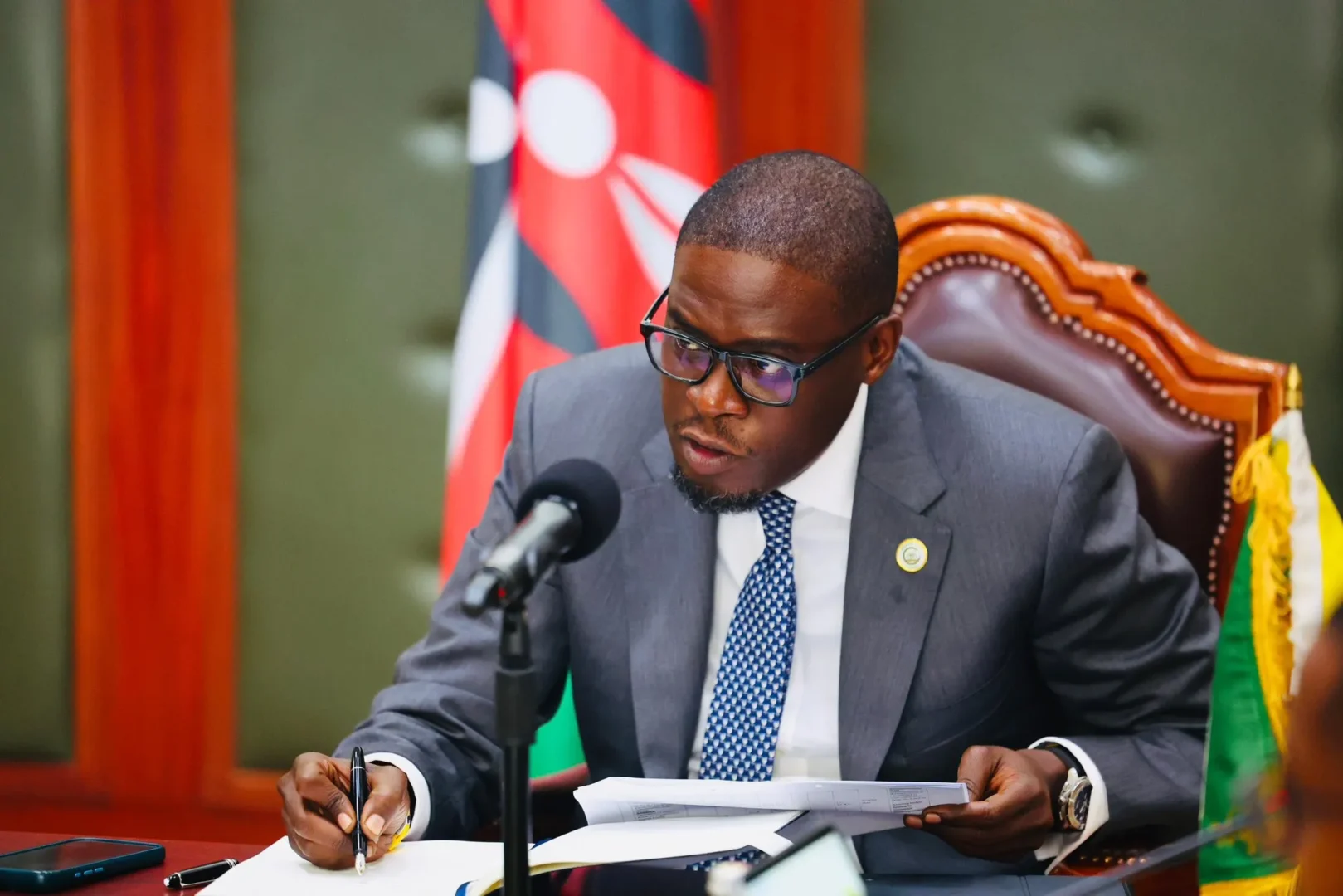
Governor Johnson Sakaja framed the project as an economic intervention as much as a transport one.
“For far too long, the people of Nairobi, particularly our hardworking commuters from Eastlands and across the metropolitan area, have lost precious hours in traffic jams that slow down our economic growth,” he said.
“Today, we are moving from planning to implementation. The approval of Phase I of the NMRTS is our commitment to delivering a modern, fast, safe and dignified public transport system. By integrating an underground CBD core with high-capacity links to Eastlands, we will unlock Nairobi’s economic potential, lower the cost of transport and build a cleaner, greener and world-class city.”
His remarks reflect a growing recognition among policymakers that mobility and economic growth are inseparable.
A city cannot compete globally if moving across it becomes increasingly difficult.
The challenge of turning vision into reality
Ambitious transport projects are not new to Nairobi.
Neither are bold promises.
What makes this announcement different is the transition from conceptual planning to an approved implementation framework.
Yet approval is only the beginning.
History offers numerous examples of large-scale urban transport projects that faced delays, budget overruns, political disputes and technical challenges.
Underground rail systems are among the most complex infrastructure undertakings governments can pursue.
Construction beneath densely developed urban areas requires sophisticated engineering, extensive environmental assessments, land-use planning and significant financial resources.
Funding will likely become one of the most closely watched aspects of the project.
Mass transit systems typically require billions of dollars in investment and long-term political commitment that extends beyond individual administrations.
Public participation and stakeholder consultations announced by the county government will therefore be critical in determining whether the project gains the broad support necessary for implementation.
More than a railway
Supporters argue that the benefits extend far beyond transportation.
Major transit systems often trigger wider urban transformation.
Property development tends to cluster around stations.
Businesses gain access to larger labour markets.
Commuters gain more predictable travel times.
Environmental benefits also become significant.
Transport remains a major contributor to urban emissions, and shifting large numbers of passengers from road-based transport to mass transit can substantially reduce carbon output.
Nairobi County says the project is expected to create thousands of jobs during both construction and operation while contributing to broader sustainability goals.
In a city increasingly grappling with pollution, congestion and rapid population growth, those outcomes could prove as important as the trains themselves.
The city Nairobi wants to become
Perhaps the most revealing part of the announcement was not the underground railway or the Eastlands connection.
It was what comes next.
County officials confirmed that planning is already underway for a second phase that would extend services toward Westlands, Ngong Road and Lang’ata while connecting commuters from Ongata Rongai, Ngong and Nairobi’s western corridor.
The completed network would eventually integrate with Nairobi’s Bus Rapid Transit system through interchange stations designed to provide seamless movement across the metropolitan area.
In other words, the vision extends beyond solving today’s congestion.
It seeks to redefine how Nairobi functions in the decades ahead.
Whether that vision becomes reality remains uncertain.
Also Read: Court declares Sh11.5b Riruta-Ngong railway project unconstitutional
Infrastructure projects of this scale inevitably face obstacles.
Funding questions remain.
Technical challenges lie ahead.
Public scrutiny will intensify as details emerge.
Yet for a city where traffic congestion has become almost synonymous with daily life, the approval of the NMRTS framework represents something many residents have not experienced in years.
The possibility of an alternative.
For now, commuters will continue sitting in traffic tomorrow morning.
And the morning after that.
And likely for years to come.
But beneath Nairobi’s crowded streets, planners are imagining a different future — one where movement is measured not in hours lost but in minutes gained.
If the project succeeds, that future could transform far more than transportation.
It could transform the city itself.
