

NAIROBI, Kenya — For years, Uganda’s political opposition has operated under a familiar reality: major court cases rarely remain confined to the individuals standing in the dock.
A single prosecution often opens a window into broader political contests, exposing networks of allies, rivals, activists, exiles and critics whose names suddenly become part of a legal narrative long before any court determines whether allegations are true.
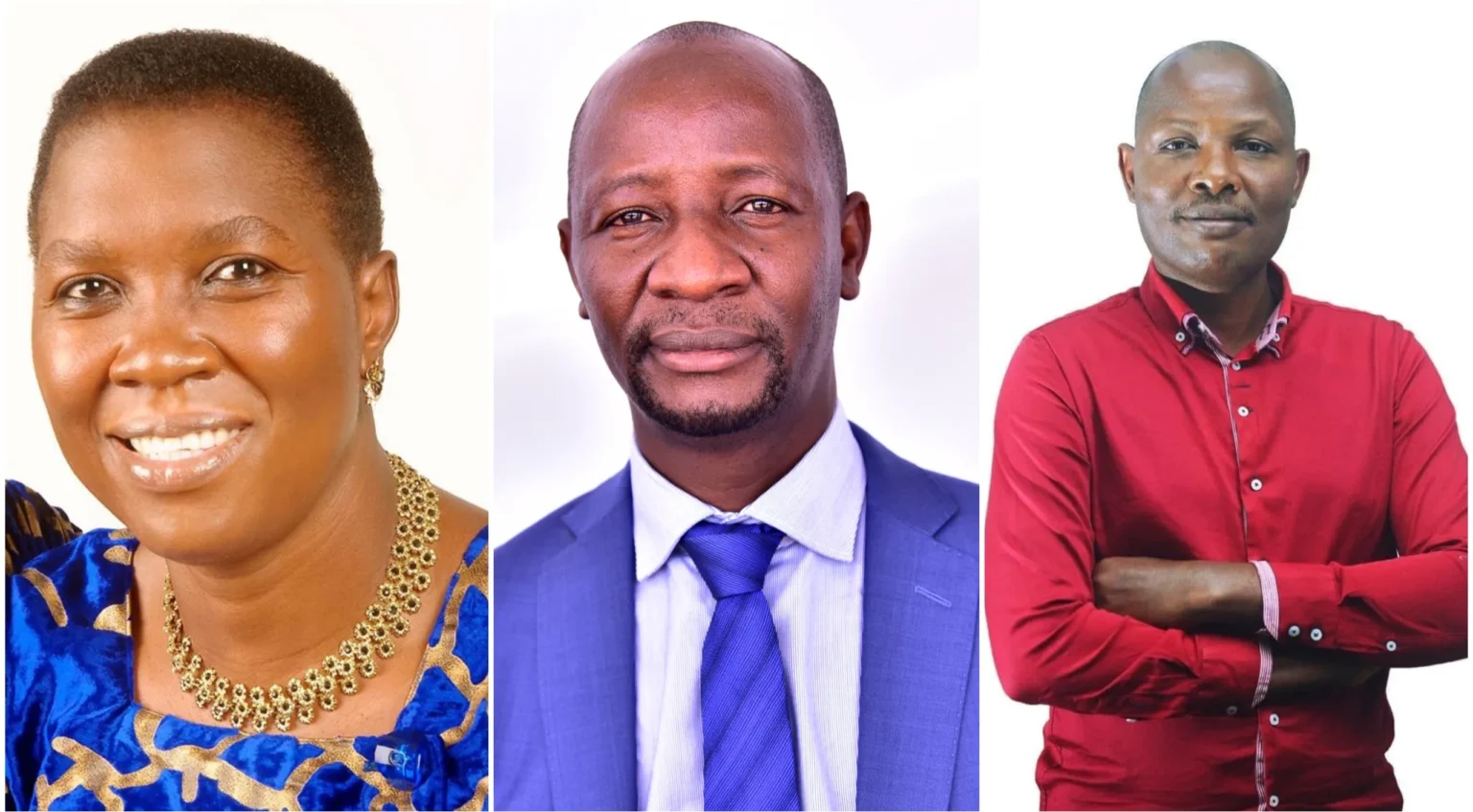
That dynamic was on display again this week when veteran opposition figure Salaam Musumba, former Kira Municipality MP Ibrahim Ssemujju Nganda and political commentator Charles Rwomushana unexpectedly found themselves at the centre of a prosecution indictment presented before the Makindye Chief Magistrate’s Court.
None of the three has been arrested.
None has been charged.
None appeared before court.
Yet all three featured prominently in a prosecution document outlining what investigators describe as an alleged plot to overthrow President Yoweri Museveni’s government.
The development has once again highlighted the increasingly blurred intersection between Uganda’s legal processes, intelligence operations and opposition politics—an arena where allegations can carry political consequences long before they are tested in court.
At the centre of the latest proceedings is former Kampala Lord Mayor Erias Lukwago, who has been committed to the High Court for trial on a charge of misprision of treason.
The charge does not accuse Lukwago of participating in treason.
Instead, prosecutors allege that he knew about an alleged conspiracy and failed to report it to authorities.
Yet as the case moves toward trial, public attention is shifting beyond Lukwago himself and toward the broader story contained within the prosecution’s indictment.
The document reads less like a conventional criminal brief and more like a political thriller spanning multiple countries, secret recordings, intelligence operations, opposition meetings and allegations of plans to remove a government that has been in power for four decades.
According to prosecutors, the case traces its origins to 2021 when Switzerland-based Ugandan Joel Wakaima allegedly approached Andrew Wilson, identified in court documents as the proprietor of a private security company involved in firearms, investigations and tactical training.
The prosecution alleges that Wakaima sought military assistance and weapons “to overturn the Government of Uganda by force of arms.”
Rather than accepting the proposal, prosecutors say Wilson alerted Ugandan authorities.
The indictment claims security agencies subsequently enlisted him in an undercover operation designed to monitor the alleged conspiracy.
From that point onward, prosecutors allege, Wilson continued engaging with the individuals involved while secretly recording conversations and meetings on behalf of Ugandan intelligence services.
If proven, the operation would represent one of the most extensive undercover intelligence exercises ever publicly described in connection with Uganda’s opposition politics.
It is through this alleged operation that the names of Musumba, Ssemujju and Rwomushana emerge.
According to the indictment, Wakaima introduced Wilson to Salaam Musumba in 2023.
“Wilson had a conversation with Salaam Musumba by Zoom call and the proceedings of this meeting were recorded by AW,” the indictment states.
The prosecution further alleges that during the conversation Musumba “requested for the training of their people in covert communications and intelligence gathering techniques for the purpose of spying on the Government of the Republic of Uganda.”
The indictment then describes a subsequent meeting in Brussels.
“That Salaam Musumba subsequently requested for a meeting with AW in Brussels, Belgium where she invited many other people to attend including the accused, Hon. Ssemujju Nganda, Lubega Mukaku and Charles Rwomushana,” the indictment states.
According to prosecutors, discussions at that meeting allegedly centred on efforts to remove the government.
“The prosecution further claims that ‘in the discussions at this meeting, Wilson accepted to join the plot to overturn the Government and agreed to be their security and military adviser.’”
The indictment adds that the Brussels discussions were secretly recorded and that “the recording shall be relied upon at the trial.”
What remains unclear is why some individuals mentioned extensively in the indictment have not been charged.
Legal analysts note that criminal indictments frequently contain references to persons who are not formally accused of wrongdoing.
In some cases, investigators may consider them witnesses.
In others, inquiries may remain ongoing.
Sometimes names appear because prosecutors believe they form part of the factual background of a case.
The result, however, can be politically significant.
Being named in a treason-related prosecution document inevitably attracts public scrutiny regardless of whether charges are eventually brought.
That reality is particularly sensitive in Uganda, where accusations involving national security, rebellion or attempts to overthrow the government carry both legal and political weight.
The indictment’s narrative extends further into opposition politics through references to retired Col Dr Kizza Besigye, one of President Museveni’s longest-serving political challengers.
According to prosecutors, Musumba later sought to facilitate contact between Wilson and Dr Besigye.
“Upon building sufficient trust in AW, Salaam Musumba requested JW to introduce AW to KB. This was done and the two (AW and JW) had an online discussion with KB about the grand plot to overturn the Government of Uganda by force of arms. This culminated into the first physical meeting between KB and AW on 29 October 2023 at Geneva, Switzerland,” prosecutors state.
The DPP further alleges that subsequent meetings in Geneva, Brussels and Nairobi formed part of a sequence of events that ultimately culminated in the arrest of Besigye and his aide Hajj Obeid Lutale in Nairobi in November 2024.
The significance of those allegations extends beyond the courtroom because they arrive against a broader backdrop of intensifying political competition as Uganda edges closer to another electoral cycle.
For decades, opposition figures have frequently accused the state of using security and legal institutions to constrain political activity.
Government officials have consistently rejected those claims, arguing that investigations and prosecutions are based on evidence rather than politics.
The latest case is likely to revive those debates.
Political analyst Dr Moses Khisa has previously observed that treason-related prosecutions occupy a uniquely sensitive place within Uganda’s political landscape because they often involve allegations that overlap with broader questions about political dissent, opposition mobilisation and state security.
The challenge for courts is ensuring that allegations are ultimately judged on evidence rather than political perceptions.
That process is only beginning.
Under Uganda’s criminal justice system, an indictment is not a finding of guilt.
It is a summary of allegations and evidence that prosecutors intend to present before the High Court.
The claims contained within it remain untested.
The recordings cited by prosecutors have not yet been subjected to cross-examination.
The individuals mentioned in the indictment but not charged have not responded to the allegations through court proceedings.
Those distinctions are likely to become increasingly important as the case advances.
For now, the legal spotlight remains on Lukwago, whose trial will focus on whether prosecutors can prove that he knew of an alleged conspiracy and failed to report it.
Also Read: High Court clears Besigye treason trial despite objections over lawyers
Yet politically, the case has already widened far beyond one accused person.
By naming some of Uganda’s most recognisable opposition figures in a document alleging a covert campaign to overthrow the government, prosecutors have ensured that the coming trial will be watched not merely as a criminal proceeding but as another chapter in Uganda’s long-running struggle between state power, opposition politics and the boundaries between dissent and national security.
Whether the allegations ultimately withstand judicial scrutiny remains a matter for the courts.
But even before the first witness takes the stand, the indictment has already achieved one thing: it has reignited debate about how Uganda’s political battles increasingly unfold not only on campaign platforms and parliamentary floors, but also inside courtrooms where law, intelligence and politics frequently intersect.