




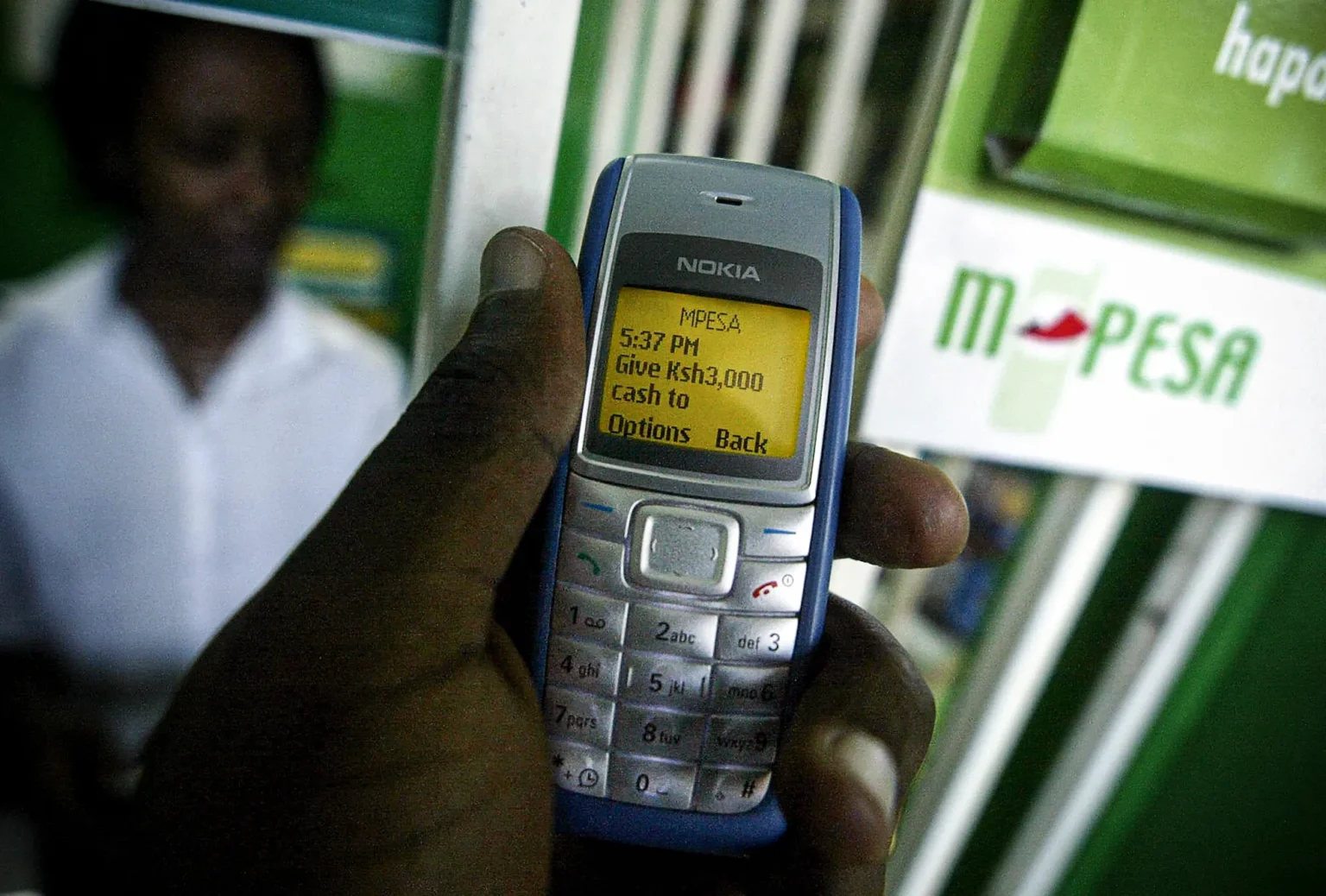
NAIROBI, Kenya — On a busy weekday morning in Nairobi’s Central Business District (CBD), a customer approaches a roadside tea vendor and orders breakfast.
The bill comes to KSh 80.
There is no fumbling through pockets for loose change. No search for a KSh 100 note. No familiar exchange of coins across the counter.
Instead, the customer pulls out a smartphone, enters a till number and completes the payment in seconds. By the time the tea vendor begins preparing the order, the transaction is already complete.
Neither man appears to think much about it.
Yet what has just happened would have seemed extraordinary to many Kenyans barely two decades ago.
Across the country, millions of similar transactions now take place every day with almost no attention.
Passengers board matatus and pay fares without touching cash. Churchgoers send tithes through mobile money platforms. Vegetable traders receive payments directly to their phones. Landlords collect rent digitally. Street vendors selling roasted maize by the roadside display till numbers as prominently as the products they sell.
What began as a convenient alternative to cash has evolved into something far more significant.
Without a government decree, a national campaign or sweeping legislation, Kenya has quietly transformed the way money moves through society.
The shift has happened so gradually that many people scarcely notice it. Yet it has altered daily life in ways few countries have experienced.
A generation ago, cash dominated almost every aspect of commerce. Today, for millions of Kenyans, a mobile phone has become more important than a wallet.
The transformation is perhaps most visible in places where one would least expect it.
At Nairobi’s Gikomba Market, East Africa’s largest open-air market, traders who once relied entirely on cash now conduct much of their business through digital payments. Customers browsing piles of clothes, shoes and household goods routinely ask for till numbers before negotiating prices.
Mary Wanjiku, a vegetable trader, says customer behaviour has changed dramatically in recent years.
“People used to ask if you accepted mobile money,” she said. “Now they assume you do.”
The shift is not merely about convenience. For traders operating in highly competitive markets, refusing digital payments can mean losing customers altogether.
“If someone wants to pay and you tell them to look for cash, many will simply buy from the next person,” Wanjiku explained.
What is happening in Gikomba is being repeated across Kenya’s informal economy. Small kiosks, roadside food stalls and market traders increasingly operate in a world where digital payments are no longer an advantage but an expectation.
The same trend has quietly reached institutions that traditionally existed far beyond the world of commerce.
On Sunday mornings across Kenya, congregants sit through church services while paybill numbers appear on projection screens, noticeboards and church bulletins. The offering basket has not disappeared, but it increasingly shares space with digital payment options.
Pastor Daniel Mwangi says many churches adopted mobile giving out of necessity before realising that congregants preferred it.
“People became comfortable using mobile money everywhere else in their lives,” the pastor said. “Eventually they wanted the same convenience when giving offerings or supporting church projects.”
What was once considered a technological innovation has become routine. Younger worshippers often arrive carrying phones but little cash, making digital contributions the simplest option available.
Public transport tells a similar story.
For generations, the matatu industry ran on physical cash. Conductors collected fares by hand, counted notes during journeys and searched endlessly for change. Today, on many routes, passengers increasingly transfer money digitally, particularly during peak hours when speed matters.
Peter Njoroge, a matatu operator in Nairobi, says the benefits became apparent almost immediately.
“You spend less time arguing about change and less time handling cash,” he said. “Everything moves faster.”
His observation points to a broader reason why digital payments have spread so rapidly. The technology solved everyday frustrations.
Consumers no longer need to visit ATMs regularly. Businesses handle less cash. Transactions are easier to record. The risks associated with carrying large amounts of money are reduced.
According to economist Dr Susan Muthoni, Kenya’s experience stands out because the transition was driven primarily by ordinary people rather than government policy.
“Many countries tried to engineer cashless economies from the top down,” she said. “In Kenya, adoption happened because consumers and businesses found digital payments genuinely useful.”
That distinction matters.
The country’s payment revolution was not imposed. It emerged organically from millions of individual decisions made every day by shoppers, traders, commuters and business owners.
Yet declarations about the death of cash may still be premature.
Travel beyond major urban centres and physical currency remains an important part of daily life. In areas where network coverage is unreliable, cash often provides a level of certainty that digital systems cannot always guarantee. Technical outages, power interruptions and system failures occasionally remind consumers why physical money still matters.
Older generations, too, often retain a preference for notes and coins, particularly for smaller transactions.
Economist Dr James Mwangi argues that the real story is not the disappearance of cash but its declining importance.
“Cash still has a role,” he said. “What has changed is that it is no longer the default option for many people.”
That distinction may ultimately define Kenya’s financial transformation.
The country is not becoming cashless in the literal sense. Rather, it is becoming a society where cash increasingly competes with digital alternatives instead of dominating them.
The implications extend far beyond convenience.
Banks, fintech firms, telecommunications companies and government agencies continue investing heavily in digital payment infrastructure. New technologies promise faster transactions, greater integration and broader financial inclusion.
For younger Kenyans who have grown up with mobile money, paying through a phone often feels more natural than handling physical currency.
The most remarkable aspect of Kenya’s cashless revolution is that it arrived without a defining moment.
There was no official launch.
No dramatic policy announcement.
No single event marking the transition.
Also Read: Kenya’s mobile money shifts online as agent visits decline despite network expansion
Instead, it emerged gradually through countless ordinary decisions: a trader accepting mobile money, a commuter paying digitally, a church member sending an offering from a phone.
Individually, those actions seem insignificant.
Collectively, they have transformed how money moves across one of Africa’s most dynamic economies.
Future historians examining Kenya’s economic evolution may identify this period as a turning point.
Not because cash disappeared entirely.
But because, for the first time, it stopped being the default.