
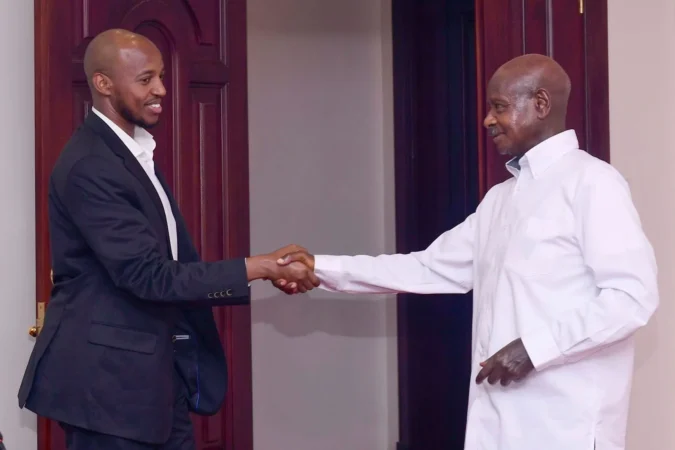


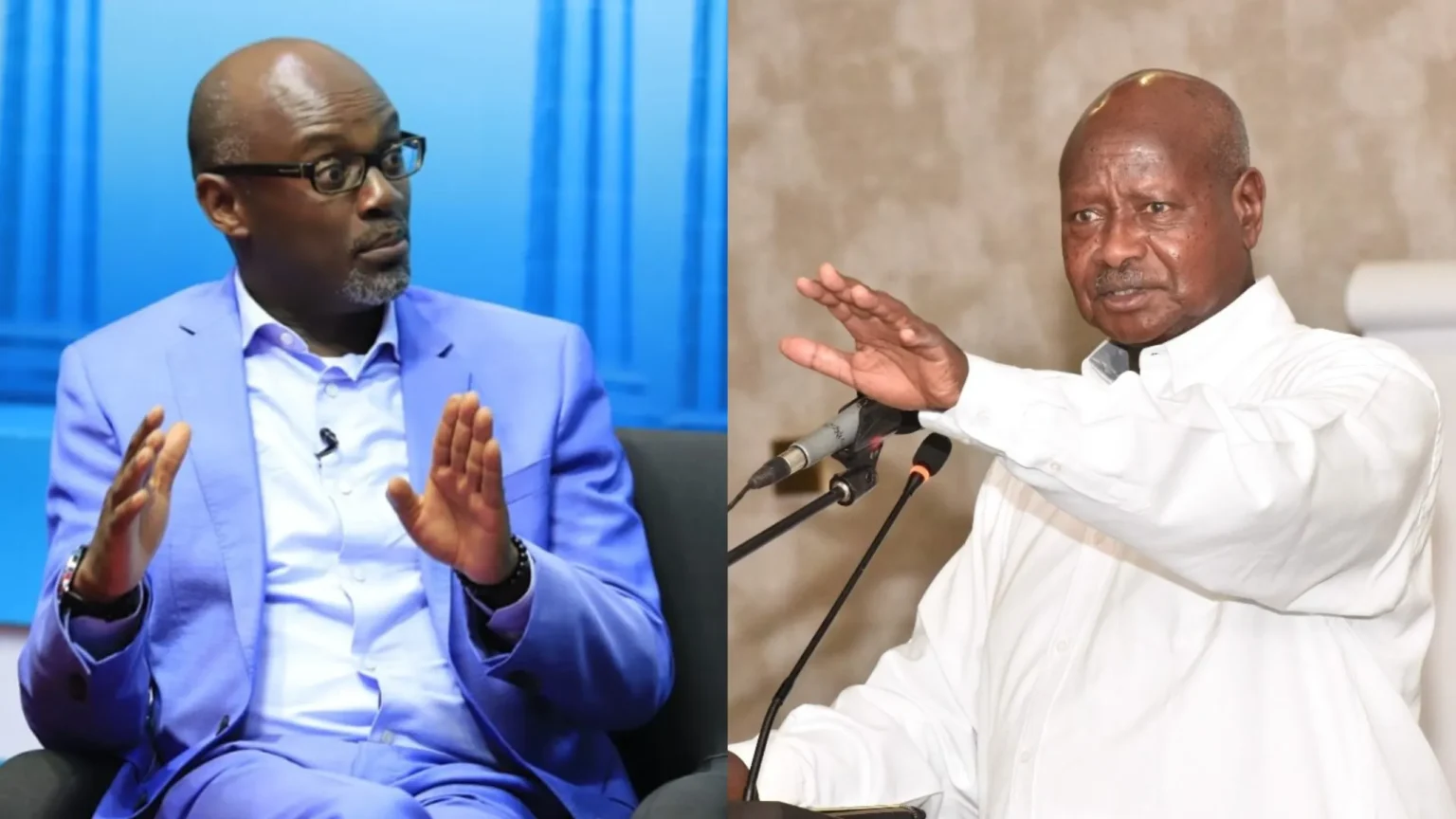
KAMPALA, Uganda — Ugandan journalist and political commentator Andrew Mwenda has issued a detailed response to Yoweri Museveni, clarifying that their public exchange reflects a policy disagreement rather than a personal or political fallout.
Mwenda, who said he was travelling to Beijing when the President published a strongly worded response to his earlier criticism, described the development as a sign of “serious policy debate” rather than hostility.
According to Mwenda, concerns from friends that he could face reprisals were misplaced, arguing that Museveni’s decision to respond publicly demonstrated openness to intellectual engagement.
“If he were as angry as some imagined, he would have sent security agencies. The fact that he wrote back shows this is a debate, not a confrontation,” Mwenda said.
Agreement on strategy, dispute on execution
At the core of the exchange is Uganda’s industrial policy—specifically, the government’s role in supporting private sector growth.
Mwenda noted that he and the President fundamentally agree on the principle of “infant industry” development, where the state plays an active role in nurturing emerging sectors. However, he argued that their disagreement lies in the selection of private firms benefiting from state support.
He also issued a direct apology to Museveni for earlier remarks linking policy decisions to the President’s age, admitting that the argument was misplaced and detracted from substantive debate.
“I should have focused on the merits and demerits of the decisions, not the age at which they were made,” he said.
Lessons from past interventions
Mwenda revisited past government-backed projects to illustrate the complexity of state-led industrial policy, citing both successes and failures.
He pointed to the early 2000s support for Tri Star Apparels under the African Growth and Opportunity Act (AGOA), which failed, and the backing of BIDCO, which went on to succeed.
Despite his earlier opposition to such interventions, Mwenda said he later reconsidered his position, acknowledging that even failed projects can yield broader economic lessons and justify state involvement in strategic sectors.
Global perspective on state intervention
Drawing from international experience, Mwenda referenced his engagements with global investors and technology leaders, including Sergei Brin and Larry Page, during discussions on Africa’s investment potential.
He recounted a 2009 investment conference in New York, where he had criticised state support for private enterprises, a position that resonated strongly with Western investors at the time.
Also Read: Museveni–Mwenda clash exposes Uganda’s mega projects spending
However, his latest remarks suggest a more nuanced stance, recognising that strategic state intervention—if well-executed—can play a critical role in economic transformation.
A debate beyond personalities
The exchange between Mwenda and Museveni has evolved into a broader conversation about Uganda’s development model, particularly the balance between market forces and state intervention.
Analysts say the debate reflects enduring tensions in economic policy across developing economies: whether governments should take an active role in shaping industrial growth or leave it largely to private market dynamics.
Mwenda’s response signals a shift toward a more calibrated position—supporting state involvement in principle while calling for stricter scrutiny in implementation.
As Uganda continues to pursue industrialisation, the discussion is likely to remain central to policy debates, especially as the government seeks to attract investment while maintaining fiscal discipline and accountability.