


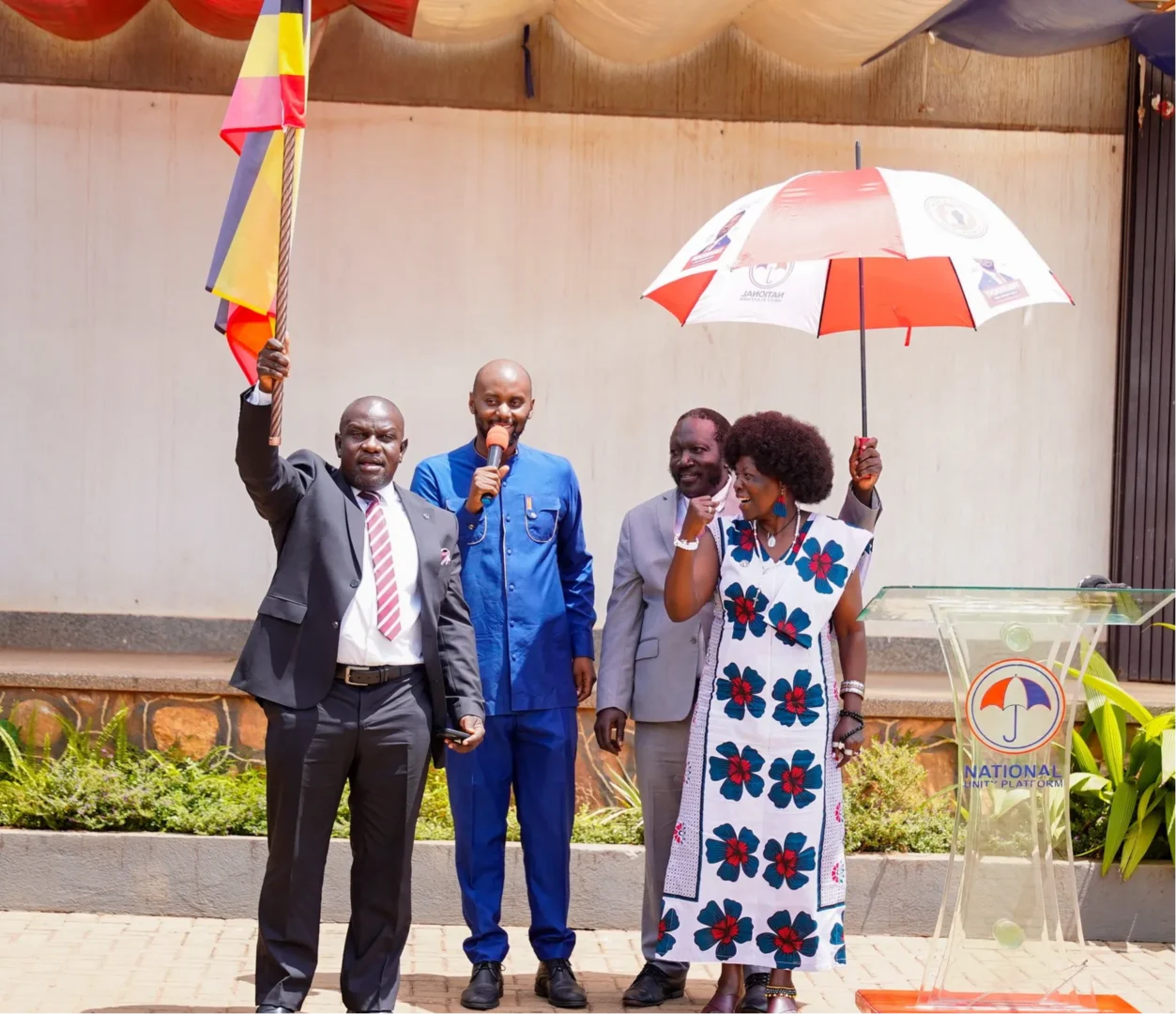
KAMPALA, Uganda — The opposition National Unity Platform (NUP) has nominated Paul Mwiru as its candidate for Speaker of Uganda’s 12th Parliament, setting up a contested leadership race ahead of the opening of the new House on May 25.
The decision follows internal consultations between the party’s leadership and its newly sworn-in parliamentary caucus, with NUP framing its bid as part of a broader push to restore institutional independence within Parliament.
In a statement shared on social media platform X, the party said its engagement with MPs focused on what it described as an “alternative vision” for parliamentary leadership.
“This morning, our top leadership interfaced with the 12th parliamentary caucus and had constructive engagements concerning our alternative vision,” the party said.
It added: “As the NUP, we believe that Parliament needs to regain its autonomy, which is not the case at the moment. There is no way a serving army officer should engage in partisan politics and endorse individuals to occupy parliamentary leadership.”
Although not explicitly named in the statement, the remarks were widely interpreted as referring to recent political interventions by Chief of Defence Forces (CDF) Gen Muhoozi Kainerugaba and the Patriotic League of Uganda (PLU), which have publicly endorsed candidates in the Speakership contest.
The Speakership contest comes at a time when the ruling National Resistance Movement (NRM) holds a commanding majority in Parliament.
According to parliamentary and electoral estimates, the ruling party enters the 12th Parliament with a dominant bloc, alongside independents and a fragmented opposition comprising NUP, UPC, FDC, DP and smaller parties.
This numerical advantage positions the NRM as the decisive force in determining both the Speaker and Deputy Speaker, though opposition parties are expected to use the contest to advance institutional and governance arguments.
The nomination of Paul Mwiru introduces a seasoned opposition figure into the Speakership contest.
A lawyer by training, Mwiru represents Jinja South East and first entered Parliament under the Forum for Democratic Change (FDC) before aligning with NUP.
He is known for his active participation in constitutional debates, governance issues and human rights advocacy, and has previously challenged government positions both in Parliament and in court.
NUP also indicated it is in discussions with other opposition parties to agree on a joint candidate for Deputy Speaker, a move aimed at consolidating influence within a Parliament dominated by the ruling party.
However, political analysts note that opposition fragmentation has historically limited its leverage in leadership contests of this nature.
The race has increasingly become a contest over the interpretation of Parliament’s independence.
Opposition parties argue that external political and security influence risks undermining institutional autonomy, while supporters of the current establishment maintain that internal cohesion within the ruling party is necessary for governance stability.
Despite shifting political dynamics, Democratic Party president general Norbert Mao has maintained interest in the Speakership contest.
Also Read: Uganda’s Speaker race is theatre: History suggests nothing will change
Mao has argued that Parliament must function as an independent arm of government capable of checking executive power, though analysts say his path to victory is constrained by limited numerical support within the House.
The 12th Parliament is scheduled to formally begin business on May 25 with the election of the Speaker and Deputy Speaker.
While the opposition’s nomination of Mwiru signals a coordinated political stance, the outcome is widely expected to be shaped by the overwhelming numerical strength of the ruling party and allied independents.
Still, the contest is emerging as an early test of political alignment, institutional independence and power dynamics in Uganda’s next parliamentary term.
