


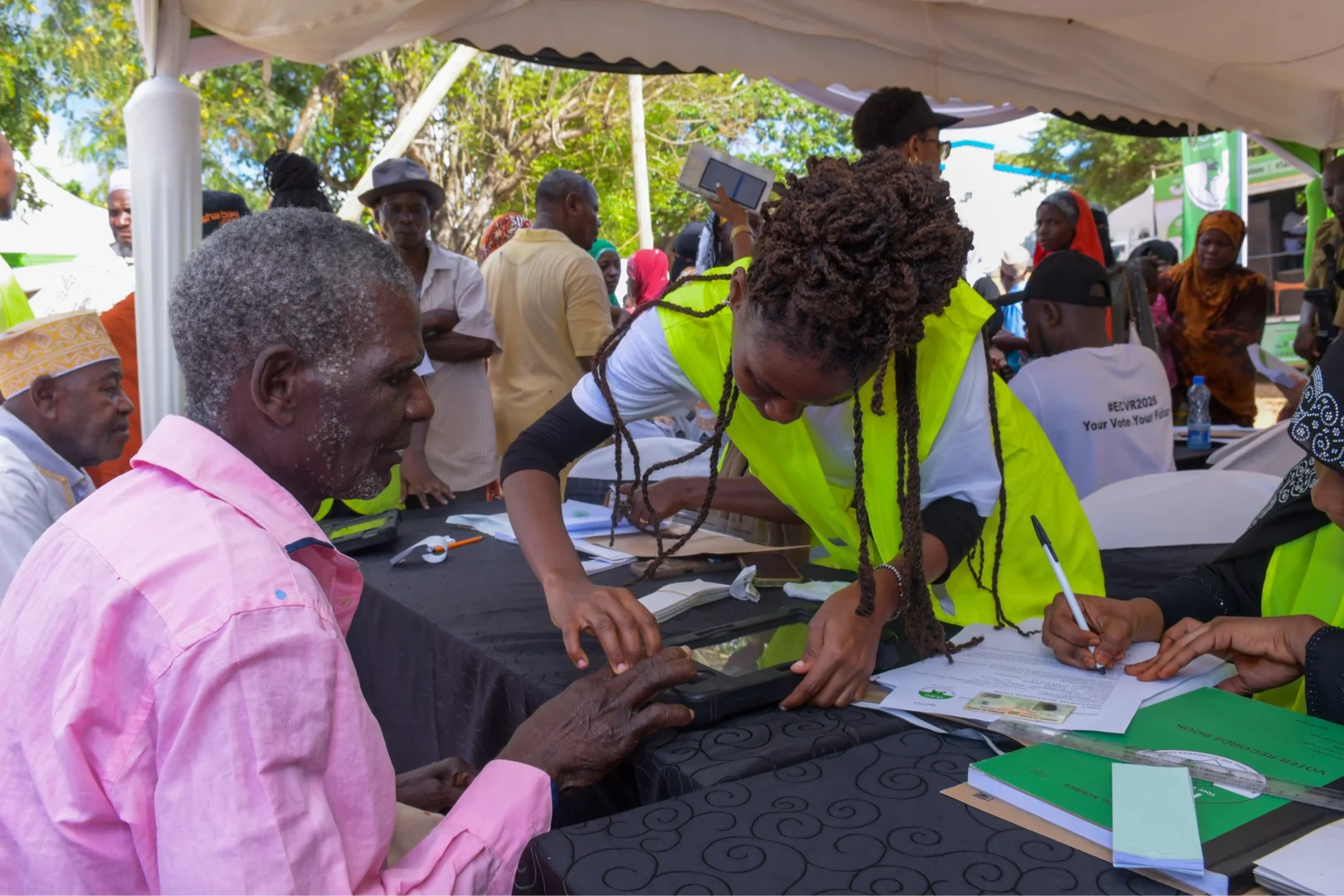
NAIROBI, Kenya — Kenya’s Independent Electoral and Boundaries Commission (IEBC) has directed citizens who registered as voters before 2012 to register afresh, as the country steps up preparations for the 2027 General Election.
Independent Electoral and Boundaries Commission (IEBC) Chairperson Erastus Edung Ethekon said the directive is necessary to ensure all eligible voters are captured in the current biometric Register of Voters (RoV).
The clarification comes amid the Commission’s ongoing Enhanced Continuous Voter Registration (ECVR) exercise, which began on March 30 and is scheduled to run for 30 days nationwide.
“Consequently, individuals who had previously enrolled as voters before 2012 are not part of the current biometric RoV unless they subsequently presented themselves for fresh registration,” the chairperson said.
He added that such individuals “are, therefore, required to register afresh in order to be included in the current biometric register.”
Why re-registration is required
Kenya transitioned to a biometric voter registration system in 2012 following sweeping electoral reforms tied to the 2010 Constitution and the enactment of the Elections Act.
The shift was designed to enhance transparency, reduce duplication, and strengthen the credibility of electoral processes.
As a result, records from the pre-2012 manual system are not automatically integrated into the current digital register, necessitating fresh biometric capture for affected voters.
The IEBC says the current registration drive is being conducted across all 1,450 County Assembly Wards, as well as in universities, Huduma Centres, constituency offices, and its headquarters at Anniversary Towers.
The exercise forms a critical part of preparations for the 2027 polls, with the Commission targeting 2.5 million new voters.
As of April 2, 2026:
- 344,316 new voters had been registered
- 18,610 voter transfers processed
- 329 updates of voter details recorded
The Commission noted that the current exercise builds on an earlier constituency-based registration conducted in September 2025, which registered 273,498 voters.
Strict timeline and no extension
The IEBC has emphasised that the exercise will end on April 28, 2026, with no extension planned.
“Please note that only 25 days remain as this ECVR will close on April 28, 2026. You are reminded that there will be no extension. Thereafter, registration will revert to the constituency offices. Therefore, the time to register is now. Please go out and register,” the chairperson said.
Registration is currently being conducted daily, including weekends and public holidays.
Tightened controls on voter transfers
The Commission also clarified procedures for voter transfers, requiring individuals to present themselves physically at the registration centre in the constituency they intend to move to and submit fresh biometric data.
Also Read: IEBC ditches census data: ID and passport records to drive 2027 voter targets
Officials say the move is aimed at strengthening verification and preventing unauthorised mass voter transfers, a concern that has previously raised questions about electoral integrity.
Call to youth and first-time voters
The IEBC has placed particular emphasis on mobilising young people and first-time voters, who are expected to play a decisive role in the 2027 elections.
“Our primary mission during this window is simple ‘kuwakatia KADI’ (to ensure you get that voter’s card),” the chairperson said.
He added that voter registration goes beyond administrative procedure, framing it as a cornerstone of democratic participation.
The voter registration acknowledgement slip, he said, “represents more than proof of registration; it signifies a citizen’s commitment to participate in the democratic process and to hold leadership accountable.”
The renewed voter registration push comes amid heightened political activity across Kenya, with parties and leaders already positioning themselves ahead of 2027.
Analysts note that voter turnout, particularly among young voters, could significantly influence the outcome of the next election cycle.
For the IEBC, the success of the ECVR exercise will be a key test of its readiness to deliver a credible poll, following past concerns over voter register accuracy and election management.
