


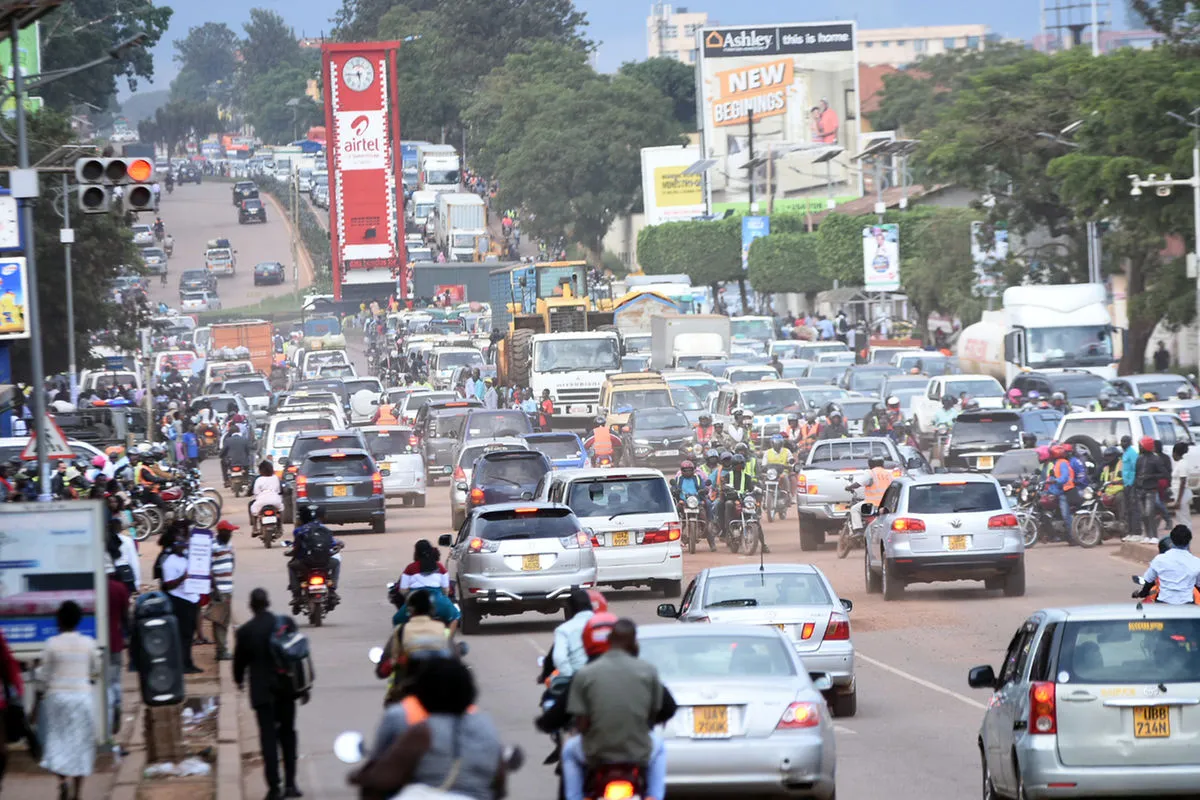
KAMPALA, Uganda — In the early hours of the morning, before traffic builds and the city fully stirs, Kampala can feel deceptively calm. But as the day unfolds, engines revving, dust rising, and waste burning, that calm gives way to a heavier reality.
It is not just perception. It is measurable.
A new global assessment has placed Kampala among the most polluted cities in the world, raising urgent questions about air quality and its long-term impact on public health.
According to the 2025 World Air Quality Report by IQAir, Uganda is now ranked the eighth most polluted country globally and the third most polluted in Africa. Kampala, the country’s economic hub, is listed as the 10th most polluted capital city worldwide.
At the centre of the findings is PM2.5, fine particulate matter small enough to penetrate deep into the lungs and enter the bloodstream.
Uganda’s average annual PM2.5 level stands at 43 micrograms per cubic metre. By comparison, the World Health Organization (WHO) recommends a safe level of just 5.
In practical terms, this means Ugandans are exposed to air containing nearly nine times the recommended safe concentration of harmful particles.
The data, compiled from more than 40,000 monitoring stations across 9,446 cities globally, highlights a troubling reality: Kampala sits at the centre of a growing environmental and health crisis.
“Air pollution is not just an environmental issue, it is a public health emergency,” said Dr Alex Ndyabakira, District Medical Officer for Makindye Division.
Globally, air pollution is linked to an estimated seven million premature deaths each year. In Uganda, it contributes to nearly 30,000 deaths annually, an alarming figure that reflects the scale of exposure.
Health professionals report rising cases of respiratory illnesses, including asthma, pneumonia, and chronic obstructive pulmonary disease, particularly in urban centres. Children remain among the most vulnerable, with long-term exposure potentially impairing lung development.
For many Kampala residents, the crisis is experienced not through statistics, but daily life.
“I spend the whole day on the road,” said boda boda rider Moses Kigongo. “By evening, my chest feels heavy, and sometimes I cough a lot. But what can I do? This is how I earn a living.”
Market vendors face similar conditions. “Most roads have remained dusty,” said Sarah Nakimuli. “We are coughing from morning up to evening.”
The causes of Kampala’s deteriorating air quality are both visible and systemic.
Traffic emissions remain a major contributor, with thousands of ageing and poorly maintained vehicles releasing exhaust into congested streets. Open burning of waste, despite official discouragement, continues to add toxic particles into the air.
Rapid urbanisation, construction activity, and industrial emissions are compounding the problem, creating a complex challenge that requires coordinated intervention.
Authorities have begun taking steps to address the crisis, though progress remains gradual.
One key intervention targets vehicle emissions. The government recently announced a ban on mechanically unfit taxis operating within Kampala and surrounding areas.
“We don’t expect any old taxis in Kampala,” said State Minister for Works and Transport Fred Byamukama, describing poorly maintained vehicles as unacceptable.
Officials say stricter enforcement could reduce emissions, offering some relief in heavily congested zones.
At the same time, the Kampala Capital City Authority (KCCA) has installed approximately 100 air quality monitoring stations across the city, with plans to expand the network.
Despite growing data and policy responses, one major challenge remains: public awareness.
Also Read: NEMA cracks down on noise pollution in Kampala
Unlike other health threats, air pollution is largely invisible, and its effects accumulate over time. Experts say this makes it harder to mobilise public action.
“By equipping journalists with the right tools, we are investing in informed reporting, strengthened accountability, and long-term positive behavior, change,” Dr Ndyabakira said.
For now, millions of Kampala residents continue to breathe air laced with dust, fumes, and microscopic pollutants.
It is a slow-moving crisis, but one with profound consequences.
And as urban growth accelerates, the question is no longer whether air pollution will affect public health, but how severe that impact will become if decisive action is not taken.
