


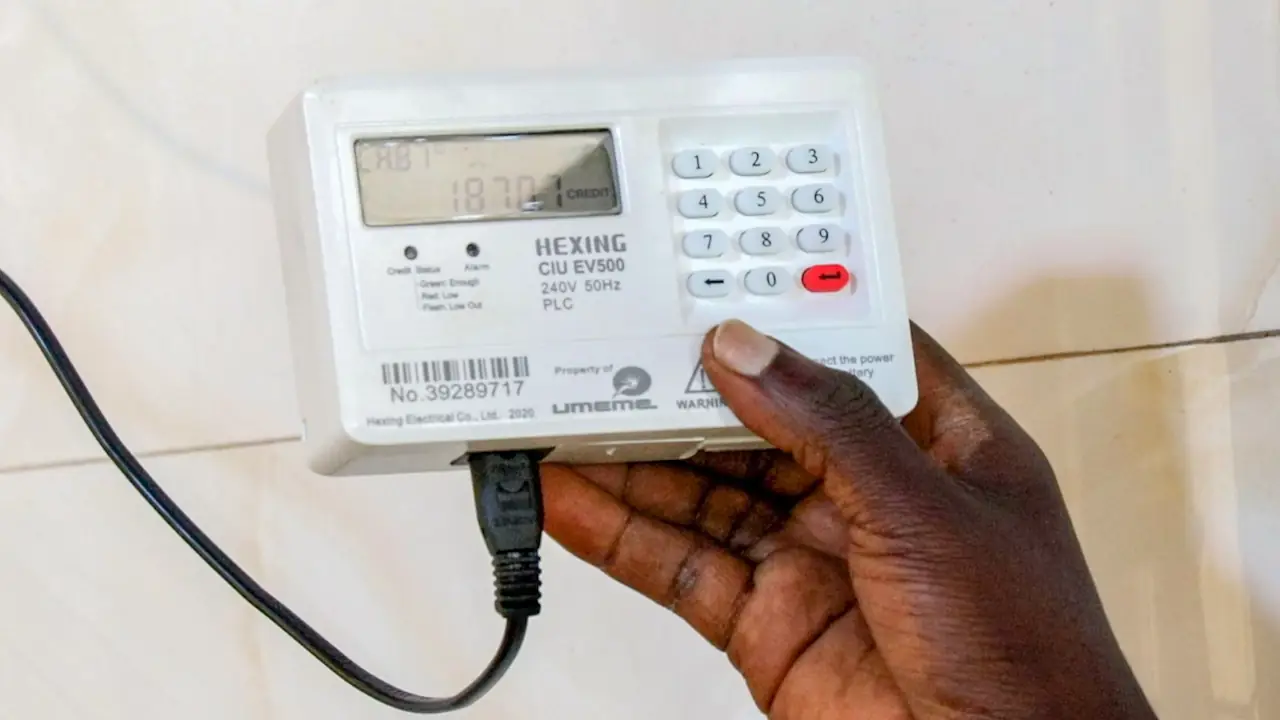
KAMPALA, Uganda — Uganda’s electricity regulator has dismissed social media claims that electricity tariffs increased in October, following complaints from consumers who say Shs10,000 now buys as little as four or five units of power.
The Electricity Regulatory Authority (ERA) says the approved tariffs for October to December 2026 remain at the same levels as those applied between July and September. Its published schedule, however, shows that domestic electricity rates vary substantially according to consumption category, while other applicable charges affect the amount of electricity customers receive.
The debate raises a question that extends beyond whether the regulator has announced another tariff increase: why do some consumers feel they are getting less electricity for their money, and how clearly are the charges explained?
The distinction matters because the official tariff schedule can establish the approved price per unit, but it cannot by itself explain every individual prepaid purchase.
That requires examining the tariff category, the amount deducted from the payment, the units credited and the customer’s consumption history.
What the official tariff schedule says
Under the fourth-quarter schedule published by ERA, domestic consumers on the Uganda Electricity Distribution Company Limited (UEDCL) network face the following rates:
- The first 15 units cost Shs250 per kilowatt-hour for eligible households under the lifeline tariff.
- Consumption between 16 and 80 units is charged at Shs779.4 per unit.
- Electricity consumed between 81 and 150 units attracts the cooking tariff of Shs412 per unit.
- Consumption above 150 units is charged at Shs779.4 per unit.
The lifeline tariff is available to domestic consumers whose rolling average monthly consumption over the preceding six months does not exceed 100 kilowatt-hours.
The structure means the amount paid does not translate into the same number of units for every household. Eligibility for the lifeline rate and the customer’s position within the applicable consumption bands can make a significant difference.
At Shs250 per unit, Shs10,000 would theoretically buy 40 units before applicable charges. At Shs779.4 per unit, the same amount would buy approximately 12.8 units before additional charges.
These calculations illustrate the effect of the tariff categories. They do not establish how many units every customer should receive from a prepaid purchase, because the final credit may be affected by applicable charges and the customer’s particular billing circumstances.
The crucial distinction: No new October increase does not mean tariffs never rose
Part of the confusion stems from the timing of the latest tariff changes.
Uganda’s domestic tariff for consumption between 16 and 80 units, and above 150 units, was Shs756.2 per unit under the 2026 base tariff. ERA raised it to Shs779.4 in the third quarter, covering July to September.
The same rate has been retained for the fourth quarter, covering October to December.
The difference between Shs756.2 and Shs779.4 is Shs23.2 per unit, an increase of about 3.1 per cent.
This means two statements can be true at the same time: the applicable rate increased earlier in the year, but it did not rise again when the fourth quarter began.
For consumers comparing their October purchases with those made in June, the current rate may therefore feel higher. Those comparing October with September should, under the published schedule, find the same approved unit rate for the relevant consumption band.
That distinction is central to understanding ERA’s response. The regulator’s assurance concerns the absence of a further increase between the third and fourth quarters; it does not mean that every domestic tariff has remained unchanged throughout 2026.
Can Shs10,000 really buy only four or five units?
At the published domestic rates, a Shs10,000 payment buying just four or five units would require an effective cost of between Shs2,000 and Shs2,500 per unit.
That is substantially above the listed rates of Shs250, Shs412 and Shs779.4 per unit. VAT and a monthly service charge can reduce the amount available to purchase electricity, but the published tariff figures alone do not establish that those charges explain a purchase yielding only four or five units.
The distinction calls for evidence from individual transactions rather than assumptions based on social media reports.
Consumers experiencing unusually low credits should check their purchase receipts, the tariff category applied, the amount deducted for taxes or other charges, and whether any outstanding balance or other adjustment was applied.
UEDCL should be able to explain the breakdown of a transaction and investigate discrepancies.
ERA, as the regulator, also has a role in ensuring that consumers can understand the approved rates and how they are applied.
Without transaction-level evidence, it would be premature either to conclude that electricity is being sold at unauthorised rates or to dismiss every complaint as false.
Why consumers remain concerned about affordability
Electricity affordability is not determined by the published price per unit alone. It also depends on household income, the amount of power needed for cooking and other domestic activities, and the cost of alternative energy sources.
A household with limited income may struggle to maintain a reliable electricity supply even where the tariff has not changed from the previous month.
The same is true of small businesses whose operating costs depend on lighting, refrigeration, machinery or other electrical equipment.
The lifeline tariff is intended to provide a lower rate for qualifying low-consumption households. But the six-month rolling-average condition means eligibility depends on consumption history, rather than simply on how much a customer spends in one transaction.
The cooking tariff, meanwhile, offers a lower rate for the designated consumption band. These measures can help particular consumers, but they do not remove the need for clear explanations of how tariffs are applied or resolve wider concerns about household purchasing power.
For policymakers, the debate highlights the difference between tariff stability and affordability.
Keeping a rate unchanged for one quarter may provide predictability, but it does not necessarily make electricity affordable to every household.
What determines electricity tariffs?
ERA reviews tariffs using factors that include the exchange rate, inflation, international fuel prices and Uganda’s electricity generation mix. These variables can influence the cost of supplying power and the rates approved for consumers.
The quarterly review system is intended to adjust tariffs in response to changing economic and energy-sector conditions.
But consumers may find it difficult to understand the relationship between these technical calculations and the amount of electricity they can afford to buy.
That creates a communication challenge for both the regulator and the distributor. Publishing a tariff schedule is necessary, but clear public explanations of price changes, consumption bands, taxes and other deductions are equally important when complaints begin circulating.
ERA should explain precisely which rates remained unchanged from the third quarter and acknowledge the earlier increase where relevant.
UEDCL, meanwhile, should help customers understand how a particular payment was converted into credited units.
The industrial tariff schedule illustrates another dimension of the debate. Large manufacturers receive rates that differ from those charged to domestic consumers, with some industrial charges varying according to the time of day and consumption block.
Those arrangements reflect different tariff categories and should not be confused with the rates applicable to household prepaid purchases.
Transparency is key to resolving the dispute
The immediate question is whether consumers reporting four or five units for Shs10,000 can obtain a clear explanation for their individual transactions.
ERA’s published schedule provides a basis for checking whether the approved unit rate has changed. But the regulator’s assurance alone cannot determine whether every customer has been billed correctly or whether all deductions have been adequately explained.
Also Read: UEDCL upgrades Kira power network as Greater Kampala demand rises
UEDCL should make transaction breakdowns accessible and investigate complaints supported by purchase receipts and meter information.
ERA should communicate the tariff structure in language consumers can understand and clarify the distinction between the latest quarterly rates and earlier changes.
Consumers, for their part, should retain transaction messages and seek clarification through official customer-service channels when the units credited appear inconsistent with the amount paid.
Ultimately, the debate is about more than whether a tariff changed on October 1. It concerns whether households can understand what they are paying for, whether charges are being applied correctly and whether the electricity system is affordable for the people who depend on it.
The published schedule supports ERA’s position that the relevant rates were not increased again for the fourth quarter. It does not, by itself, settle every complaint about the number of units received.
That requires transparent billing information and evidence from the transactions in question.
