


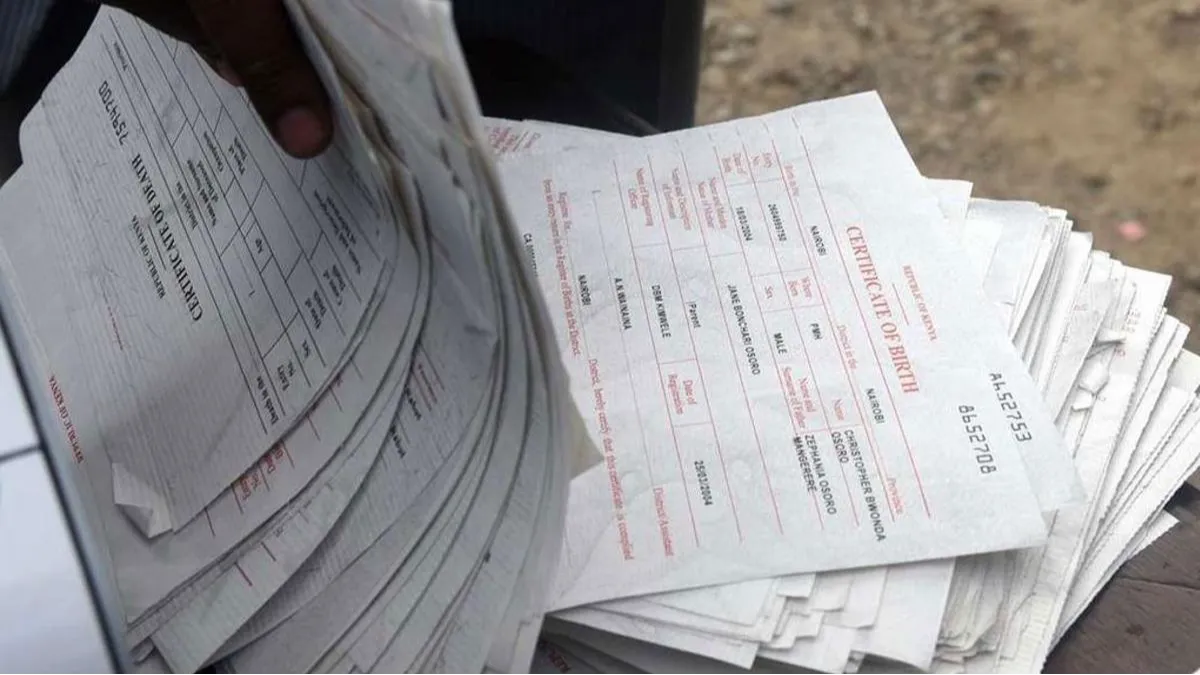
NAIROBI, Kenya — The Government of Kenya will pilot an electronic birth notification system in three counties during this year’s Mashujaa Day celebrations, in a move aimed at reducing paperwork and easing the process of obtaining birth certificates.
Interior Cabinet Secretary Kipchumba Murkomen announced on Tuesday, October 13, that Nandi, Uasin Gishu and Elgeyo Marakwet will be the first counties to test the system before its planned nationwide rollout.
The digital platform, known as the e-Birth Notification System, is intended to replace the traditional paper birth notification by allowing details of newborns to be submitted electronically to civil registration authorities.
Speaking during a rally in Elgeyo Marakwet, Murkomen said the change would reduce the need for parents to travel long distances to collect birth notifications from hospitals and subsequently visit Huduma Centres to obtain birth certificates.
“Parents used to travel long distances to get birth certificates. Now during Mashujaa Day, we have pilot projects here in Uasin Gishu, Elgeyo Marakwet and Nandi, and will go across the country very soon to ensure that birth notifications are given online immediately after birth, no need to go and look for it later,” Murkomen said.
Mashujaa Day will be marked on October 20, with Eldoret in Uasin Gishu County scheduled to host this year’s national celebrations. The three-county pilot is expected to provide the initial stage of the government’s plan to digitise birth registration.
Government targets nationwide rollout by December
The announcement follows an earlier statement by Immigration and Citizen Services Principal Secretary Belio Kipsang, who said the government intended to extend electronic birth notifications to hospitals contracted by the Social Health Authority (SHA) within three months.
Kipsang said the Interior Ministry was working with the Ministry of Health to integrate the civil registration system with hospital management systems, allowing birth details captured at health facilities to be transmitted electronically.
“We already finalised our engagement with the Ministry of Health, and we shall be rolling it out across all our hospitals that benefit from the SHA. So everybody who benefits from SHA will be benefiting from the process of E-notification,” Kipsang said.
He added that the system should be available across SHA-contracted hospitals within three months, placing the expected expansion around December 2026.
The two announcements outline a phased approach: the initial pilot in three counties during Mashujaa Day, followed by expansion to hospitals participating in SHA and, ultimately, a nationwide rollout.
However, the government has not yet published a detailed implementation schedule showing when every county or hospital will be connected.
How the new birth notification system will work
Under the proposed system, hospitals will capture a newborn’s details electronically and transmit the information to Civil Registration Services, reducing dependence on paper notifications.
The reform is expected to simplify the process for parents who have previously faced difficulties after losing physical birth notifications, which are used when applying for birth certificates.
The government also plans to link the digital registration process to a Unique Personal Identifier (UPI), intended to help connect an individual’s records across government services, including civil registration and education.
Kipsang has said the UPI will support efforts to improve the consistency of personal records and enable eligible individuals to access birth certificates digitally.
The electronic notification, however, should not be confused with the birth certificate itself. The notification records the birth and supports the civil registration process; the certificate is the official document issued through that process.
Parents have raised concerns over lost documents
The planned changes address a longstanding challenge for parents who misplace physical birth notifications and subsequently struggle to complete birth certificate applications.
Under the existing system, parents can apply for birth certificates through the government’s eCitizen platform.
The Civil Registration Services website says applicants can submit applications and make payments online, although the current process may still require them to print the application form and invoice and submit them to a registrar for processing.
The proposed electronic notification system aims to reduce those manual steps by enabling information to move directly from participating health facilities to civil registration authorities.
If implemented as planned, the system could reduce unnecessary travel, limit the risk of losing paper notifications and make birth registration more convenient for families, particularly those living far from government service centres.
Digital reform extends beyond birth registration
The e-notification initiative forms part of a wider government programme to digitise public services and improve access to official identity documents.
Birth registration establishes a person’s legal identity and provides the foundation for accessing services such as education and other administrative processes.
Also Read: Kenyans can now download and print birth certificates online
The Civil Registration Services department is responsible for recording births and issuing birth certificates under Kenya’s Births and Deaths Registration Act.
The effectiveness of the new system will depend on how quickly hospitals are connected to the platform, how reliably information is transferred between agencies and whether parents can access the service without additional administrative barriers.
For now, Nandi, Uasin Gishu and Elgeyo Marakwet are expected to be the first testing grounds when the pilot begins during Mashujaa Day celebrations on October 20.
The government says the system will then be expanded, with SHA-contracted hospitals targeted for integration within three months.
