


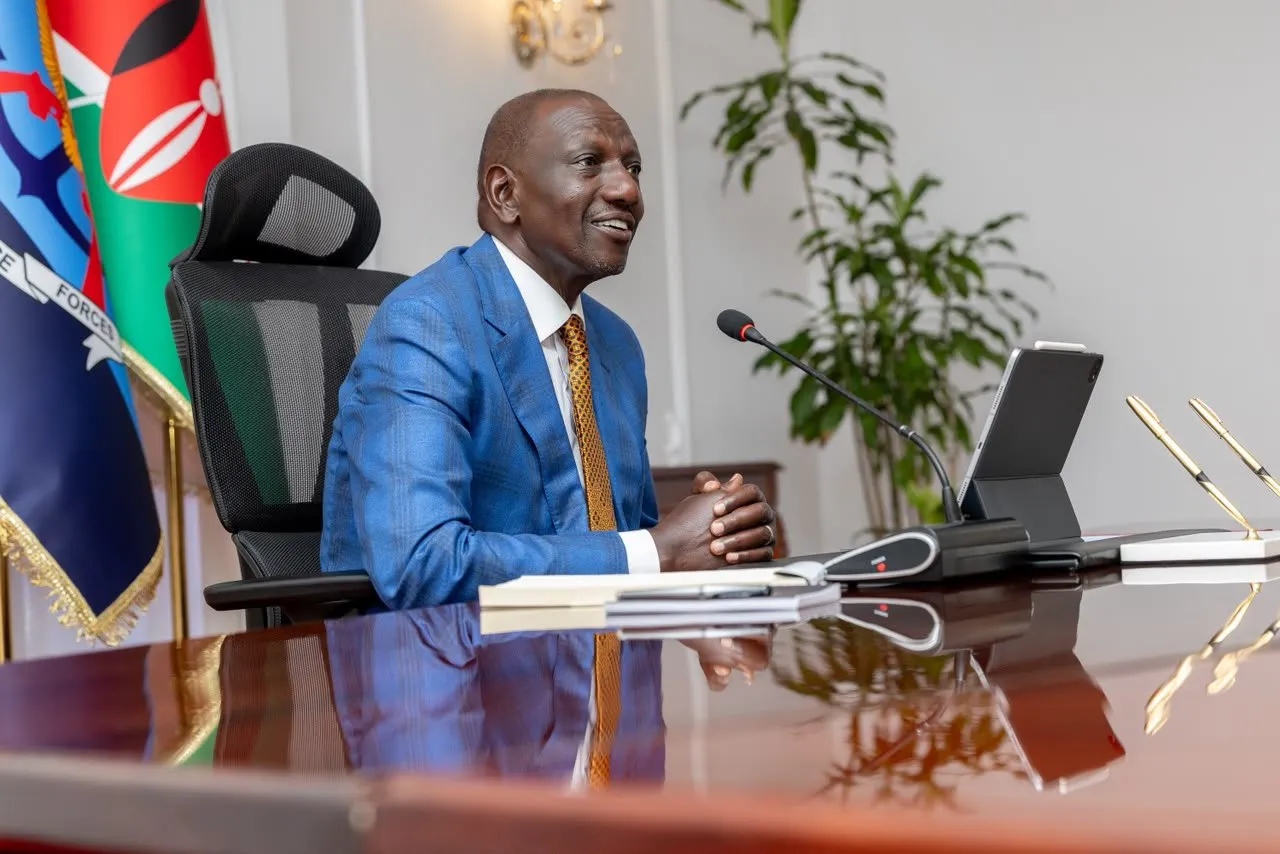
NAIROBI, Kenya — President William Ruto’s proposal to introduce buffaloes into Kenya’s dairy industry has sparked debate among Kenyans, with some turning to social media to share memes and digitally altered images of themselves milking the animals.
But behind the online humour lies a policy question that predates the President’s latest remarks: how far has Kenya progressed towards introducing domesticated water buffaloes into its food and livestock industries?
The issue returned to the spotlight after Ruto told the Agriculture and Food Security Transformation Summit at Jamhuri Park in Nairobi on October 8, 2026, that he had asked Principal Secretary for Livestock Development Jonathan Mueke to explore sourcing improved breeds of camels and buffaloes.
“I had told the Livestock PS to bring in good breeds of camels and buffaloes,” Ruto said, arguing that Kenya needed to diversify its milk sources.
“I hear buffaloes also produce a lot of milk. Tulikua tumesema tuanze na kidogo tuone hii buffalo, kama tunaweza kukamua. If others are milking them, why can’t we do the same? What is wrong with that? We need to diversify our sources of milk,” he added.
The proposal comes amid milk supply constraints that have affected consumers and processors, prompting renewed attention to alternative sources of dairy production. The Star reported on October 9 that formal milk deliveries to processors had declined for three consecutive months.
How Kenya opened the door to buffalo meat
The proposal is not the first attempt by the government to introduce domesticated water buffaloes into Kenya’s food industry.
On January 31, 2025, Agriculture Cabinet Secretary Mutahi Kagwe issued Gazette Notice No. 977, declaring the domesticated water buffalo (Bubalus bubalis) a food animal under Section 2 of the Meat Control Act.
The notice stated: “In exercise of the powers conferred by section 2 of the Meat Control Act, the Cabinet Secretary for Agriculture and Livestock Development declares the Domesticated Water Buffalo (Bubalus bubalis) as a food animal for purposes of the Act.”
The declaration established a legal basis for recognising domesticated water buffaloes within Kenya’s meat-control framework. It did not, however, establish that a commercial buffalo farming industry was already operating or remove the need to comply with applicable animal health, slaughter, inspection and hygiene requirements.
The move attracted attention because water buffaloes are widely reared in parts of Asia, particularly India, where they are used for both meat and milk production.
In February 2025, the Ministry of Agriculture indicated that the government was considering introducing the animals to supplement existing food sources, with a proposed two-year pilot and measures addressing animal identification, registration, animal health and slaughterhouse requirements.
The proposal subsequently drew scrutiny in Parliament. In March 2025, nominated Senator Catherine Mumma sought answers from the Senate Agriculture Committee regarding the scientific basis for the declaration, public participation and the involvement of the Kenya Wildlife Service.
The questions highlighted the need to establish the rationale for introducing a new livestock species and the regulatory arrangements required before commercial production could proceed.
What happened to the proposed buffalo pilot?
Despite the 2025 declaration and the subsequent discussion of a pilot programme, the status of implementation remains unclear.
The Ministry of Agriculture has not publicly clarified, in the information available for this report, whether the proposed two-year pilot was launched, whether domesticated water buffaloes have been imported or whether a commercial milk-production programme has been approved.
Ruto’s latest remarks therefore revive an earlier policy direction without, on their own, establishing that buffalo farming is ready to begin on a commercial scale.
Introducing the animals would require decisions on suitable breeds, sourcing and importation, veterinary controls, feeding, water requirements, breeding and the infrastructure needed to collect, process and distribute the milk.
The commercial question is equally important: whether farmers can rear the animals economically, whether processors can handle the milk and whether consumers will create sufficient demand to support a new dairy value chain.
These details will determine whether the proposal progresses beyond an idea into a practical livestock programme.
Water buffaloes are not Kenya’s wild buffaloes
An important distinction in the debate is the difference between domesticated water buffaloes and African buffaloes.
The domesticated water buffalo, scientifically known as Bubalus bubalis, is a livestock species widely reared in parts of Asia. The African buffalo, Syncerus caffer, is a different species found in Kenya’s natural habitats.
The January 2025 Gazette Notice specifically referred to domesticated water buffaloes. It should not be interpreted as a blanket authorisation to capture, domesticate or commercially exploit wild African buffaloes.
The distinction matters for wildlife conservation, animal management and the regulations governing livestock imports and production.
It also helps clarify the public debate: the proposal concerns exploring a livestock species used for milk production elsewhere, rather than turning Kenya’s native wild buffaloes into dairy animals.
Milk shortages put alternative production under the spotlight
Ruto’s proposal comes as Kenya’s dairy supply chain faces pressure from prolonged dry conditions, reduced pasture availability and rising animal-feed costs.
According to The Star, formal milk deliveries to processors fell from 84.4 million litres in June 2026 to 81.3 million litres in July, before declining further to 75 million litres in August.
The figures reflect deliveries to formal processors rather than total national milk production, an important distinction when assessing the extent and causes of shortages.
A separate report by People Daily noted that Kenya’s annual milk production had continued to increase, while deliveries into the formal processing system declined during the middle of 2026. The report cited the Kenya National Bureau of Statistics’ 2026 Economic Survey, which put national milk production at 5.521 billion litres in 2025, up from approximately 5.335 billion litres in 2024.
The difference between overall production and formal deliveries illustrates why increased national output does not necessarily guarantee consistent supplies on supermarket shelves. Milk may be sold through different channels, while drought and feed costs can affect the volume available to processors.
Ruto has also pointed to the commercial potential of camel milk, citing urban retail prices of between KSh180 and KSh200 per litre. The government’s broader approach is to explore alternative sources of milk rather than relying exclusively on conventional dairy cattle.
However, buffalo milk would not offer an immediate solution to existing shortages. Establishing a new production system would take time and require investment in livestock, veterinary services, feed, processing and distribution.
What buffalo milk could offer Kenya
Buffalo milk is widely consumed in countries such as India and is known for its relatively high fat and solids content, which makes it suitable for products including cheese, butter, yoghurt and ghee.
Its potential value in Kenya would depend on more than the quantity of milk individual animals produce. Farmers and processors would need to establish whether the animals can thrive under local conditions, how much it would cost to maintain them and whether the resulting products could compete in the domestic market.
Food safety would also remain central. As with other animal milk, appropriate handling and pasteurisation are necessary to reduce the risk of harmful bacteria.
Any pilot programme would therefore need to assess both agricultural productivity and the public-health safeguards required for safe commercial production.
The renewed proposal puts the focus on what has happened since the 2025 legal declaration and whether the government has completed the groundwork needed to introduce the animals.
Also Read: Kenya forced to import Ugandan milk as local supply falls, CS Kinyanjui says
Key questions remain over the status of the proposed pilot, the scientific assessments underpinning the plan, the number and origin of any animals to be introduced, and the regulatory framework for commercial milk production.
The government would also need to explain how buffalo farming would complement existing dairy production and whether resources would be directed towards expanding the new livestock system, improving conventional dairy farming or both.
For now, Ruto’s remarks amount to a renewed call to explore buffalo and camel milk production. They do not establish that imports have taken place or that commercial buffalo dairies are about to begin operating.
As Kenyans continue to joke about the prospect of milking buffaloes, the more consequential test will be whether the government can translate the proposal into a transparent, scientifically assessed and economically viable programme that improves the reliability of the country’s milk supply.
