


MOMBASA, Kenya — Opposition leaders have accused President William Ruto’s administration of failing to adequately prepare for the threat of Ebola, using Kenya’s first confirmed imported case to demand greater accountability over public health spending and the country’s disease-screening systems.
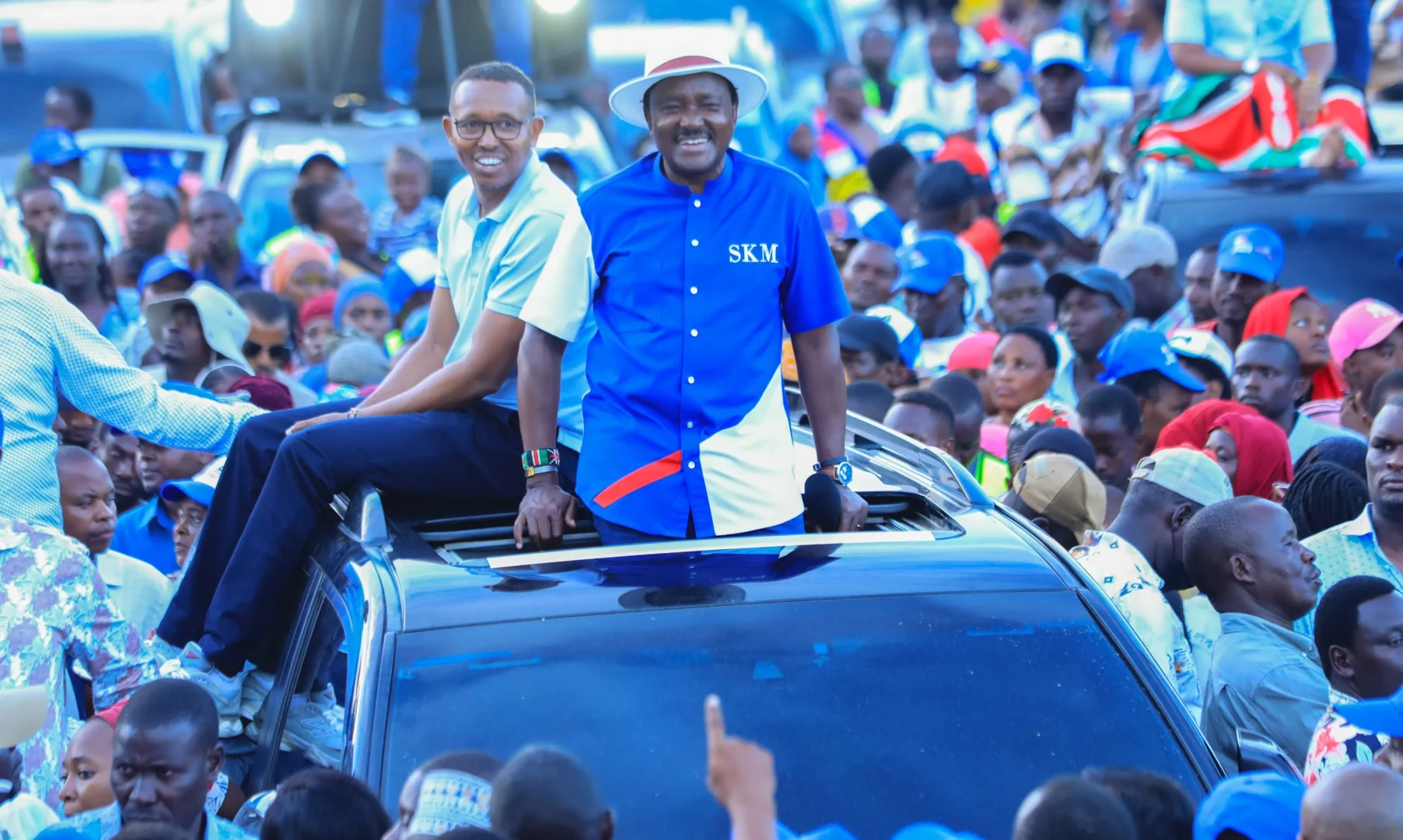
Wiper Patriotic Front (WPF) leader Kalonzo Musyoka made the accusations during a political tour of Mombasa, where he questioned how a Kenyan man who had been living in the Democratic Republic of Congo (DRC) travelled through Uganda and arrived in Nairobi before his illness was identified as Ebola.
The patient tested positive for the Bundibugyo strain of the virus and died after receiving treatment in Nairobi. Kenya’s Ministry of Health subsequently said it had identified 57 contacts linked to the case, with 10 people placed under quarantine as contact-tracing efforts continued.
Kalonzo argued that the patient’s journey raised questions about the effectiveness of screening at regional transport hubs and whether health officials had been adequately prepared to detect suspected cases.
“Alitoka upande wa DRC, akaingia upande wa Uganda, akaingia kutoka uwanja wa ndege wa Entebbe, akaja Nairobi. Wale ambao wanachunguza, ambao wangepima hali ya joto kuangalia kama anafanya bleeding, badala ya kufanya kazi yao, wanafuata amri ya Duale kuachilia yeyote ambaye anaingia huku,” Kalonzo said.
His remarks amounted to an allegation that screening personnel had failed to carry out their responsibilities. He did not provide evidence in the reported remarks to substantiate his claim that they had acted under instructions from Health Cabinet Secretary Aden Duale.
The controversy has put Kenya’s border health controls under scrutiny. A Reuters investigation published on October 7 reported that the patient had passed through screening points in Uganda and Kenya while seriously ill, raising concerns about the limitations of temperature checks and other routine screening procedures.
Kalonzo calls for scrutiny of health funding
Beyond the screening controversy, Kalonzo called on the United States and other development partners to monitor how money allocated to Kenya’s health sector is spent.
He accused the Kenya Kwanza administration of corruption and the misappropriation of public resources, arguing that funding intended to improve healthcare should produce measurable benefits for citizens.
“Wajue wawekezaji, hiyo pesa wafuate. Nilimwambia juzi balozi wa Marekani, hizo pesa ambazo anapatia idara ya afya, wazifuatilie kikamilifu, zisije tu, one billion shillings zinaingizwa kwa mfuko ya mtu na kuwacha wananchi wanalala hoi,” Kalonzo said.
The opposition leader did not cite specific evidence in his remarks establishing that money allocated to Ebola preparedness had been diverted.
His demand comes as the government faces pressure to demonstrate that its investment in disease surveillance, laboratory testing, hospital isolation facilities and emergency response systems is translating into effective protection for the public.
The Ministry of Health has maintained that Kenya is strengthening its response following the imported case. It has reported that more than 652,000 travellers had been screened and 267 samples tested through the national laboratory network. The ministry has also said that 4,971 healthcare providers had received training in Ebola prevention and case management.
Duale has stressed that the imported case does not, by itself, establish widespread transmission in Kenya. The ministry has nevertheless continued contact tracing and surveillance, including enhanced screening for travellers arriving from 10 countries identified as requiring additional monitoring.
The opposition’s criticism therefore centres on whether existing safeguards were sufficient to identify a seriously ill traveller before he entered the country, and whether the government’s preparedness measures were implemented effectively.
Mohammed Ali cites shortages in Mombasa hospitals
The opposition delegation also used its engagements in Kisauni Constituency to highlight what it described as persistent shortcomings in local public services.
Wiper deputy party leader and Nyali MP Mohammed Ali accused the government of neglecting infrastructure and healthcare in Mombasa, arguing that residents continued to face shortages despite public spending and government development promises.
“Watu wa Mombasa hawana barabara. Watu wa Mombasa hawana hospitali, na ile moja iko, dawa hakuna, vifaa hakuna, watu wanakufa,” Ali said.
The leaders’ comments linked the Ebola controversy to longstanding concerns about access to healthcare, the availability of medicines and equipment, and the capacity of public hospitals to respond to emergencies.
However, the remarks represent the opposition’s assessment of service delivery. Establishing the scale of shortages in Mombasa’s hospitals would require current county health data and independent verification.
The tour also served a political purpose, with Kalonzo and allied leaders seeking to strengthen their presence along the Coast ahead of the 2027 General Election. The two-day programme included public engagements in Junda and Shanzu in Kisauni Constituency.
Opposition challenges Ruto’s environmental record
The leaders extended their criticism to the government’s climate and environmental policies as Kenya prepared to mark National Mazingira Day on October 10.
They questioned whether the administration’s tree-growing campaign was delivering the environmental benefits it promised, arguing that tree-planting announcements should be assessed against evidence of implementation, tree survival and forest restoration.
Deputy Party leader of the Democratic Party Justin Muturi criticised the government’s tree-planting programme, referring to the proposed national target of 15 billion trees.
“Toka wakati huo nilipokataa kuweka sahihi mambo ya upanzi wa miti bilioni 15, iliisha. Sasa leo ndio anatuambia eti wamepanda 5.3 million trees. Wapi huyu huyu wa kutuambia tukunywe maziwa ya nyati?” Muturi said.
His comments questioned the credibility and implementation of the programme, but the reported remarks did not independently establish that the initiative had been abandoned or that funds allocated to it had been misappropriated.
Kalonzo also questioned whether the government had developed effective measures to protect communities from flooding and other climate-related risks.
“Wameweka mikakati ya aina gani kuhakikisha wamama hapa hawatapatwa na mafuriko hapa, na wanasema wamepanda miti?” he asked.
The government, meanwhile, has continued to promote tree growing as part of its target of growing 15 billion trees by 2032.
The State Department for Forestry said the 2026 Mazingira Week campaign was targeting 17.24 million trees through activities involving national and county governments, schools, communities and other institutions. It also said the government was using geo-tagging, certification and tree-survival tracking to improve accountability.
On October 10, Ruto led a tree-growing exercise in Trans Nzoia County, where the government promoted its national environmental restoration agenda. The Kenya Forest Service said the Jaza Miti platform had recorded about two billion trees, while the administration continued to pursue its longer-term target.
The competing claims highlight a distinction between the number of trees recorded as planted and the environmental results ultimately achieved. Tree survival, restoration of degraded ecosystems and protection of water catchments remain important measures of whether the campaign is delivering lasting benefits.
Amisi urges opposition to unite behind one candidate
Separately, People’s Renaissance Movement leader Caleb Amisi called on opposition parties to overcome personal ambitions and unite behind a single presidential candidate to challenge Ruto in the 2027 election.
Speaking in Garissa during a function on Saturday, Amisi argued that opposition parties risk weakening their electoral prospects if their leaders fail to agree on a common candidate.
“People will have to put down their ambition and, for the sake of the nation, they have to select one presidential candidate to send William Ruto home, and my party is going to lead by example,” Amisi said.
Amisi’s remarks add to the debate over how the opposition should select a flag-bearer, with competing proposals ranging from negotiated agreements among party leaders to a more transparent nomination process.
The question has become increasingly important as opposition parties and political movements seek to build national support ahead of the election. Amisi has previously called for a united opposition candidate, including backing Nairobi Senator Edwin Sifuna as a potential flag-bearer.
His latest appeal did not establish that opposition parties had agreed on a candidate. Instead, it underscored the challenge of reconciling individual ambitions with a collective electoral strategy.
Accountability debate moves beyond Ebola
The opposition’s Mombasa tour has brought together several issues that could feature prominently in the 2027 campaign: public healthcare, management of foreign-funded programmes, climate resilience and the delivery of basic services.
Also Read: Canada updates Kenya travel advice after imported Ebola case in Nairobi
The Ebola case has given the leaders a specific event around which to question the government’s preparedness, while the tree-growing debate has provided another avenue for challenging the administration’s development record.
For the government, the immediate task remains containing the risk associated with the imported Ebola case, tracing exposed contacts and demonstrating that screening and response systems are functioning effectively. Health officials have continued to stress that a single imported case does not automatically mean Kenya is experiencing widespread transmission.
For the opposition, the incident has become a test of public accountability. Its claims about negligence, corruption and failures in environmental policy will require evidence to establish beyond political accusation.
As the country approaches the 2027 election, the wider question is whether the debate will produce closer scrutiny of public spending and service delivery—or remain another front in the contest between the government and its opponents.
