


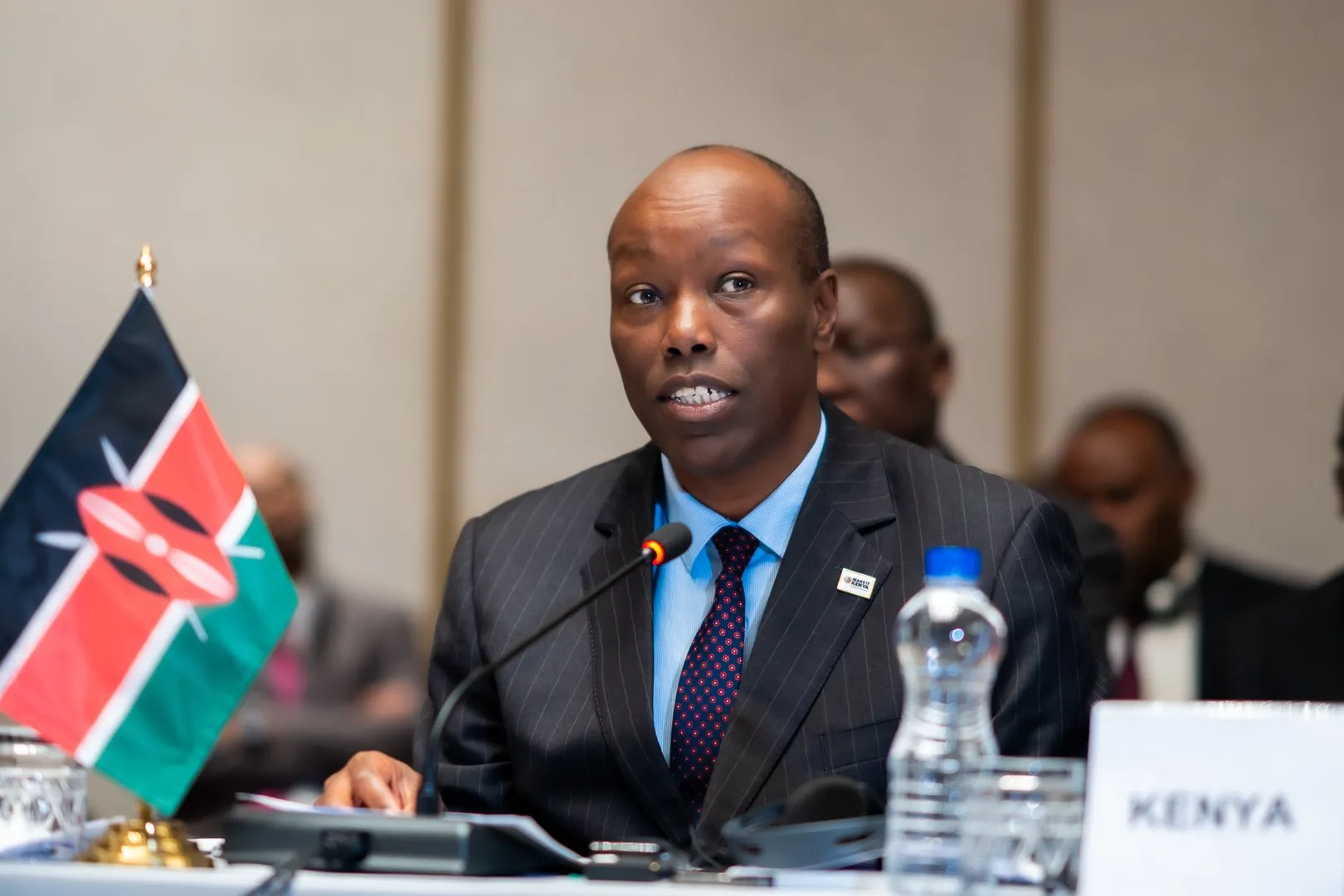
NAKURU, Kenya — Kenya is importing milk from neighbouring countries, including Uganda, after local production fell below domestic demand, Trade Cabinet Secretary Lee Kinyanjui has said.
Kinyanjui said the situation was unsustainable and called for greater support for dairy farmers to increase production and help Kenya achieve self-sufficiency in milk.
Speaking during a family day organised by the Catholic Diocese of Nakuru on Saturday, September 5, the Cabinet Secretary said the government was working to address the supply gap.
“For now, we cannot meet all our milk demand locally. So, we are actually importing milk from neighbouring countries like Uganda, and we believe that this is not where the country should be,” Kinyanjui said.
He said the government would work with farmers to increase production and reduce the country’s dependence on imported milk.
“We are asking our farmers, and we will support you to ensure that you can produce enough for the nation to achieve self-sufficiency,” he added.
Milk supplies fall
Kinyanjui’s remarks come amid a squeeze in milk supplies that has affected availability of some products in supermarkets and pushed up prices for consumers.
Formal milk deliveries to processors fell by 3.7 per cent, from 84.4 million litres in June to 81.3 million litres in July, according to figures cited by the Kenya Dairy Board.
The board has attributed the decline to seasonal production challenges, including dry and cold weather in major milk-producing areas, which has affected pasture and fodder availability.
Kinyanjui has also linked the shortage to prolonged dry conditions, saying several months of adverse weather have affected agricultural production and contributed to reduced milk supplies.
The decline in domestic production has increased pressure on the dairy supply chain, with Kenya turning to neighbouring countries to supplement local supplies.
Kinyanjui said the government’s priority should ultimately be to ensure Kenyan farmers can produce enough milk to meet the country’s domestic needs.
Government targets foreign retail traders
Kinyanjui also addressed concerns over foreign nationals entering Kenya as investors or traders and subsequently engaging in retail activities.
He said the government was considering measures to ensure foreign investors concentrate on investment rather than competing directly in retail and hawking.
“There has been a challenge of some traders from overseas coming here as investors or traders, but later they come here and start retailing, hawking and things like that,” Kinyanjui said.
He said the government would introduce a mechanism for approving foreign nationals working in Kenya to ensure they invest rather than engage in activities that could be undertaken by local traders.
“We will be establishing a procedure to approve those who have come from foreign countries and are working here, so that they can invest and not retail, because that is not the focus,” he said.
The Cabinet Secretary, however, clarified that the proposed measures would not target citizens of neighbouring East African Community countries.
“This notice is not for those coming from neighbouring East African Community countries. It is for those who have come from far away to do business here, and we want to ensure that they invest,” he said.
Kinyanjui said the government was concerned about protecting opportunities for Kenyan youth in the retail and small-business sector.
“Business is very important in providing jobs for our youth. We do not want jobs to be taken by those who have come from other parts of the world while our children remain without something to do,” he said.
Rironi-Mau Summit road expected to transform Nakuru
Kinyanjui also pointed to the ongoing Rironi–Mau Summit road project, describing it as a potential game changer for Nakuru and neighbouring counties.
The project involves the expansion of the major transport corridor linking Nairobi, Nakuru and western Kenya. The 233-kilometre road project is being implemented through a public-private partnership and is expected to improve transport along one of Kenya’s busiest routes.
Kinyanjui said improved connectivity would create new opportunities for businesses, tourism and trade across Nakuru and neighbouring counties.
“This road will change the future of this entire area, all the way to Baringo, Kericho and everywhere,” he said.
He added that President William Ruto had reminded him of the expected progress on the project, describing the road as a potential “game changer” for Nakuru.
Also Read: Uganda begins milk exports to Algeria following bilateral agreements
The government has said construction of the Rironi–Naivasha section is expected to reach the tarmacking stage by December, with the wider project intended to ease congestion and improve movement along the Northern Transport Corridor.
Kinyanjui urged businesses in Nakuru to prepare to take advantage of the opportunities expected to emerge as road connectivity improves.
Kinyanjui calls for political unity
The Cabinet Secretary also urged political leaders to maintain peace and avoid allowing political competition to divide Kenyans.
He said Nakuru was home to people from different parts of the country and that political leaders should pursue their ambitions without undermining national unity.
“Our country, and in particular even our county here, we have people from all parts. So, when we engage in politics, let us remember that Kenya is not moving. Kenya will remain here,” Kinyanjui said.
“Although politicians want different seats, our country and our unity must remain paramount for us to move forward,” he added.
The remarks come as political activity intensifies ahead of the 2027 General Election, with politicians positioning themselves for different elective positions.
For Kinyanjui, however, the immediate challenge facing the dairy sector is increasing domestic production to ensure Kenya can meet its own milk demand rather than relying on imports from neighbouring countries.
