



ACCRA, Ghana — For years, verifying a person’s identity in Ghana often involved a familiar routine.
A bank teller would examine a national identity card, photocopy it, stamp a document and file the paperwork away. A telecommunications agent would glance at the card before registering a SIM card. Employers, landlords and service providers routinely relied on visual inspections as proof that the person standing before them was who they claimed to be.
The process was simple, inexpensive and widely accepted.
It was also increasingly vulnerable.
As digital transactions expanded and identity-related fraud became more sophisticated, authorities grew concerned that traditional verification methods were no longer providing adequate protection against impersonation, forged documents and financial crimes.
Now Ghana is attempting to fundamentally change how identity is verified across the country.
Under new regulations announced by the National Identification Authority (NIA), businesses, government institutions and other organisations must use biometric technology to verify Ghana Cards rather than relying on photocopies or visual inspections.
The move represents one of the most ambitious efforts by an African country to transform a national identity card from a simple proof-of-identity document into a real-time digital authentication tool.
More significantly, it reflects a broader global shift in which governments are increasingly viewing identity verification as a critical pillar of national security, financial integrity and digital governance.
A card that became the key to everyday life
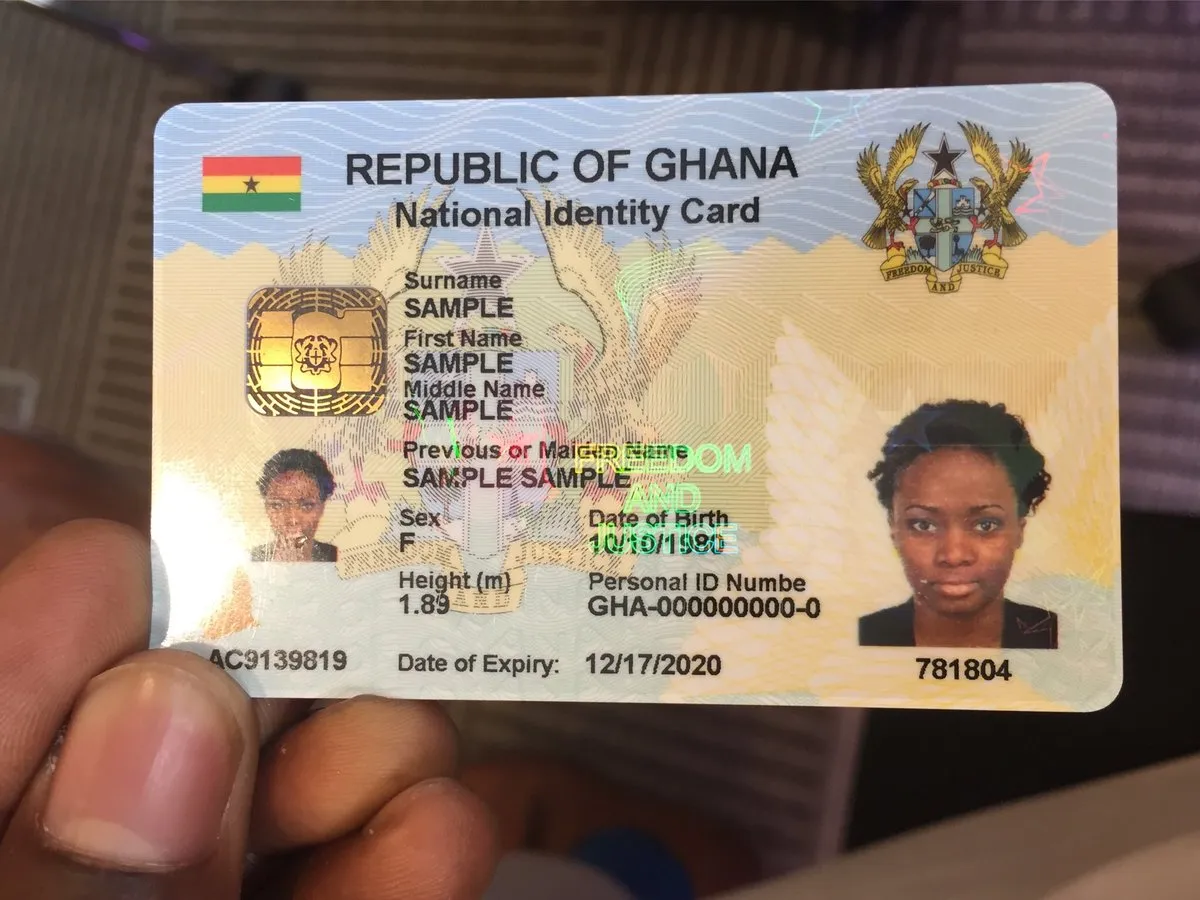
The Ghana Card was introduced over the past decade as part of a wider effort to create a unified national identity system.
What began as a government registration programme gradually evolved into one of the country’s most important administrative tools.
Today, the card is required for a growing range of activities, including accessing banking services, registering mobile phone SIM cards, applying for passports, obtaining driver’s licences and interacting with numerous government programmes.
Behind the plastic card lies a sophisticated biometric database containing fingerprints, iris scans, photographs and signatures collected by the National Identification Authority (NIA).
Supporters of the system argue that such biometric identifiers offer a far more reliable method of confirming identity than traditional documents that can be copied, altered or fraudulently obtained.
Yet despite the technology embedded within the card itself, many organisations continued relying on photocopies and visual checks rather than fully utilising the biometric infrastructure available to them.
Authorities now say that gap has become too large to ignore.
Why photocopies are no longer enough
At the centre of the new policy is a simple concern: a card can be copied, but a fingerprint cannot.
Identity fraud has become an increasingly complex challenge for governments worldwide as economic activity shifts online and criminals exploit weaknesses in verification systems.
Financial institutions, telecommunications providers and public agencies frequently handle sensitive transactions where mistaken identity can result in financial losses, cybercrime, money laundering or other forms of fraud.
According to the National Identification Authority, visual inspections and photocopies create opportunities for impersonation because they depend largely on human judgment.
A forged document, a manipulated photograph or a stolen card may pass casual inspection.
Biometric verification, by contrast, allows organisations to confirm that the individual presenting the card matches the biometric data stored within the national identity database.
Under the new regulations, verification will be conducted through a mobile application capable of scanning and authenticating the card’s information.
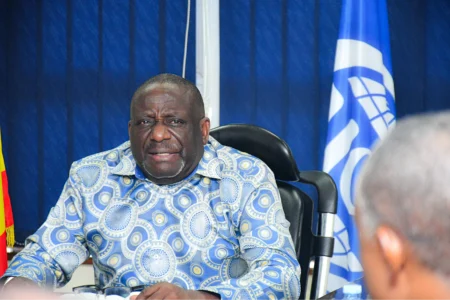
“It is now an offence to photocopy or visually inspect a Ghana Card for the purpose of transaction. Biometric verification is now mandatory,” said Wisdom Yayra Koku Deku, the NIA chief.
The statement signals a significant departure from longstanding administrative practices and effectively transforms biometric verification from an optional safeguard into a legal requirement.
The rise of the digital state
Ghana’s decision reflects a broader trend unfolding across Africa and beyond.
Governments increasingly recognise that effective identity systems are essential not only for security but also for economic development.
Digital identification can simplify access to public services, improve tax administration, reduce fraud in welfare programmes and strengthen confidence in financial systems.
Countries such as India, Estonia and the United Arab Emirates (UAE) have invested heavily in digital identity infrastructure, often positioning identity verification as the foundation upon which modern digital economies are built.
Across Africa, governments are pursuing similar goals.
Kenya’s ongoing digital identity initiatives, Nigeria’s National Identification Number programme and Rwanda’s digital governance reforms all point toward a future where identity verification plays a central role in how citizens interact with both the state and private institutions.
Ghana’s latest move may therefore be viewed not merely as a regulatory adjustment but as another step in the country’s broader digital transformation agenda.
Security versus convenience
Like many technological reforms, however, the policy raises practical questions.
The requirement means organisations must acquire compatible technology, connect to verification systems and train staff to use the new tools effectively.
Businesses that have relied for years on simple photocopies may face additional operational costs during the transition.
For smaller enterprises, especially those operating outside major urban centres, implementation could present challenges.
Questions also arise regarding connectivity, technical support and system reliability.
Digital verification systems are only as effective as the infrastructure supporting them.
If systems become unavailable due to network disruptions or technical failures, organisations may struggle to process transactions that previously required only a visual inspection.
Privacy advocates globally have also long debated the expansion of biometric identity systems, warning that governments must maintain strong safeguards around data protection, cybersecurity and the responsible use of personal information.
The success of such systems often depends not only on technology but also on public trust.
A strong enforcement signal
What distinguishes Ghana’s approach is the emphasis on enforcement.
The National Identification Authority has attached significant penalties to non-compliance.
Organisations that continue relying on photocopies or visual inspections risk prosecution and fines reaching 24,000 Ghanaian cedis.
Individuals may face fines of up to 6,000 Ghanaian cedis.
Such penalties suggest authorities view the issue as more than an administrative technicality.
Instead, they appear determined to drive behavioural change across both the public and private sectors.
The NIA has urged institutions that are not yet connected to the verification platform to begin integration immediately, while government officials prepare additional public guidance on implementation and compliance.
The future of trust
At its core, the new policy is about a question that every modern society increasingly faces: how do you prove who you are in a digital age?
For generations, identity verification depended largely on paper documents and human observation.
Today, governments are moving toward systems that rely on databases, biometrics and digital authentication.
Also Read: Kenya confirms deletion of Worldcoin’s biometric data after High Court order
Supporters argue that such systems provide greater security and reduce opportunities for fraud.
Critics caution that technological solutions must be balanced against concerns about privacy, accessibility and state oversight.
Ghana’s latest regulations place the country firmly on the side of deeper digital verification.
Whether the transition proceeds smoothly will depend on implementation, infrastructure and public confidence.
What is clear is that the era of simply photocopying a national identity card is rapidly coming to an end.
In its place, Ghana is betting that fingerprints, iris scans and real-time biometric verification will offer something increasingly valuable in a digital economy: trust.