


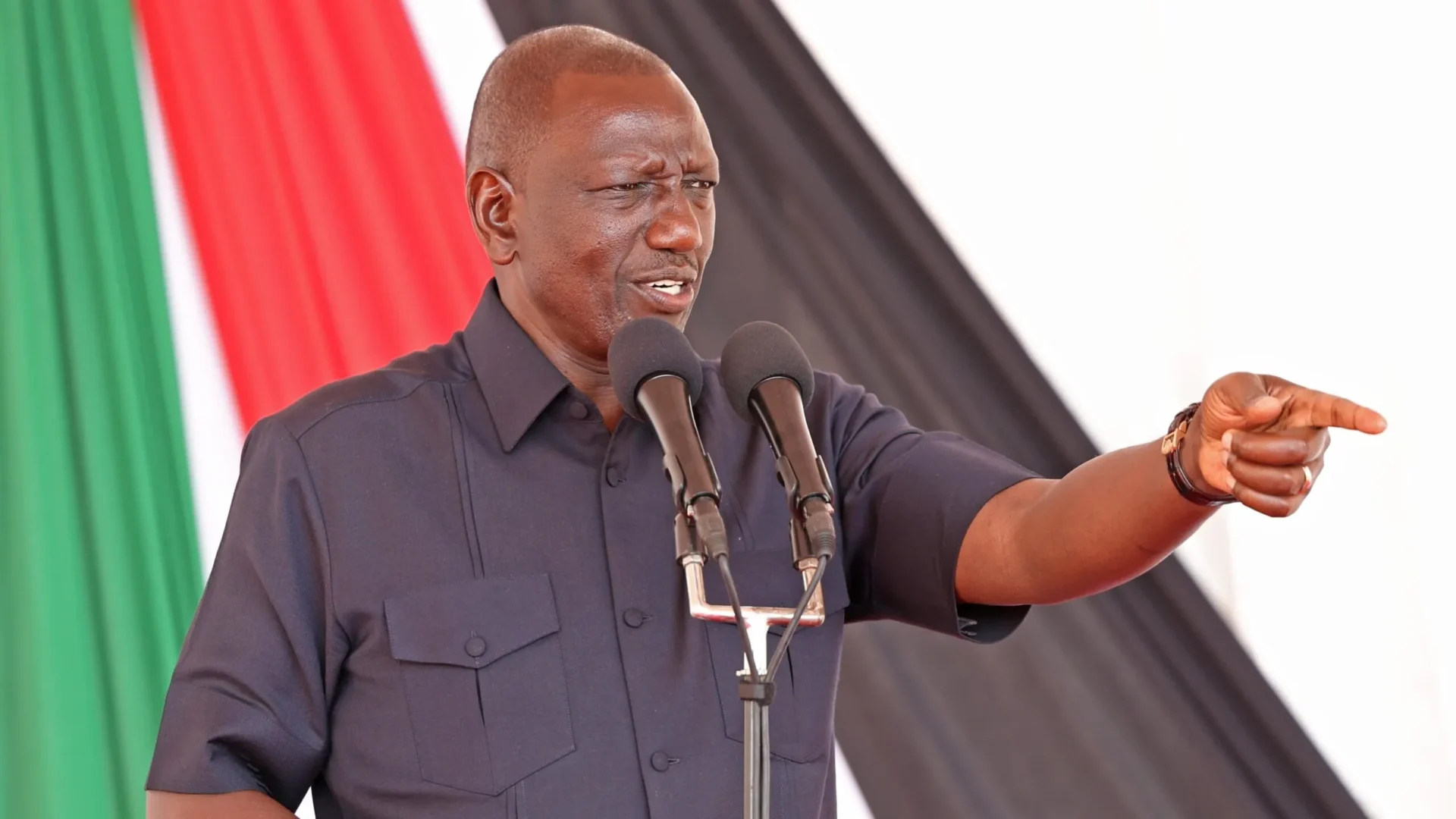
NAIROBI, Kenya — President William Ruto has pledged a decisive crackdown on cartels operating in Nairobi, warning that entrenched networks benefiting from inefficiencies in the capital will no longer be tolerated.
Addressing the Nairobi County Assembly on Thursday, the President called for closer coordination between county and national authorities to dismantle systems that profit from dysfunction and stalled reforms.
“We must take the cartels in the city head-on, whoever they are, however powerful they are. It is your responsibility, with support from both the county and the national government,” Ruto said.
“There are those who make money through institutional paralysis. They shout the loudest against reform because they thrive on failure. Let me be very clear, the era of appeasing cartels at the expense of public interest must come to an end. Leadership is not about protecting a few people, but delivering justice and order.”
The President told Members of the County Assembly that their mandate goes beyond political rhetoric and requires tangible delivery of services.
“The document is not ceremonial, it is not public relations, it is not politics for headlines. Your role in governance in Nairobi cannot be overstated. You have a duty to ensure that the needs of constituents are properly addressed,” he said.
He criticised what he described as a persistent cycle of blame and inaction, urging leaders to prioritise execution and measurable outcomes.
“What Nairobi needs is not a cycle of blame, speeches and complaints. It needs disciplined leadership, order, execution and results and that is exactly what we intend to deliver together,” he added.
Acknowledging growing dissatisfaction among residents and businesses, the President said concerns about the state of Nairobi are valid.
“I have listened carefully to what Kenyans have said about Nairobi. I have heard their anger and disappointment, what businesses, visitors and investors say, and what Kenyans in the diaspora say when they compare us with other countries,” he said.
“The truth is, they are right. They are right to ask why we struggle with basic order. They are right to demand better.”
Also Read: The hunger crisis: Why Nairobi residents can’t afford to put food on the table
Nairobi’s rapid expansion, from fewer than 300,000 residents at independence to nearly five million today, has placed significant strain on infrastructure, housing, transport systems and service delivery, intensifying calls for reform.
Ruto pointed to reforms in other sectors as evidence that change is achievable, citing improvements in payment timelines for sugarcane farmers in western Kenya.
“Today you can ask the people in Western Kenya sugarcane that used to be paid for after one year can now be paid very soon,” he said.
His remarks come amid renewed scrutiny of urban governance in Nairobi, where issues such as waste management, transport congestion, informal settlements and revenue collection have often been linked to cartel-like networks and weak institutional enforcement.
Analysts say the success of the proposed crackdown will depend on sustained political will, inter-agency coordination and transparency in enforcement.
The President reiterated that only a unified approach between national and county leadership would restore order and improve service delivery in the capital.
