


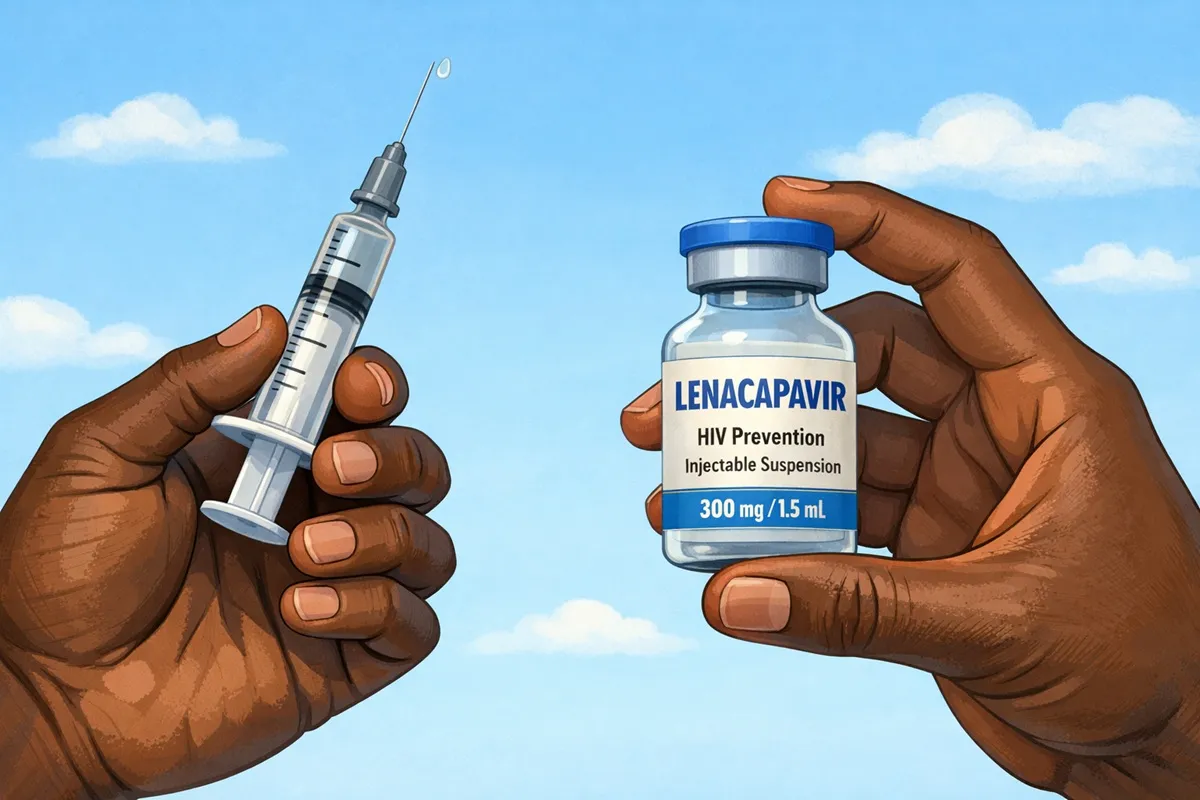
NAIROBI, Kenya — Kenya is set to begin the nationwide rollout of the long-acting HIV prevention injection Lenacapavir on February 26, 2026, marking a significant step in the country’s strategy to eliminate new infections by the end of the decade.
Health authorities say the injectable, a long-acting form of pre-exposure prophylaxis (PrEP), will complement existing prevention tools as Kenya seeks to accelerate progress toward the global goal of ending HIV transmission as a public health threat by 2030.
However, medical experts have cautioned that eligibility will be limited. The injection will only be administered to individuals who test HIV-negative and who have not had potential exposure to the virus within the previous 72 hours. Those who may have been exposed are advised to seek post-exposure prophylaxis (PEP) instead.
Clinicians have also urged prospective recipients to disclose any medication they are currently taking, including tuberculosis treatment and sexual performance enhancement drugs, due to the risk of drug interactions that could affect the injection’s effectiveness or safety.
Prevention strategy and effectiveness
Lenacapavir represents one of the most advanced long-acting HIV prevention options currently available. Research indicates that when administered correctly, the drug can reduce the risk of infection by up to 96 per cent.
Unlike daily oral PrEP, the injection is administered twice a year, a schedule expected to improve adherence among individuals who struggle to maintain daily medication routines.
Kenya’s Ministry of Health says the injectable will be offered alongside existing prevention options such as oral PrEP and Cabotegravir, providing patients with a wider range of choices tailored to lifestyle and risk profile.
According to data from the National AIDS and STI Control Programme (NASCOP), Kenya recorded just over 19,000 new HIV infections in 2024, equivalent to roughly 52 new infections each day. Officials say reducing this figure to zero remains a central public health priority.
Phased rollout across counties
Authorities have outlined a three-phase implementation strategy designed to prioritise areas with the highest HIV burden.
The first phase will target 15 counties identified through epidemiological data as having elevated infection rates. A second phase will extend coverage to another 15 counties, followed by a final expansion to 17 counties, effectively achieving national reach.
Public health specialists say the phased approach allows for monitoring safety, uptake and operational challenges before scaling up nationwide.
The rollout is expected to expand prevention access for key populations, including young women, sex workers and individuals in sero-discordant relationships, groups that remain disproportionately affected by new infections.
Global context and policy implications
Kenya’s introduction of Lenacapavir aligns with broader international efforts led by agencies such as the World Health Organization (WHO) and the UNAIDS to promote long-acting HIV prevention technologies as a critical tool in reducing transmission.
Long-acting injectables are increasingly viewed as transformative because they reduce reliance on daily adherence, historically one of the biggest barriers to PrEP effectiveness.
Health economists also note that while the injections may carry higher upfront costs, they could lower long-term treatment expenses by preventing new infections.
Despite optimism, experts warn that success will depend on sustained funding, public awareness and integration with testing services.
Also Read: Kenya rolls out twice-yearly HIV prevention injection lenacapavir
Stigma, limited access in rural areas and the need for trained healthcare workers remain structural barriers that could affect uptake.
There are also logistical considerations, including cold-chain management, patient follow-up for six-monthly dosing and ensuring consistent drug supply.
Nevertheless, public health officials argue that expanding prevention choice is essential if Kenya is to meet its 2030 elimination target.
The introduction of Lenacapavir signals a shift toward more patient-centred HIV prevention, emphasising flexibility and long-term protection.
If widely adopted, experts say the injection could significantly reshape prevention strategies and accelerate progress toward ending new infections, a goal Kenya has committed to alongside global partners.
