

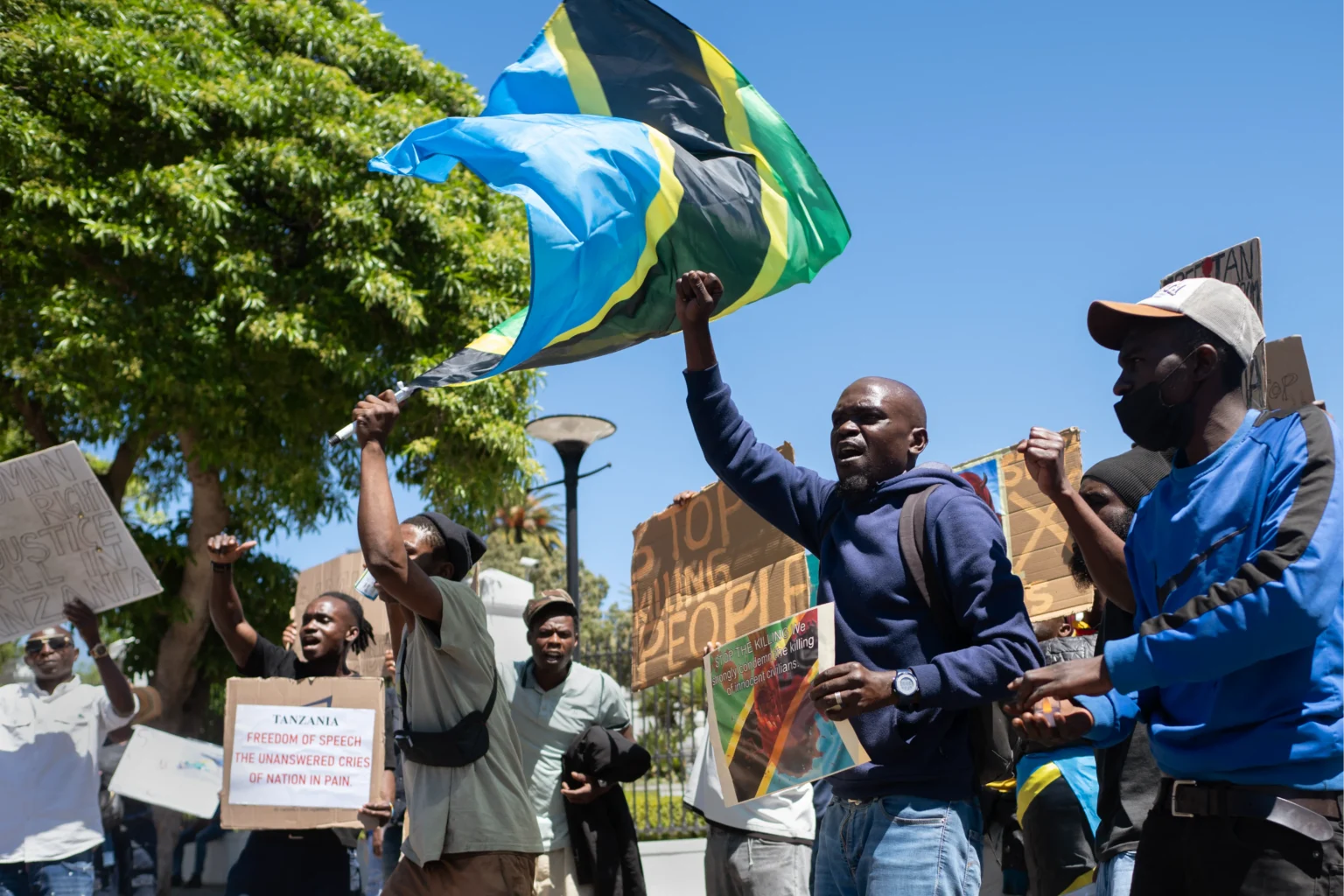
DAR ES SALAAM, Tanzania — Tanzanian authorities have arrested at least 130 people accused of “inciting criminal acts” as security forces intensified a nationwide crackdown on planned anti-government demonstrations, deepening concerns over political freedoms and civic space ahead of the country’s next electoral cycle.
The arrests were confirmed by police on Thursday, days after heavily armed security personnel blocked demonstrations that had been scheduled for July 7 in Dar es Salaam and other urban centres.
Police said investigations were ongoing and warned that additional suspects were being sought.
The operation followed the government’s decision to ban all political rallies, a move announced by Interior Minister Hamad Masauni on June 26, citing security concerns and the need to maintain public order.
Planned protests halted before they began
The demonstrations were organised by opposition supporters, activists and civil society groups seeking to demand democratic reforms, greater political freedoms and accountability for victims of election-related violence.
Security forces deployed heavily across Dar es Salaam, occupying major road junctions, transport hubs and strategic government installations.
Witnesses reported that potential gathering points were effectively sealed off before demonstrators could assemble.
The protests were also expected to draw attention to the continued detention of opposition leader Tundu Lissu, who faces charges authorities have linked to national security concerns.
Lissu’s supporters have consistently maintained that the case is politically motivated, a claim repeatedly rejected by the government.
Election violence still haunts Tanzania
The July 7 demonstrations were also intended to highlight unresolved questions surrounding violence that followed Tanzania’s most recent election cycle.
A government-appointed commission of inquiry reported in April that at least 518 people were killed during election-related unrest, one of the deadliest episodes in the country’s recent political history.
The violence followed the exclusion of several prominent opposition candidates from the electoral process, triggering widespread protests and confrontations between demonstrators and security forces.
Human rights organisations have argued that security agencies used excessive force during the unrest.
The Tanzanian government has denied those allegations and insists that law enforcement acted within the law to restore order.
Businesses shut as security presence intensified
The extensive security deployment also disrupted economic activity in Dar es Salaam.
Many businesses, particularly in the bustling Kariakoo commercial district, closed their doors amid fears of unrest and uncertainty surrounding the planned demonstrations.
Kariakoo is one of East Africa’s largest trading hubs and serves as a critical centre for commerce, transport and regional supply chains.
Traders reported significantly reduced activity throughout the day as residents stayed away from areas where security forces were concentrated.
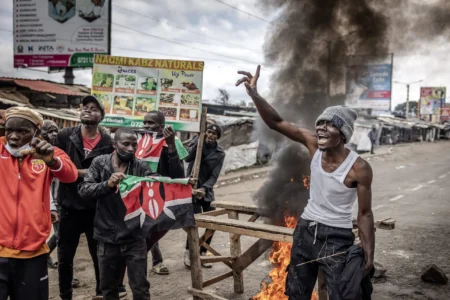
Similar caution was observed in parts of Nairobi, where authorities mounted parallel operations to prevent anti-government demonstrations during Kenya’s annual Saba Saba commemorations.
Regional concerns over shrinking civic space
The developments in Tanzania have reignited debate over the state of democracy, political participation and civil liberties across East Africa.
Rights groups have increasingly expressed concern about restrictions on public assembly, the treatment of opposition figures and the narrowing space for dissent in several countries in the region.
Also Read: Why Tanzania’s planned Saba Saba protests may struggle to gain momentum
Government officials, however, maintain that security deployments are necessary to prevent violence, protect property and stop criminal elements from exploiting political gatherings.
Political analysts say the latest arrests highlight growing tensions between governments seeking stability and opposition groups demanding greater democratic reforms.
With Tanzania moving closer to another election cycle, questions surrounding political freedoms, opposition participation and public accountability are likely to remain central to national debate.
For now, the heavy security operation succeeded in preventing the planned demonstrations from taking place, but it has also intensified scrutiny of the country’s democratic trajectory and its handling of political dissent.