


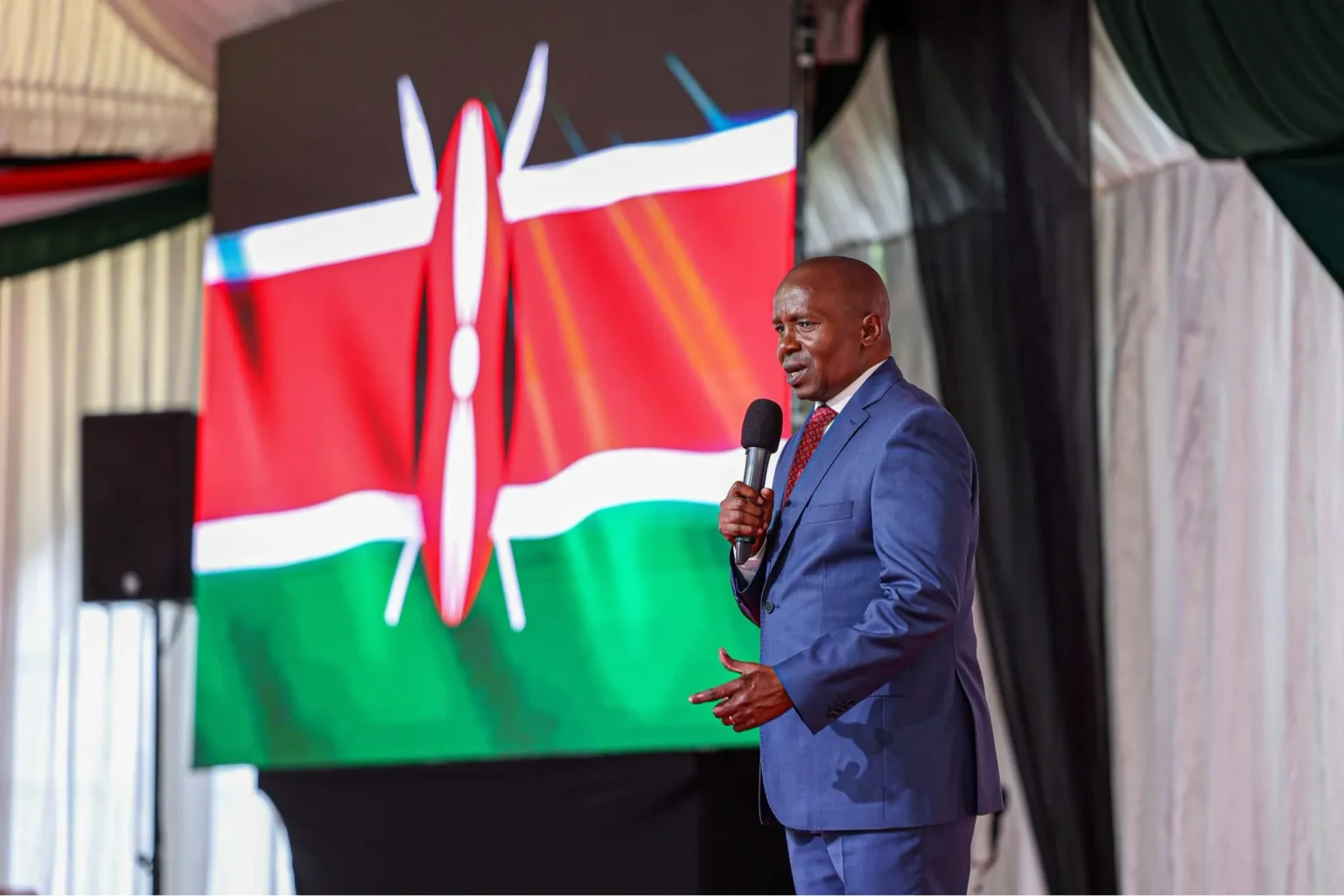
NAKURU, Kenya — Deputy President Kithure Kindiki has defended the government’s National Youth Opportunities Towards Advancement (NYOTA) programme, arguing that critics are unfairly dismissing an initiative designed to help young Kenyans start and expand businesses at a time when unemployment remains one of the country’s biggest economic challenges.
Speaking during the rollout of the second phase of the programme in Nakuru on Friday, July 10, 2026, Kindiki said the Kenya Kwanza administration was focusing on practical interventions that provide young people with capital and opportunities to become economically independent.
The Deputy President accused opposition leaders of criticising government programmes without offering viable alternatives to address youth unemployment and economic exclusion.
“Some people are competing politically with President William Ruto, but when it comes to programmes that directly empower young people, there is very little they can point to as an alternative,” Kindiki said.
He argued that initiatives such as NYOTA were aimed at equipping young people with resources to establish businesses and generate income rather than relying on political patronage.
Defending the KSh50,000 grants
Kindiki also responded to criticism that the KSh50,000 grants issued under the programme are insufficient to transform beneficiaries’ economic circumstances.
While acknowledging that the amount may not solve every financial challenge facing young entrepreneurs, he said the grants provide essential start-up capital that many youths would otherwise struggle to access.
“I hear some people saying KSh50,000 is too little. Yet for many young people trying to start a business, that amount can make the difference between having an opportunity and having none at all,” he said.
The Deputy President maintained that government support should be viewed as a catalyst for enterprise development rather than a complete solution to the country’s employment challenges.
According to him, the programme is designed to help beneficiaries establish small businesses, build financial records and eventually access larger financing opportunities.
Government expands youth enterprise support
Kindiki’s remarks came hours after President William Ruto announced that the government would invest nearly KSh3 billion to support more than 122,000 young entrepreneurs under the NYOTA initiative.
Speaking during the launch of NYOTA Tranche II at Nairobi’s Ulinzi Sports Complex, the President described the programme as one of the largest coordinated investments in youth entrepreneurship ever undertaken in Kenya.
“We are going to spend close to KSh3 billion across Kenya to fund more than 122,000 young entrepreneurs,” Ruto said.
The latest phase of the programme is expected to benefit thousands of young people who have already demonstrated progress after receiving initial grants under the first phase.
Government officials say the programme is intended to promote self-employment, support small business growth and reduce dependence on scarce formal-sector jobs.
Part of broader youth employment strategy
The NYOTA programme forms part of the government’s broader effort to tackle youth unemployment through enterprise development, access to credit and skills training.
Recent labour market assessments have shown that hundreds of thousands of young Kenyans enter the job market every year, while the formal economy creates only a fraction of the jobs needed to absorb them.
Also Read: Ruto orders two-year business permit waiver for NYOTA beneficiaries
As a result, policymakers have increasingly turned to entrepreneurship and small business development as key drivers of employment creation.
In recent months, the government has also announced additional measures to support NYOTA beneficiaries, including plans for a two-year business permit waiver, a dedicated beneficiary identification system and the creation of specialised financing products through institutions such as the Youth Enterprise Development Fund, Uwezo Fund and Kenya Industrial Estates.
Debate over effectiveness continues
Despite government assurances, critics have questioned whether small grants alone can address structural challenges facing young entrepreneurs, including limited access to markets, rising business costs and inadequate financing for expansion.
Opposition leaders and some economists have argued that broader reforms aimed at improving the business environment and expanding formal employment opportunities are equally important.
The government, however, insists that NYOTA is already producing results and represents a practical intervention for young people seeking to build sustainable livelihoods.
As implementation of the second phase gathers momentum, the programme is likely to remain at the centre of debate over how best to tackle unemployment and create opportunities for Kenya’s rapidly growing youth population.