



MUKONO, Uganda — Uganda has launched its first local production facility for OraQuick HIV self-test kits, a development expected to widen access to testing, reduce dependence on imported medical supplies and strengthen the country’s efforts to end AIDS as a public health threat by 2030.
The facility, owned by Zakayo Industries Limited in Ntenjeru, Mukono District, was commissioned on Thursday, October 29, in partnership with US-based OraSure Technologies. The launch coincided with the dispatch of the plant’s first export consignment of HIV self-test kits to Kenya.
Healthcare workers and government officials say local production could help address barriers that prevent people from knowing their HIV status, including stigma, concerns about privacy, fear of visiting health facilities and limited access to testing services.
The company is also targeting a significant reduction in the retail price of the kits, from the current Shs25,000 to Shs30,000 to approximately Shs7,000, potentially making private self-testing more affordable.
Shamim Naggayi, the plant manager, said the introduction of OraQuick in Uganda in 2018 had encouraged more people to test themselves, particularly those reluctant to visit hospitals or other conventional testing centres.
“When it was introduced on the market in 2018, the product cost about Shs40,000. At the moment, you will find it at Shs25,000 to Shs30,000 in pharmacies,” Naggayi said.
“Our target as Zakayo Industries is to bring the cost of this product to as low as Shs7,000, so every Ugandan can afford it.”
She clarified that the kits are already distributed free of charge through government public health facilities.
The proposed price reduction is therefore aimed particularly at improving access for people who prefer to purchase the products from private pharmacies.
Production capacity rises to 60,000 kits daily
Zakayo Industries said production capacity has expanded considerably since the company began assembling the kits in June.
Naggayi said the facility initially produced approximately 10,000 kits during an eight-hour shift but now has the capacity to produce between 50,000 and 60,000 kits daily.
The plant employs more than 120 people, with the company planning to expand its operations from assembly and secondary packaging to full manufacturing of diagnostic devices by 2028.
The distinction is significant because the facility is currently assembling and packaging OraQuick kits locally rather than manufacturing every component of the diagnostic product.
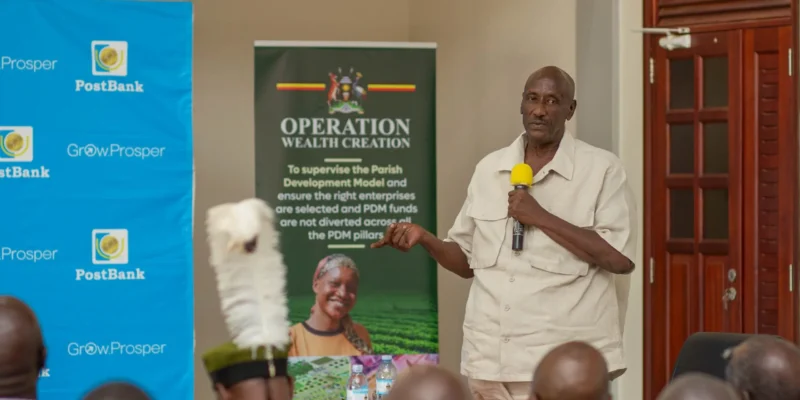
Ronald Wantanda Zakayo, the company’s chief executive officer, said the investment was driven by three objectives: reducing the spread of HIV, creating employment opportunities and generating tax revenue for Uganda.
He described the first export consignment to Kenya as an important milestone in the country’s ambition to move from importing medical products to supplying regional markets.
“Twenty-five years ago, we imported everything. Tomorrow, we should be exporting. As a matter of fact, we exported today,” Zakayo said.
The shipment marks an early step in the company’s plans to establish Uganda as a regional supplier of diagnostic products, although the scale of future exports will depend on production capacity, regulatory approvals and market demand.
Uganda seeks to close HIV testing gap
The launch comes as Uganda continues to address gaps in HIV diagnosis despite progress in treatment and viral suppression.
Dr Charles Olaro, the Director General of Health Services at the Ministry of Health, said self-testing would help reach people who face difficulties accessing conventional testing services, particularly men and young people.
He said local production would also reduce reliance on imported testing materials and the foreign exchange previously spent on procuring them.
Olaro cited Uganda’s HIV prevalence of 5.9 per cent and estimated that between 150,000 and 200,000 people remained unaware of their HIV status.
However, the preliminary findings of the 2025 Uganda Population-based HIV Impact Assessment (UPHIA), released by the Ministry of Health on October 1, provide a more recent national measure of the testing gap.
The survey found that 85.3 per cent of adults aged 15 and above living with HIV knew their status, meaning approximately one in seven remained unaware of their infection.
It estimated that about 1.496 million adults aged 15 and above were living with HIV in Uganda, with prevalence at 5.9 per cent.
The assessment also found that 99.1 per cent of those who knew their HIV status were receiving antiretroviral treatment, while 96.5 per cent of those on treatment had achieved viral suppression.
The findings suggest that identifying people who remain undiagnosed is one of the major outstanding challenges in Uganda’s HIV response.
The government has been pursuing the 95-95-95 targets, which aim for 95 per cent of people living with HIV to know their status, 95 per cent of those diagnosed to receive treatment and 95 per cent of those on treatment to achieve viral suppression.
The latest findings show that Uganda has made substantial progress in treatment and viral suppression but remains below the first target, highlighting the importance of expanding testing opportunities.
How OraQuick self-testing works
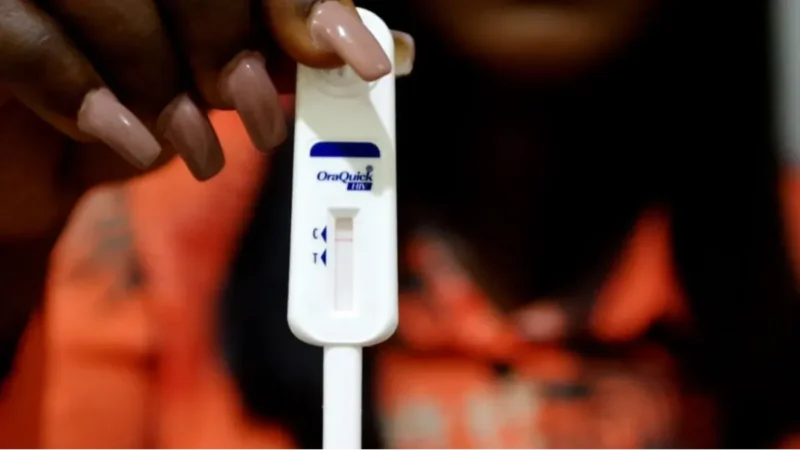
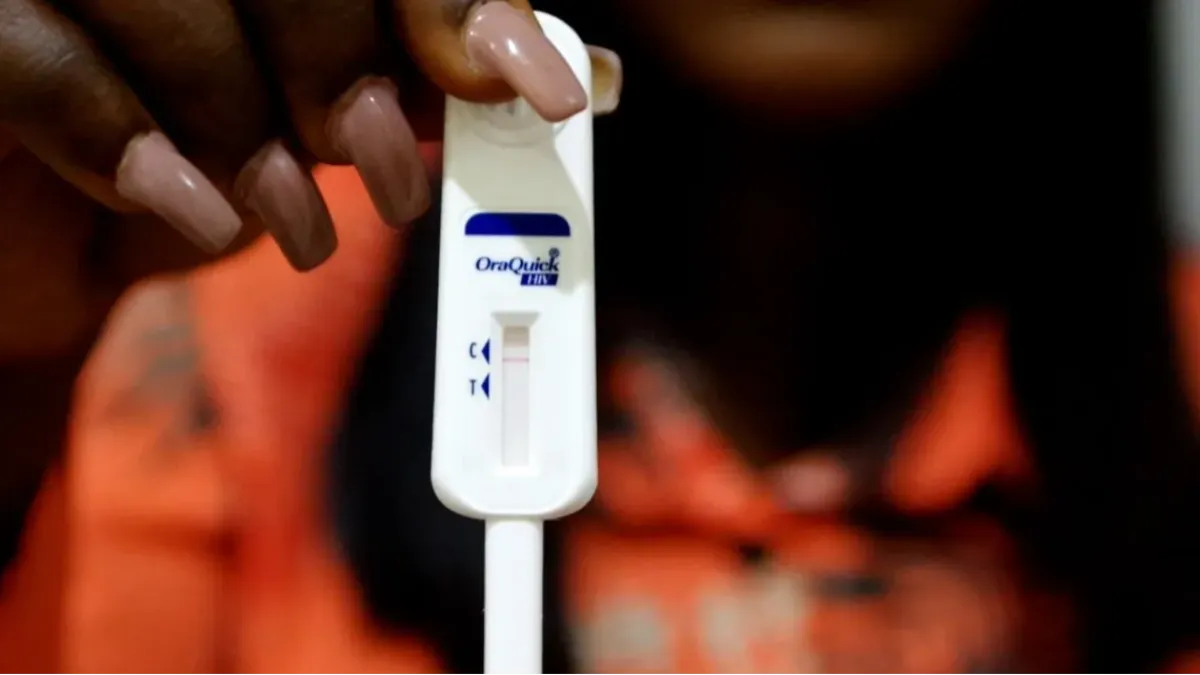
OraQuick is an oral fluid-based HIV self-test that allows individuals to screen themselves by collecting a sample from their gums using a testing device.
Unlike conventional blood-based rapid tests, the kit does not require a blood sample or a healthcare worker to administer the initial screening.
The option offers greater privacy and convenience for people who may otherwise avoid testing because of stigma, fear of discrimination or concerns about confidentiality.
However, a reactive result does not amount to a confirmed HIV diagnosis.
Anyone who obtains a reactive result must seek further testing at a recognised health facility in accordance with national testing guidelines. Confirmatory testing is necessary before an HIV-positive diagnosis can be established, followed by linkage to appropriate treatment and care.
Health officials say the availability of self-testing must therefore be accompanied by public awareness, reliable counselling and effective referral systems to ensure that people who screen positive receive the medical support they need.
US-Uganda partnership targets wider diagnostic production
Michael Cleverly, the US Chief of Mission in Uganda, welcomed the partnership, describing it as part of a longstanding relationship between the two countries in healthcare, research and education.
He said US investment and cooperation had contributed to the development of Uganda’s health system over several decades.
“As long as I remain US Chief of Mission, I will continue to encourage foreign companies to invest in the country in order to improve people’s lives in the economy, education, and health sectors,” Cleverly said.
John Ballester, OraSure Technologies’ senior director for international diagnostics, said the partnership would help address logistical challenges associated with transporting diagnostic products across continents.
He explained that the supply chain previously involved producing raw materials in the United States, assembling the kits in Thailand and then shipping finished products to African markets.
Rising freight costs, geopolitical tensions and international supply-chain disruptions had demonstrated the need to bring production closer to the markets being served, he said.
The partnership is expected to extend beyond HIV testing, with the companies exploring opportunities to produce other diagnostic products, including Ebola tests, as well as tests for hepatitis and sickle cell disease.
Zakayo Industries said the Mukono facility had obtained ISO 9001 and ISO 13485 certifications, which relate to quality management systems and medical device quality management respectively.
Can local production help Uganda reach its 2030 target?
Uganda’s new diagnostic facility represents both a public-health investment and an attempt to strengthen domestic production of essential medical supplies.
By reducing dependence on imported products, increasing local production capacity and potentially lowering retail prices, the initiative could make HIV screening more accessible to people who prefer testing privately.
The first export consignment to Kenya also signals the company’s ambition to serve markets beyond Uganda and establish a regional supply chain for diagnostic products.
Also Read: Expired HIV self-test kits seized in Kampala crackdown
However, the impact will depend on whether the company can sustain production, achieve its proposed price reduction and maintain the quality and regulatory standards required for diagnostic devices.
The availability of cheaper self-test kits alone will not eliminate the testing gap. Public awareness, confirmatory testing, access to treatment and sustained HIV prevention programmes will remain essential to the country’s response.
With the 2025 national assessment showing that 14.7 per cent of adults living with HIV remain unaware of their status, expanding access to testing is a critical part of Uganda’s effort to meet its 2030 ambition of ending AIDS as a public health threat.