

KAMPALA, Uganda — Uganda’s Senior Presidential Adviser on Special Operations, Gen Salim Saleh has revealed that he found detained opposition leader Dr Kizza Besigye in what he described as an almost-fatal condition while in custody, prompting him to arrange the politician’s transfer to a specialised medical facility.
Saleh, the younger brother of President Yoweri Museveni and head of the government’s Operation Wealth Creation (OWC) programme, said he intervened after being asked to handle Besigye’s situation, which had become a major source of public concern following the veteran opposition figure’s health deterioration in detention.
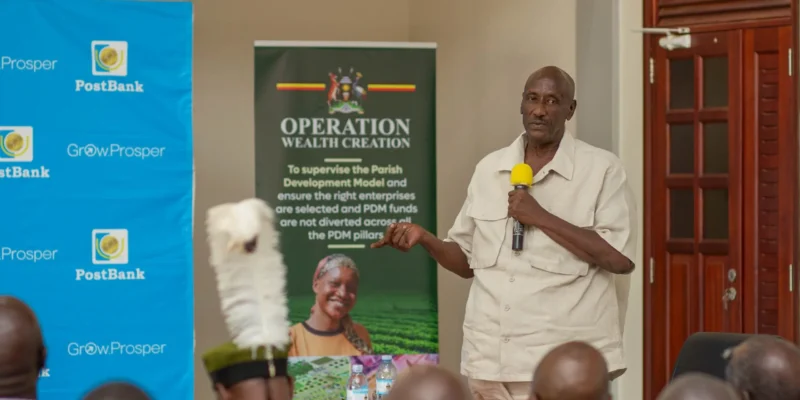
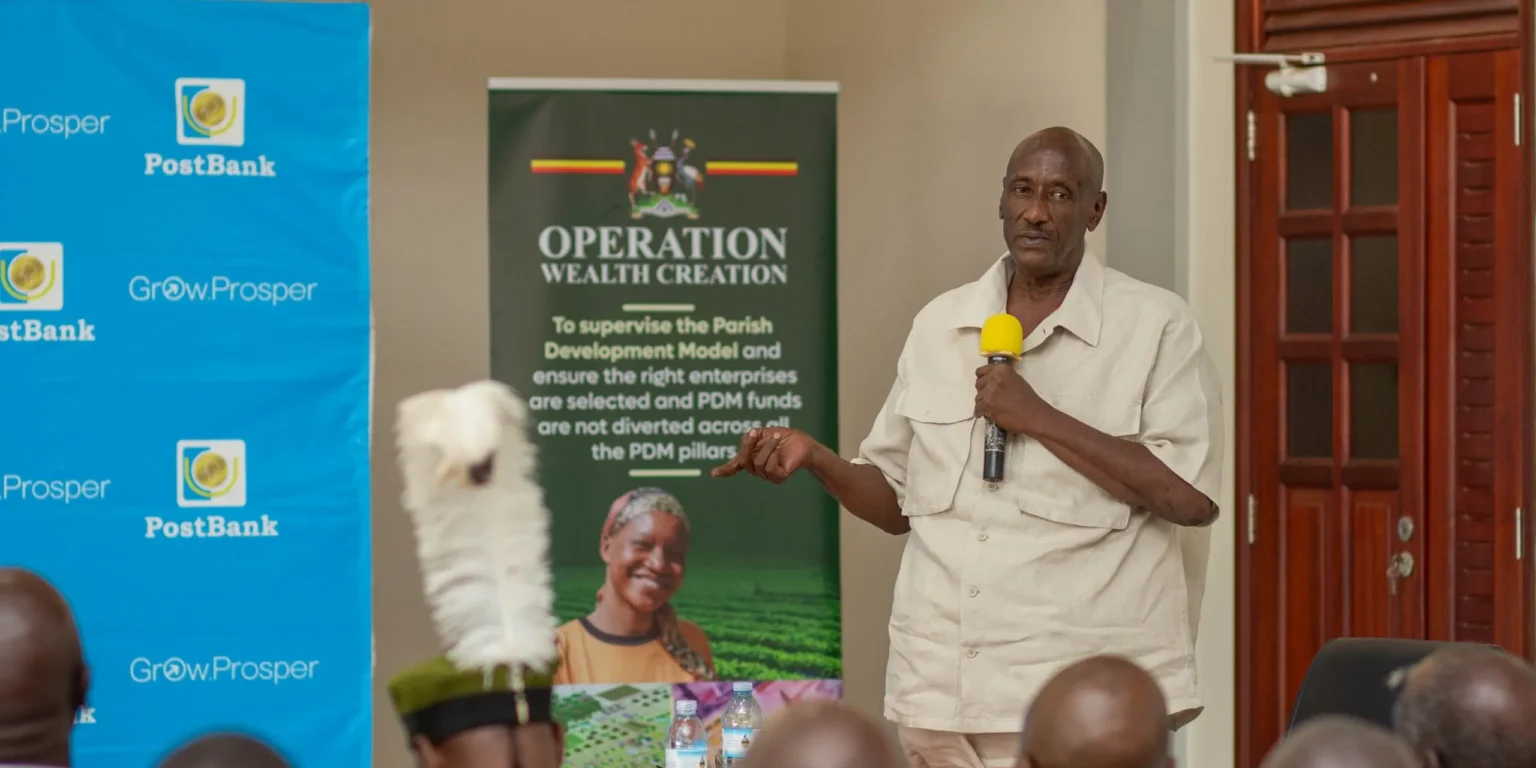
Speaking to parliamentary committee chairpersons and other National Resistance Movement (NRM) legislators at Kapeeka in Nakaseke District on October 30, Saleh said he was alarmed by Besigye’s physical condition when he visited him.
“By the time I went to the hospital, I found my friend almost dead in prison. So my first action was to take him from the prison to a proper medical centre,” Saleh said.
He disclosed that he arranged for Besigye to receive treatment at the Joint Clinical Research Centre (JCRC) in Lubowa, an institution he said he helped establish.
Saleh described the facility as sufficiently equipped to provide the level of specialised care he believed Besigye required.
“The bed he’s now being attended from is the same bed I would be in, in my setup, if I was under intensive conditions, at the Joint Clinical Research Centre, which was established by us. I’m a founder member there,” he said.
The remarks offer a rare account from a senior government figure of the circumstances surrounding Saleh’s intervention in Besigye’s medical care, although the general did not provide clinical details of the opposition leader’s condition at the time of his visit.
Muhoozi’s intervention brought former allies back into contact
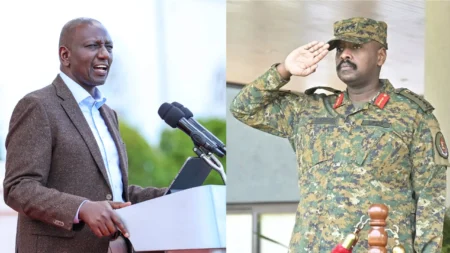
Saleh traced his involvement to an August 25 social media post by Uganda’s Chief of Defence Forces (CDF), Gen Muhoozi Kainerugaba, who indicated that his uncle had been assigned responsibility for handling Besigye’s situation.
“Dr KB will be handled by Afande Saleh. If he wants forgiveness, he should talk to Afande Saleh. Mzee has given Afande SS those powers,” Gen. Muhoozi wrote.
Saleh said he initially questioned whether Gen. Muhoozi was serious about the message but later understood it as an opportunity to reconnect with Dr. Besigye, whom he described as an old friend and former bush war colleague.
“I got that tweet on the 25th of August from the CDF that Kizza Besigye’s problem is my problem. I’m the one going to sort it out,” Saleh recalled.
“He didn’t know that he had given me a very, very good opportunity because I had lost touch with KB completely because of those politics.”
The two men share a history dating back to Uganda’s liberation struggle, but their political paths subsequently diverged, with Besigye emerging as one of Museveni’s most prominent political challengers.
Saleh said he had since maintained contact with the opposition leader and hoped their renewed relationship could help them overcome past political differences.
“I have been in touch with him. All the newspapers are talking peace talks,” he said.
However, he declined to confirm whether their engagement amounted to formal negotiations aimed at securing Dr. Besigye’s release.
“Don’t ask me whether we are in peace talks or not. For me, the moment I got that tweet, I said, ‘Ah, now God has helped me to reconnect with an old colleague,’” Saleh said.
He expressed hope that the two could reach a shared understanding of Uganda’s future within three to six months.
“I hope we shall convince each other in the next maybe six months or maybe three months to have a combined outlook of the Uganda we want,” he added.
Besigye’s health crisis intensified public pressure
Saleh’s account comes against the backdrop of growing concerns over Besigye’s health during his detention.
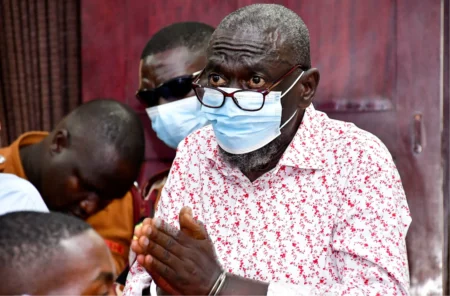
The 70-year-old opposition politician collapsed during court proceedings in Kampala on July 29, 2026, and was taken to Mulago National Referral Hospital for treatment.
His condition became a subject of public dispute, particularly after his wife, Winnie Byanyima, repeatedly raised concerns about his ability to walk, speak and perform basic activities without assistance.
In August, Byanyima said Besigye was too weak to walk or talk and appealed to authorities to allow him to travel to Geneva, Switzerland, for specialised treatment and care closer to his family.
She also questioned decisions to move him between medical facilities and prison, arguing that his condition required sustained medical attention.
The People’s Front for Freedom (PFF), the political organisation associated with Besigye, similarly expressed concern about his health and called for access to appropriate medical care.
Uganda Prisons Service confirmed his transfer to JCRC for medical attention on August 31, although reports about the precise timing of the transfer placed it in late August.
The conflicting public accounts of Dr. Besigye’s condition have made independent medical information particularly important. Saleh’s description of finding him “almost dead” is a personal account, not a published medical assessment, and the general did not disclose Besigye’s current diagnosis or prognosis.
Government acknowledges political consultations
The latest remarks also come as government officials acknowledge efforts to explore a political solution to the cases involving Besigye and detained Kampala Lord Mayor Erias Lukwago.
Justice and Constitutional Affairs Minister Norbert Mao confirmed on October 21 that President Museveni had instructed officials to engage people with an interest in the two politicians’ cases.
Mao said the consultations involved government representatives, family members and political organisations, and were being led by Saleh as part of a broader effort to promote national reconciliation.
He described the process as involving three parallel tracks: ongoing court proceedings, medical treatment and political engagement.
“The instruction of the President is: talk to everybody who has a stake in the lives of the Lord Mayor and Dr Besigye, so that, for the sake of Uganda, we find harmony,” Mao said.
The minister, however, stressed that political consultations would not replace the judicial process, maintaining that the courts should continue handling the cases in accordance with the law.
His comments indicated that Saleh’s involvement extends beyond arranging medical care and includes a wider government-backed effort to engage people connected to the detained opposition figures.
Besigye’s family and party question reports of negotiations
Despite the government’s confirmation of consultations, Besigye’s family and political associates have challenged suggestions that he is negotiating his release.
Byanyima has insisted that her husband’s health, access to medical treatment and legal rights should not be subject to political bargaining.
“There are no negotiations for Kizza Besigye’s release. His health and his rights are not matters for negotiation,” she said in a statement cited by Daily Monitor.
She has maintained that Besigye should be granted bail through the courts and receive the medical attention he needs.
Also Read: Makerere paid Shs59.3m to transcribe recordings in Besigye treason trial
PFF official Dr Lulume Bayigga has also said Besigye denied participating in negotiations over his release when he visited him.
According to Bayigga, Besigye maintained that bail was a judicial matter and that any broader dialogue about Uganda’s political future should involve all relevant stakeholders rather than a small group of individuals.
The positions point to a distinction between government consultations involving Saleh and a formal agreement accepted by Besigye himself. No such agreement has been announced.
Treason case remains before the High Court
Besigye has been in detention since November 2024, when he was arrested in Nairobi, Kenya, and subsequently taken to Uganda.
He faces treason-related charges alongside his aide Hajj Obeid Lutale and retired Uganda People’s Defence Forces officer Capt Denis Oola.
Prosecutors allege that the accused participated in activities intended to overthrow the government. Besigye and his co-accused deny the allegations.
The case is being heard before the High Court in Kampala, with the proceedings continuing amid disputes over Besigye’s health, access to legal representation and his ability to participate in court.
Saleh’s latest disclosure has therefore placed renewed attention on two closely connected questions: the treatment of a high-profile opposition figure in state custody and the possibility of political engagement between the government and one of its longstanding critics.
For now, Saleh has expressed optimism about rebuilding his relationship with Besigye, but has not announced a deal, a release arrangement or any change to the treason proceedings.
Whether the renewed contact develops into a broader political understanding remains uncertain. Besigye’s family and party continue to insist that his immediate health needs and legal rights must be addressed independently of political negotiations.