

KAMPALA, Uganda — When President Yoweri Museveni launched his armed rebellion against Milton Obote’s government in 1981, he presented himself as a revolutionary determined to rescue Uganda from dictatorship, political instability, and the abuse of state power.
His message resonated with a population exhausted by years of turbulence. The National Resistance Movement (NRM) promised a new political order founded on democracy, accountability, national unity, and the rule of law. For many Ugandans, Museveni represented a decisive break from the country’s troubled past.
Four decades later, however, one of the most enduring questions in Ugandan politics is whether the man who came to dismantle personalised rule has instead presided over the creation of a political system increasingly centred on his family.
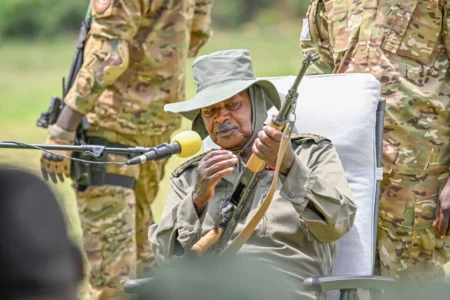
It is a question that has become more difficult to ignore following Museveni’s swearing-in for a record seventh consecutive presidential term on May 12, 2026, at the Kololo Independence Grounds in Kampala, and the continued prominence of members of the First Family in the country’s political, military and administrative structures.
The debate is not merely about succession. It is about whether Uganda’s institutions have become strong enough to outlive the individuals who built them, or whether power has become so concentrated around a single family that the distinction between state, party and household is increasingly blurred.
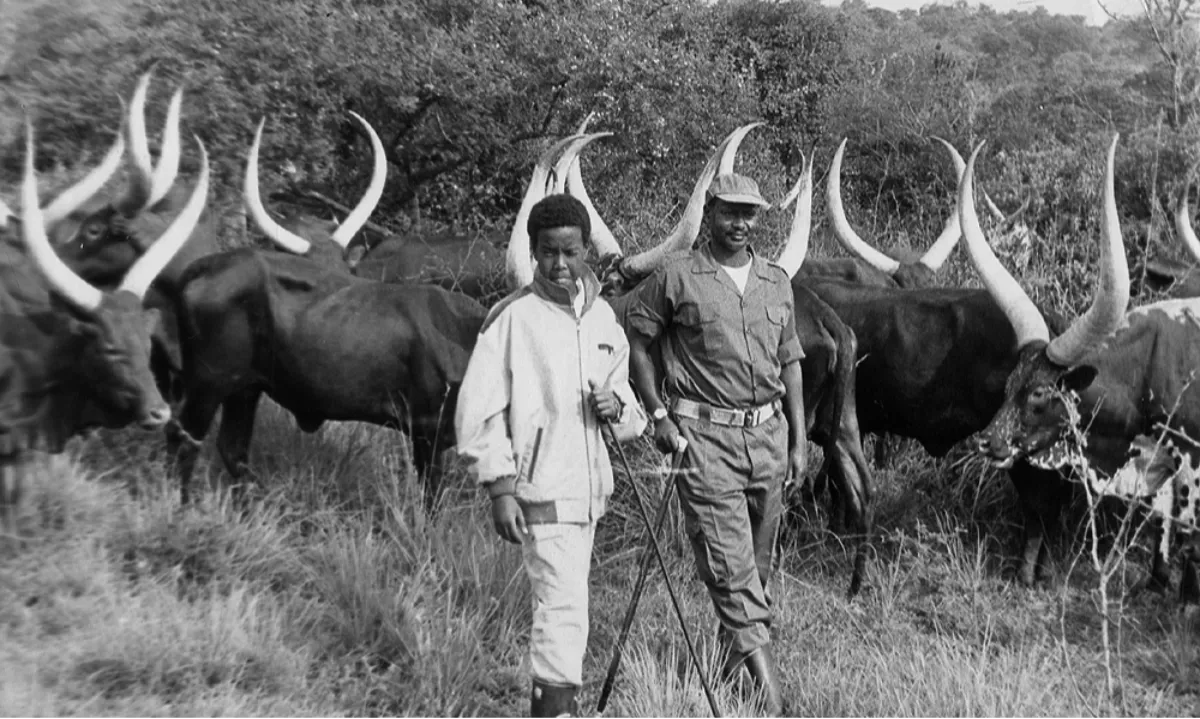
Throughout his presidency, Museveni has often drawn parallels between Uganda’s modern political journey and the kingdoms and dynasties that shaped the region’s pre-colonial history. Among the historical references he frequently invokes is the Cwezi dynasty, a semi-legendary ruling order remembered in the Great Lakes region for its influence and longevity.
To his supporters, such references reflect an appreciation of African history and indigenous governance systems. To critics, they represent something more symbolic: an attempt to frame long-term rule as both natural and desirable.
Whether intentional or not, the imagery has become increasingly relevant as Uganda’s political landscape evolves.
The most striking feature of Museveni’s fourth decade in power is not simply the length of his rule but the extent to which key centres of authority are occupied by individuals linked to him politically, historically, regionally or through family ties.
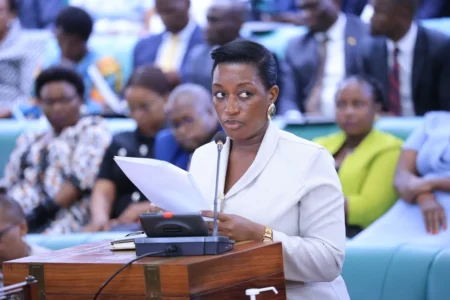
His wife, Janet Museveni, remains one of the most influential figures in government, serving as Minister of Education and Sports while continuing her role as First Lady. Few African countries have witnessed a presidential spouse simultaneously occupying such a powerful cabinet position for an extended period.
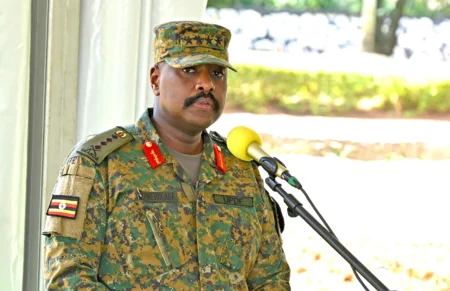
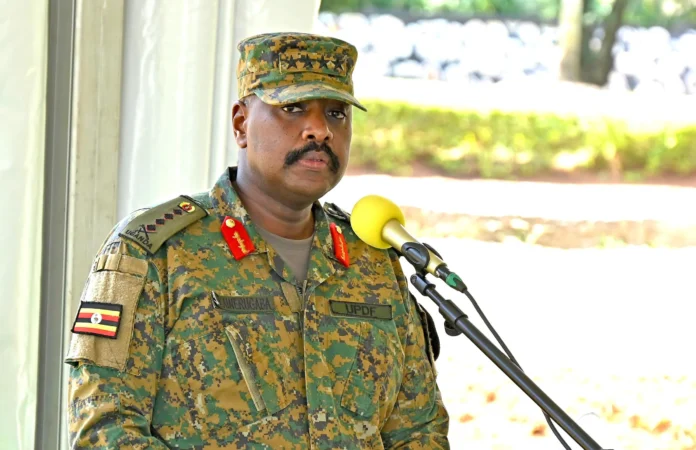
His son, General Muhoozi Kainerugaba, currently serves as Chief of Defence Forces (CDF), the highest military office in the country. Once viewed primarily as a military officer, Gen Muhoozi has emerged as one of Uganda’s most visible political figures, generating headlines through public appearances, political statements and an often controversial social media presence.
The significance of Gen Muhoozi’s position goes beyond rank. Since independence, control of the military has remained one of the most decisive factors in determining political power in Uganda. As a result, his rise is viewed by many observers not merely as a military career trajectory but as part of a broader discussion about succession and the future direction of the state.
The conversation has been amplified by years of public campaigning by supporters who openly portray Gen Muhoozi as Uganda’s next leader. While neither Museveni nor his son has formally announced a succession arrangement, the persistence of such campaigns has fuelled speculation that a transfer of influence within the ruling establishment is already underway.
Supporters reject this interpretation. They argue that Gen Muhoozi, like any other Ugandan citizen, has a constitutional right to seek political office if he chooses to do so. They further contend that his military appointments have reflected professional advancement rather than familial privilege.
Yet the concerns raised by critics extend beyond Gen Muhoozi alone.
For years, opposition politicians, civil society activists and some political analysts have argued that key government, military and security positions have become increasingly concentrated among individuals with close ties to Museveni and his home region of Ankole in western Uganda.
Government officials have consistently dismissed such claims, insisting that appointments are based on merit, experience and national interest rather than ethnicity or regional identity.
Nevertheless, the perception of regional concentration has persisted and remains a recurring source of political contention, particularly during election periods and debates over national representation.
These concerns have emerged alongside broader questions about Uganda’s democratic evolution.
When Museveni took power in 1986, he frequently criticised what he described as Africa’s problem of leaders overstaying in office. He argued that political instability often stemmed from leaders who personalised state institutions and treated public office as private property.
Over time, however, Uganda’s constitutional framework was significantly altered. Presidential term limits were removed in 2005, while the presidential age limit was abolished in 2017. Both changes enabled Museveni to remain eligible for office indefinitely.
To supporters, these reforms reflected the will of Parliament and the electorate. To critics, they marked a gradual weakening of constitutional safeguards designed to guarantee leadership renewal.
The contradiction has become one of the defining paradoxes of Museveni’s legacy.
The revolutionary who once positioned himself as a corrective to life presidencies is now among Africa’s longest-serving leaders. The movement that emerged from a guerrilla war promising democratic transformation has itself become the establishment.
This transformation has prompted comparisons with political dynasties elsewhere in the world, where power is sustained not solely through elections but through the strategic positioning of family members and trusted allies within key state institutions.
The question facing Uganda today is not whether Museveni has built roads, expanded education, strengthened security, or overseen periods of economic growth. Those achievements and debates are well documented.
The more fundamental question concerns the future.
Can Uganda demonstrate that its institutions are stronger than the personalities who lead them? Can leadership transitions occur through transparent democratic processes independent of family influence? Can the military remain professionally detached from political succession debates?
Also Read: Uganda succession debate: What happens after Museveni?
These questions have become increasingly important because they extend beyond Museveni himself. Every political system is ultimately tested not by how it acquires power but by how it transfers it.
Forty years after the National Resistance Army (NRA) marched into Kampala, Uganda stands at a pivotal moment in its political history.
The institutions built during Museveni’s presidency are approaching their most significant test: proving whether they are capable of surviving and functioning independently beyond the era of the man who created them.
History may ultimately judge Museveni not by how long he governed, but by what kind of political order he leaves behind.
Whether that order is remembered as a durable republic strengthened by institutions or as the foundation of a family-centred political dynasty remains one of the most consequential questions facing Uganda today.