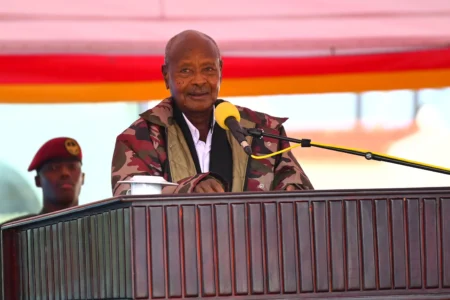


KAMPALA, Uganda — After more than four decades in power since taking office in January 1986, President Yoweri Kaguta Museveni’s tenure has brought Uganda’s succession question increasingly into focus.
While there has been no official indication of a transition timeline, political discourse within the country, and across the region, is steadily shifting toward what a post-Museveni era might look like.
For years, Uganda’s political stability has been closely tied to Museveni’s leadership, with supporters crediting him for maintaining relative order and economic continuity. However, analysts say the absence of a clearly defined succession framework presents both political and institutional risks.
At the centre of the debate is the question of continuity versus change.
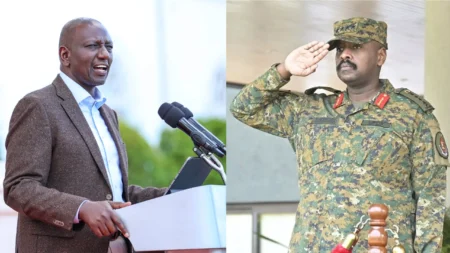
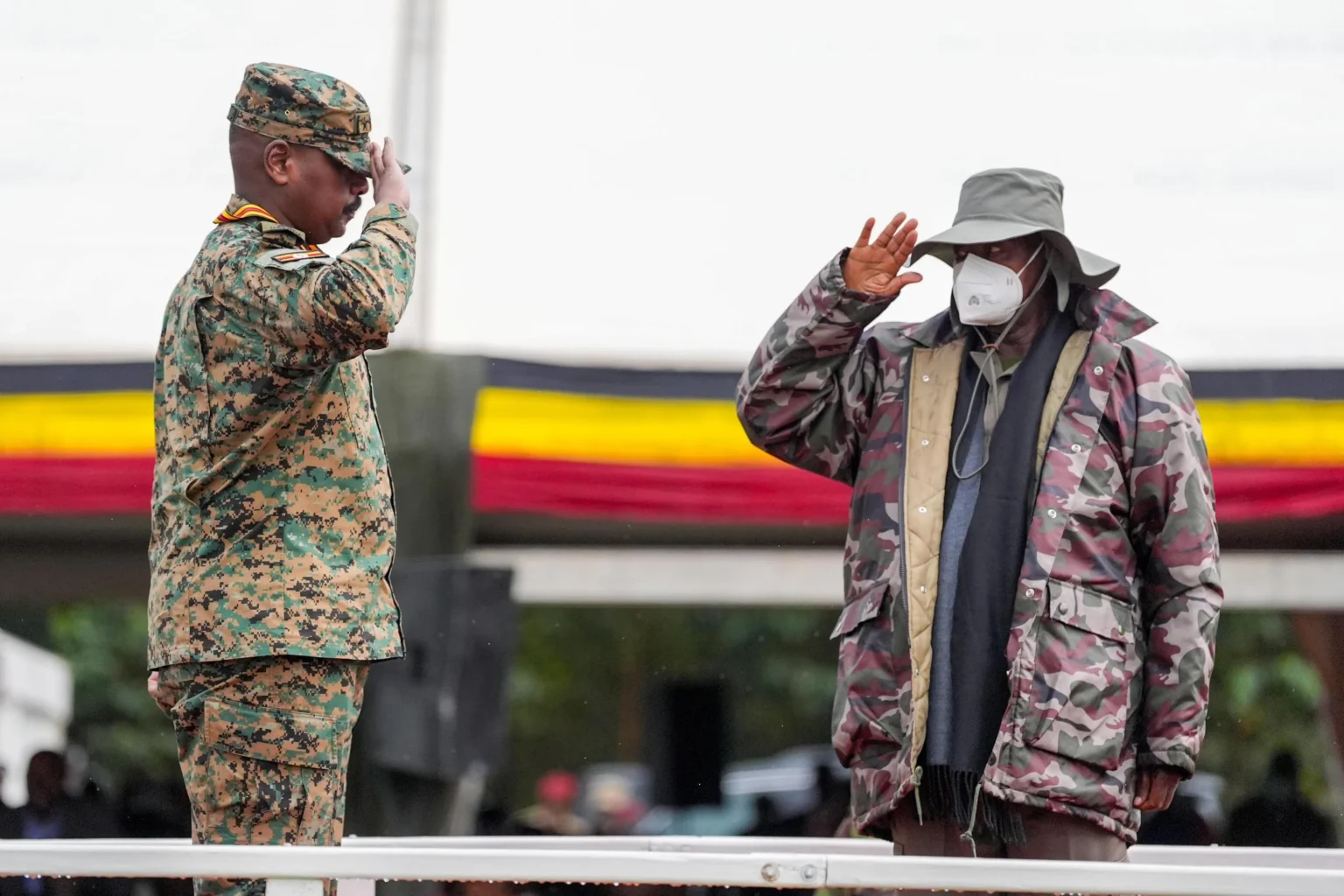
Some observers point to the growing visibility of General Muhoozi Kainerugaba, the President’s son and a senior military figure, whose public profile has expanded significantly in recent years. His statements, public engagements, and perceived influence within security circles have fuelled speculation about a potential future leadership role.
At the same time, opposition figures continue to push for democratic transition and institutional reforms, arguing that Uganda’s long-term stability depends on strengthening governance structures beyond individual leadership.
The challenge, analysts say, lies in navigating a transition without destabilising the political system.
Uganda’s history, like that of many African nations, includes periods of political upheaval linked to leadership changes. This has made questions of succession particularly sensitive, both domestically and internationally.
Within the ruling establishment, maintaining cohesion will be critical.
Political transitions often test alliances within governments, security institutions, and party structures. Any perceived uncertainty can trigger shifts in loyalty, making the management of succession as important as the outcome itself.
Regional dynamics also play a role.
Uganda is a key player in East African security and economic frameworks, and any major political shift in Kampala would have ripple effects across neighbouring countries.
International partners, meanwhile, are likely to watch closely, particularly in areas related to governance, investment stability, and security cooperation.
Despite growing discussion, the topic remains largely informal.
There has been no comprehensive public roadmap outlining how a transition would unfold, leaving space for speculation and political signalling.
Also Read: Uganda’s ex-spy chief David Sejusa, who ‘opposed Museveni’s monarchy,’ defends UK exile
For many Ugandans, the issue is less about personalities and more about institutions.
Questions around electoral processes, constitutional safeguards, and the independence of key state bodies are increasingly central to public debate.
As the country moves forward, the manner in which succession is handled could shape Uganda’s political trajectory for decades.
Whether it leads to continuity, reform, or uncertainty will depend not only on leadership decisions, but also on the strength of institutions and the expectations of a younger, more politically aware population.