


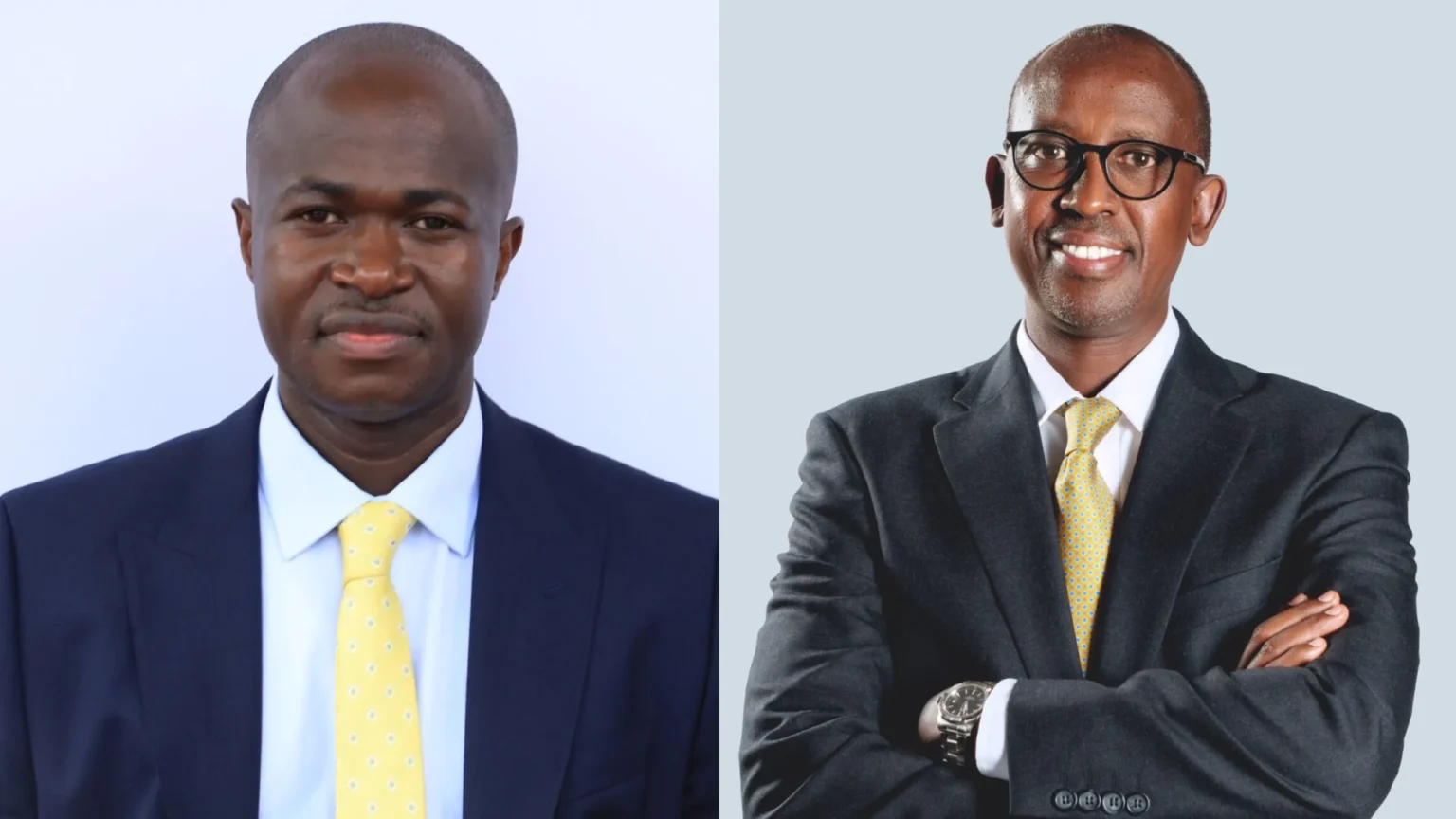
KAMPALA, Uganda — Presidential Advisory Committee on Exports and Industrial Development (PACEID) chairman Odrek Rwabwogo has strongly denied allegations that he grabbed government land in Kiruhura District, insisting the claims are politically motivated attempts to discredit his work in Uganda’s industrialisation programme.
In a lengthy audio statement released over the weekend, Rwabwogo responded to accusations by Kasambya County MP Daudi Kabanda, who alleged that the presidential adviser acquired about seven square miles of land belonging to the National Animal Genetic Resources Centre and Data Bank (NAGRC&DB) after persuading President Yoweri Museveni that the property would be used for a milk factory and livestock project.
Kabanda further alleged that the promised investment had become a cover for other commercial ventures, accused Rwabwogo of depriving cattle keepers of grazing land and claimed that some farmers had not been paid for milk supplied to one of his factories.
Rwabwogo dismissed the allegations outright, describing them as false and inconsistent with his personal values.
“I wish to respond to some of the claims I have been hearing about land grabbing. I am deeply hurt because some of you do not know much about me; when you hear these ridiculous claims you may be tempted to believe them,” he said.
He added: “I wish to inform you that in the Rwabwogo family I grew up in, my mother Erina and my father Thomas were pure Christians. We never lie. God was gracious to us. He gave us life and educated us. We can never take what is not ours.”
Rather than responding only to the Kiruhura allegations, Rwabwogo sought to establish what he described as a longstanding personal record of respecting property rights.
He recounted a land dispute involving property he had purchased in Kakyeera years earlier, saying church leaders later informed him that part of the land belonged to the Anglican Church.
According to Rwabwogo, an independent survey found that several people, including the church itself, had encroached on neighbouring property. Despite believing he had a legal claim over the disputed land, he said he voluntarily surrendered 63 acres to the church.
“I got 63 acres and handed them to the church even in the presence of the person who sold me that land,” he said.
“I tell you this not to brag but to show how Satan uses people to tell lies about others to tarnish their names.”
He also cited another example involving land in Maya, Mpigi District, where he and his wife had planned to build a family home.
Instead, he said, they donated the property for church development after what he described as a spiritual conviction.
“Rwabwogo cannot touch what is not his,” he maintained.
Turning to the Kiruhura project, Rwabwogo rejected suggestions that the Nshaara Industrial Park existed for personal enrichment.
He said the project was conceived as part of a broader strategy to promote value addition, agro-processing and export-oriented industrialisation rather than speculative land acquisition.
According to Rwabwogo, investments have already been made in meat processing and coffee production under a private company known as Rise.
He acknowledged that plans for a major export abattoir had encountered setbacks but attributed the delays to external factors rather than project failure.
“We have a company called Rise through which we are trying to set up a coffee farm. We have already set up a meat factory,” he said.
“I personally looked for Chinese investors. Unfortunately we looked for 150 cows to slaughter every day and couldn’t get them. Secondly, we failed to get certification from China. We were disrupted by Covid-19.”
He said Uganda continues to face structural challenges in livestock supply chains and export certification, adding that PACEID is advocating reforms to strengthen food safety and certification systems.
Rwabwogo argued that increasing livestock productivity would ultimately support Uganda’s ambition of expanding meat exports.
“My calculation is that if I can get 3,000 cattle farmers, and also reduce the time the cows take to grow up and reproduce from 18 months to 12 months, we may get more cows going to the abattoir,” he explained.
Beyond the industrial park, Rwabwogo defended the record of a milk processing plant in Rushere, saying it had purchased milk worth more than Shs11 billion from local farmers over the past nine years.
He denied claims that dairy suppliers remained unpaid.
Instead, he blamed payment disputes on an intermediary who allegedly received Shs800 million to procure milk but failed to deliver after mismanaging the funds.
“We got Shs800 million and handed it to an individual to get us milk. He never delivered and later we heard that he had two wives who were fighting over this money,” he said.
“We shut him down.”
He said the factory subsequently shifted to direct procurement from farmers and insisted no outstanding payments remain.
“We are not owed by a single farmer of any amount.”
Rwabwogo also defended his broader development record, listing investments in education, water supply and religious institutions.
“We have brought tap water to our community.”
“My wife has renovated a church in Nkukuru which was built in 1965.”
“We built Naama Primary School and purchased computers for them.”
He questioned why critics who accuse him of wrongdoing had not undertaken comparable community projects.
“What have you done?” he asked.
Away from the land dispute, Rwabwogo used the statement to defend his recent visits to opposition politicians and other detainees held in prison, an issue that has attracted criticism from sections of the ruling National Resistance Movement (NRM).
He rejected suggestions that showing compassion to political prisoners amounted to disloyalty.
“I will not stop visiting people who are incarcerated in prison,” he said.
“If you arrest a person, I will look for their family because in our nation I want my children and their children not to be scared of each other.”
He argued that reconciliation, dialogue and respect for the rule of law should remain central to Uganda’s political future.
“How do you want to run Uganda if you don’t want to listen to one another and reject reconciliation or to follow the law?”
“We will not accept this.”
Rwabwogo further accused sections of the ruling party of abandoning the National Resistance Movement’s ideological foundations in favour of money-driven politics.
He lamented what he described as the decline of political education within the movement.
“Forty years later the party’s memories are starting to fade.”
“Educating and sensitising the masses has died down.”
“Instead of educating people, we buy them.”
Without directly naming Kabanda, Rwabwogo recalled an incident from 2015 involving a young political operative whom he said he had recruited for NRM mobilisation work before allegedly discovering him in a hotel with alcohol, a firearm and a woman after he had switched off his phone.
Also Read: Museveni dragged into Kabanda–Rwabwogo political feud
He said he replaced the individual and later learned he had become a Member of Parliament.
“Lack of education is dangerous,” he said.
Despite the criticism directed at him, Rwabwogo insisted he would continue supporting President Museveni’s development agenda while remaining committed to reconciliation across political divides.
“I have knowledge, I am humble and I have God.”
“I will not be intimidated or allow my people to be intimidated.”
He concluded by urging Ugandans to disregard what he described as politically motivated accusations.
“I will encourage my people to be strong and know that all you hear are lies from the pits of hell.”
“They are lies that fear the truth.”