


NAIROBI, Kenya — Kenya has received a commitment of approximately Sh1.75 billion ($13.5 million) from the United States to support Ebola preparedness efforts, as Washington intensifies measures aimed at preventing the spread of the virus beyond Africa and ultimately into the United States.
The funding, announced as part of a broader emergency response package, comes amid a rapidly expanding international containment operation targeting the ongoing outbreak of the rare Bundibugyo strain of Ebola in parts of the Democratic Republic of Congo (DRC) and Uganda.
According to US officials, the intervention is designed not only to reinforce outbreak response systems in the region but also to reduce the risk of global transmission, particularly to the United States, where health authorities remain on heightened alert.
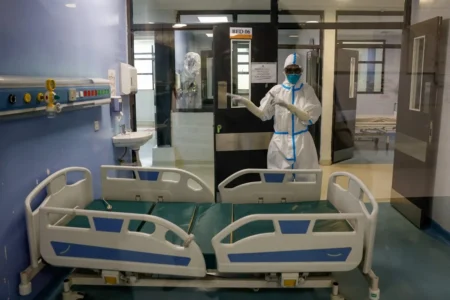
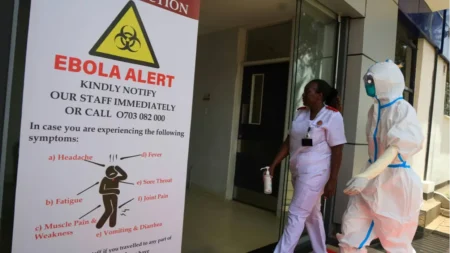
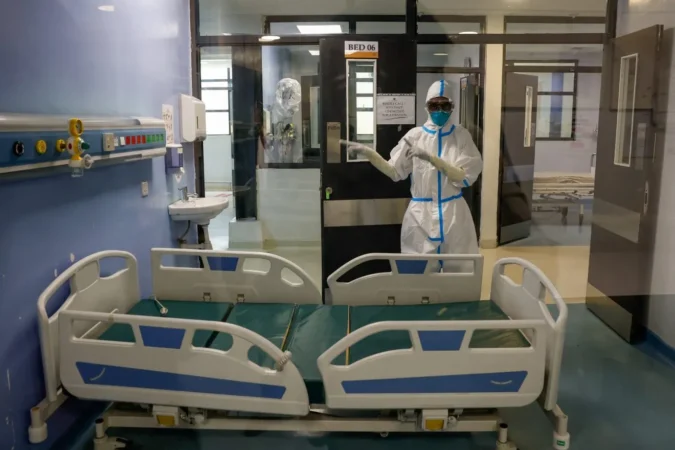
The financial package will be directed toward strengthening Kenya’s preparedness infrastructure, including enhanced surveillance systems, emergency response coordination, and isolation readiness in the event of imported infections.
Kenya positioned as key regional hub in containment strategy
The development comes as Kenya increasingly emerges as a strategic operational node in the US-led Ebola response architecture in East Africa, following reports that a dedicated quarantine facility for exposed American citizens is being established within the country.
The facility, reportedly located at a secured military installation in Laikipia, is intended to house individuals who may have been exposed to Ebola but are not yet symptomatic, allowing for monitored isolation during the virus’s incubation period.
US authorities argue the approach is intended to shorten response times and reduce the risk of infected individuals travelling onward to the United States, where domestic preparedness systems are already on high alert.
A Reuters report indicated that the facility is expected to be staffed by members of the US Public Health Service Commissioned Corps, a specialised uniformed medical unit trained in high-risk infectious disease response.
Kenya’s reported involvement has, however, triggered mixed reactions domestically, with questions raised over legal oversight, biosafety readiness, and the ethical implications of hosting a foreign-run quarantine structure for high-risk pathogens.
Containment race as Ebola spreads across the region
The outbreak at the centre of the crisis has been described by global health authorities as one of the most serious recent resurgences of Ebola, with hundreds of suspected cases reported across the Democratic Republic of Congo (DRC) and Uganda.
The World Health Organization (WHO) has warned that transmission is advancing faster than response capacity in some affected areas, raising concerns over delayed containment, overstretched surveillance systems, and limited laboratory capacity in remote regions.
In response, multiple governments across the region have tightened travel monitoring measures, while international agencies have deployed emergency teams to strengthen testing, contact tracing, and case management systems.
The US Centers for Disease Control and Prevention (CDC) has also expanded screening protocols at selected entry points and introduced travel restrictions affecting individuals who have recently been in affected countries, as part of efforts to reduce importation risks.
Africa at the centre of global health and policy debate
The latest US funding highlights a broader geopolitical and public health debate over how Ebola outbreaks should be managed in an increasingly interconnected global system.
While Washington has framed its intervention as a global health security measure, critics argue that such containment models risk shifting operational and ethical burdens disproportionately onto African countries hosting response infrastructure.
Also Read: High Court blocks US Ebola quarantine facility plan in Kenya
Some public health experts have also questioned whether offshore quarantine arrangements could create unequal standards in outbreak management, particularly when compared with domestic treatment and isolation protocols in higher-income countries.
In Kenya, medical professionals and legal advocacy groups have separately raised concerns over transparency, parliamentary oversight, and whether sufficient biosafety infrastructure exists to safely support such high-risk operations.
Preparedness gains versus perception risks
For Kenya, the Sh1.75 billion commitment strengthens its position within regional health security coordination frameworks but also places it at the centre of sensitive debates on sovereignty, preparedness, and public risk management.
Health experts caution that while financial and technical support can significantly enhance surveillance, early detection, and response capacity, public trust remains a critical factor in outbreak control.
They warn that any perception of secrecy or inadequate communication in international health arrangements could undermine compliance with public health directives in the event of a localised outbreak.
As Ebola continues to spread across parts of Central and East Africa, the focus is increasingly shifting toward rapid containment, strengthened cross-border coordination, and deeper international cooperation.
Kenya’s dual role, as both a recipient of preparedness funding and a potential operational hub for foreign-supported quarantine arrangements, places it at the centre of one of the most complex and consequential public health responses in recent years.